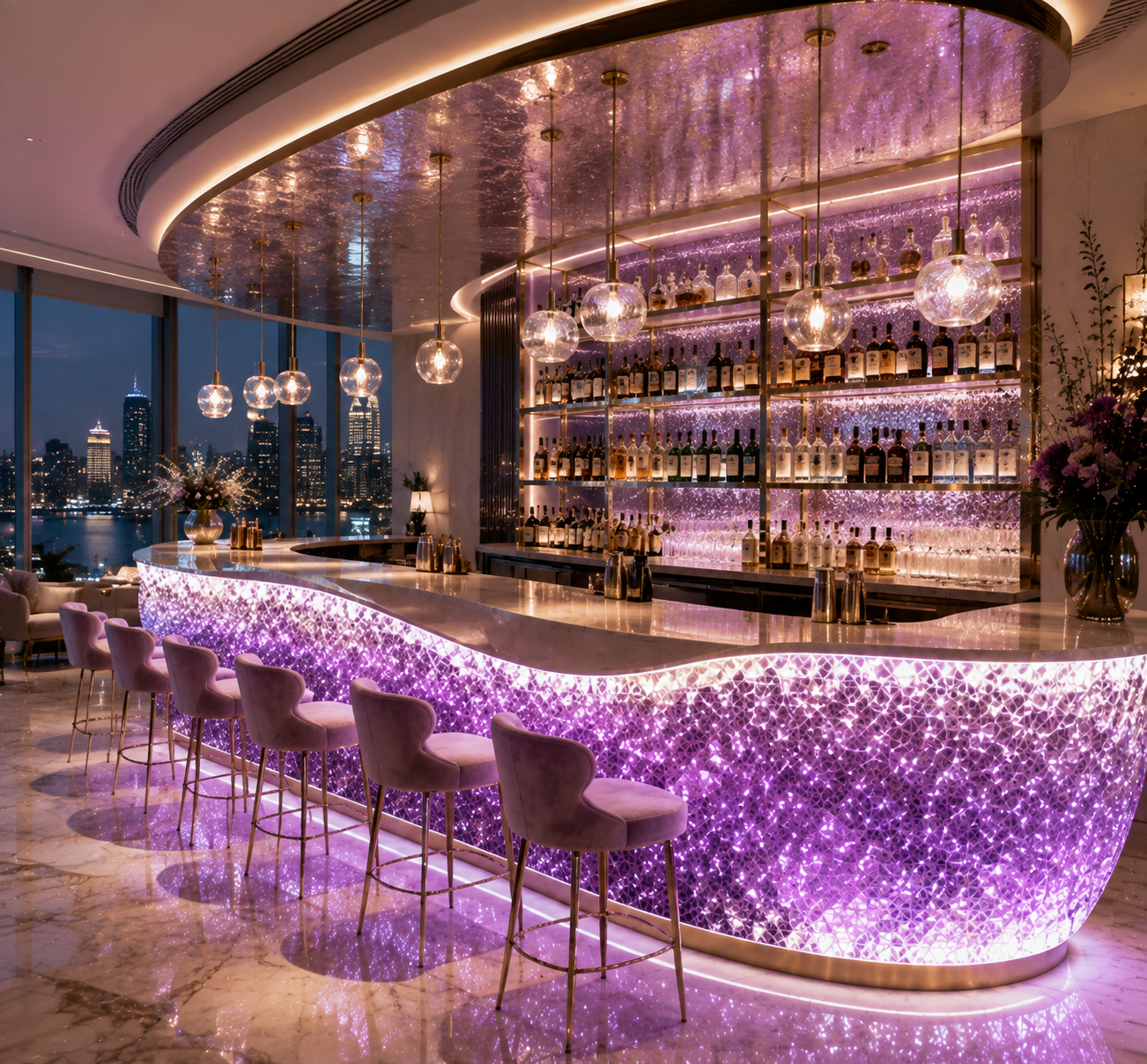
For decades, many furniture companies have understood materials primarily through the language of cost.
Solid wood costs more than engineered board. Natural stone costs more than laminate. Brass costs more than ordinary steel. Leather costs more than synthetic upholstery. Thick acrylic costs more than thin acrylic.
The traditional logic appears simple: if a material is more expensive, the finished furniture should also sell at a higher price.
But this logic is becoming increasingly incomplete.
The future of furniture branding will not be determined simply by who uses the most expensive raw material. It will be determined by who understands how to transform a material into a stronger design language, a better customer experience, a more recognizable product identity, and a more convincing reason for customers to pay more.
This is the real meaning of the premium power of materials.
A material has premium power when it allows a furniture brand to create value beyond production cost.
That value may come from visual distinction. It may come from craftsmanship. It may come from customization. It may come from rarity, emotional appeal, technical difficulty, or brand storytelling. It may also come from the way furniture interacts with architecture, lighting, lifestyle, and customer experience.
This is particularly relevant today because furniture markets are becoming more competitive and more visually homogeneous.
Digital platforms allow customers to compare products instantly. Manufacturers can reproduce popular forms quickly. Design trends spread globally in a short period of time. As a result, shape alone is becoming easier to copy. Price competition becomes more intense.
Under these conditions, furniture brands need deeper sources of differentiation.
Materials can provide that differentiation, but only if brands stop treating them as passive production inputs.
Materials must instead become strategic assets.
1. Material Is No Longer Just a Cost — It Is Part of Brand Positioning
The first change furniture brands need to make is conceptual.
Material should no longer be viewed only as a component of the bill of materials. It should also be understood as part of market positioning.
Two tables may have similar dimensions and perform the same basic function, but the materials can create completely different perceptions.
A veneered table may communicate practicality. A solid walnut table may communicate craftsmanship and natural luxury. A marble table may communicate permanence and architectural richness. A stainless-steel table may communicate precision and modernity. A thick transparent acrylic table may communicate visual lightness, contemporary luxury, and sculptural clarity.
The function is similar. The perceived value is not.
This difference matters because customers rarely evaluate premium furniture purely through rational cost calculation.
They respond emotionally. They respond to texture. They respond to weight. They respond to transparency. They respond to color. They respond to surface quality. They respond to how the object feels inside a specific interior.
This means material selection influences the emotional territory occupied by the brand.
A company using natural oak, linen, and warm stone may build an identity around calmness and organic living. A brand using polished stainless steel, glass, and mirrored surfaces may communicate technological precision. A company specializing in synthetic crystal acrylic furniture may build its identity around transparency, light, optical depth, and contemporary elegance.
These material choices become part of what customers remember.
The mistake many brands make is assuming that expensive material automatically creates premium positioning.
It does not.
A costly stone used without proportion or design intelligence can look ordinary. A high-grade leather applied poorly can reduce value. A thick acrylic sheet with rough edges and visible bonding defects can look inexpensive despite the raw material cost.
The customer does not pay a premium simply because the supplier paid more for materials. The customer pays a premium when the final object communicates value.
This is an important distinction.
Future furniture brands must therefore ask a different question.
Not: “How much does this material cost?”
But: “What additional value can this material help us create?”
That value may be visual. It may be technical. It may be emotional. It may be commercial.
The strongest brands will understand all four.
2. From Functional Materials to Visual Identity
Furniture design is becoming increasingly connected to brand recognition.
A successful product should not only work well. Ideally, customers should be able to recognize its design language even before they see the logo.
Materials play a major role in creating this recognition.
Consider how strongly certain materials affect visual identity.
Dark timber communicates something different from clear acrylic. Brushed metal communicates something different from velvet. Travertine creates a different emotional atmosphere from polished resin.
These differences are not minor decorative details. They shape how the furniture is categorized in the customer's mind.
This is why materials should be treated as part of the visual identity system.
A furniture brand can build recognition through repeated use of certain material characteristics.
These may include transparency, thickness, edge treatment, texture, color, reflective quality, joinery, or mixed-material combinations.
Synthetic crystal acrylic furniture offers a particularly clear example.
Basic transparent acrylic can be relatively neutral. But when a brand consistently uses thick sections, crystal-clear polishing, sculptural curves, or specific tinted colors, the material can become recognizable.
The brand is no longer simply making acrylic furniture. It is developing its own interpretation of acrylic.
That difference is critical.
The same principle applies to traditional materials.
Two furniture companies may both use oak. One may emphasize soft curves, natural grain, and hand-finished surfaces. The other may combine oak with blackened steel and sharp architectural forms.
The raw material is similar. The brand expression is completely different.
This demonstrates why future competition will increasingly depend on how materials are interpreted rather than simply which materials are used.
Product homogenization makes this even more important.
Many furniture categories are saturated with similar forms. Round coffee tables, minimalist consoles, modular sofas, dining chairs, shelving systems, and side tables can easily begin to look alike.
If form becomes similar, material treatment becomes one of the strongest opportunities for differentiation.
A clear acrylic console can create a very different impression from a wooden version. A transparent dining table base can make a stone top appear visually lighter. A colored acrylic chair can introduce a futuristic quality that ordinary upholstery cannot achieve.
The material changes the identity of the object.
This is why brands need to move from material selection to material language.
Selection answers the question: what is the furniture made from?
Material language answers a deeper question: what does the furniture communicate because it is made this way?
That second question has much greater strategic value.
.png)
3. Customization Increases the Premium Potential of Materials
Standardization has enormous manufacturing advantages.
It reduces cost. It simplifies production. It makes inventory easier to manage.
But it can also reduce premium potential.
When products are standardized, customers can compare them easily.
If three suppliers offer similar acrylic side tables with similar dimensions and similar thicknesses, price becomes an obvious decision factor.
This is where customization changes the equation.
Custom dimensions, curves, thicknesses, colors, joint details, mixed materials, and project-specific forms make direct comparison more difficult.
The furniture becomes unique to the project.
This increases perceived exclusivity.
It also changes the role of the manufacturer.
Instead of supplying a product, the company begins supplying a solution.
Synthetic crystal acrylic furniture is particularly well suited to this model.
The material can be machined, bent, polished, bonded, engraved, frosted, tinted, and combined with other materials.
This allows a wide range of custom applications.
A hotel may require bedside tables with specific dimensions. A luxury retail brand may need display furniture designed around product proportions. A restaurant may want colored transparent tables that fit a specific visual concept. A private residence may require a large sculptural dining table that cannot be purchased from standard retail channels.
These projects create opportunities for higher-value business models.
The premium does not come only from the acrylic itself. It comes from the ability to adapt the material to a specific environment.
Customization adds several layers of value.
There is design value. There is engineering value. There is communication value. There is sampling value. There is production coordination. There is project management. There may also be installation and logistics value.
All of these make the finished furniture more difficult to compare with a standard product.
This is commercially important.
Brands that sell only standardized products are often forced into transparent price competition.
Brands that solve customized problems compete on capability.
Capability is much harder to compare.
This is one reason future furniture brands should rethink their material strategy together with their customization strategy.
A material with high customization potential can create a stronger premium than a material used only in predictable ways.
This also means brands should develop deeper technical understanding.
If a company knows how to bend acrylic into complex curves, create clean transparent joints, engineer large spans, integrate lighting, or combine acrylic with stone and metal, it can accept projects that simpler suppliers cannot.
Technical knowledge therefore expands premium potential.
The customer is no longer paying only for material.
The customer is paying for possibility.
4. Craftsmanship Determines Whether a Material Can Truly Command a Premium
One of the biggest misconceptions in furniture is that premium materials automatically produce premium furniture.
In reality, craftsmanship determines whether the value of the material is fully expressed.
Every material has details that reveal quality.
In wood, it may be grain selection, sanding, joinery, edge treatment, and finish consistency.
In metal, it may be weld quality, polishing, coating, alignment, and surface precision.
In stone, it may be slab selection, cutting, edge finishing, vein matching, and installation.
In acrylic, it may be clarity, machining, polishing, bonding, bending, joint design, and structural stability.
These details transform raw materials into finished value.
This is especially visible in synthetic crystal acrylic furniture because transparency exposes mistakes.
A rough edge cannot easily be hidden. A bubble inside a transparent joint remains visible. A scratch catches light. A misaligned connection becomes obvious. A cloudy bonded area immediately reduces the crystal-like effect.
As a result, high-end acrylic furniture requires a level of manufacturing discipline that is not always obvious from a photograph.
The same is true of many premium materials.
Customers may not understand every manufacturing process, but they can often feel the difference between an ordinary product and a highly refined one.
This feeling is important.
Premium furniture is judged at close distance.
Customers touch surfaces. They inspect corners. They see reflections. They notice proportions. They experience stability. They compare how materials meet each other.
The quality of these details determines whether the brand's price feels justified.
This is why craftsmanship should not be treated as a production issue separate from marketing.
Craftsmanship is part of brand value.
A company that invests in superior machining, finishing, assembly, quality control, and packaging is building commercial differentiation.
The challenge is communicating that value.
Future furniture brands will need to explain not only what material they use, but how they work with it.
Why is the edge clearer? Why is the surface smoother? Why does the joint appear cleaner? Why is the structure more stable? Why does one furniture piece retain a refined appearance while another looks inexpensive?
These questions connect manufacturing directly to premium positioning.
This is particularly important in markets where raw material claims are easy to copy.
Many companies can say they use high-quality acrylic, imported leather, natural marble, or solid wood.
Far fewer can consistently demonstrate exceptional craftsmanship.
This makes processing capability one of the strongest foundations for genuine premium pricing.
5. Materials Are Becoming Part of Customer Experience and Brand Communication
The role of furniture is expanding.
In residential interiors, furniture contributes to lifestyle.
In hotels, it contributes to guest experience.
In restaurants, it contributes to atmosphere.
In retail, it contributes to product presentation.
In showrooms, it contributes to brand positioning.
The material of the furniture influences all of these experiences.
This creates a major opportunity for furniture brands.
A memorable material can create value beyond the object itself.
Consider a hotel lobby.
A conventional table may perform its function perfectly. Guests may use it without remembering it.
A sculptural transparent acrylic table under carefully designed lighting may become part of the visual identity of the lobby.
Guests notice it. They photograph it. Design magazines may feature it. Social media users may share it.
The furniture now has marketing value.
The same principle applies to retail.
A luxury boutique may use transparent acrylic displays because they allow merchandise to remain visually dominant.
The acrylic may also reflect the brand's sense of modernity, precision, or exclusivity.
The furniture becomes part of the sales environment.
Restaurants offer another example.
Customers increasingly choose destinations partly because of atmosphere.
A distinctive material palette helps create memorable interiors.
Colored acrylic furniture, polished metal, natural stone, and textured fabrics can work together to create a recognizable visual world.
The furniture is not just seating.
It is part of the experience customers purchase.
This relationship between material and experience is becoming more important because physical spaces now exist in two environments simultaneously.
There is the real space.
And there is the digital representation of the space.
Hotels appear on booking websites. Restaurants appear on social media. Luxury residences appear in design publications. Retail stores appear in videos. Showrooms appear in brand campaigns.
Materials that photograph well therefore have additional value.
Transparency, reflection, strong texture, sculptural form, and light interaction all influence how a space appears on camera.
Synthetic crystal acrylic can perform particularly well in this context because it changes appearance depending on lighting and angle.
A clear object can feel subtle in person but highly graphic in photography. Colored acrylic can create strong visual highlights. Illuminated edges can produce dramatic nighttime effects.
This makes material selection relevant not only to interior design but also to marketing.
Furniture brands that understand this connection can position themselves differently.
They are not simply supplying objects.
They are helping clients create recognizable environments.
That creates stronger premium potential.
.png)
6. The Future Competitive Advantage: Building a Material-Based Value System
The most important lesson is that materials should not be treated individually.
Furniture brands need to build complete value systems around them.
A strong material-based value system combines several elements.
It begins with material knowledge.
The company understands performance, thickness, finishing, limitations, maintenance, structural behavior, and processing methods.
Then comes design capability.
The company understands how to use the material in ways that create visual distinction.
Next comes craftsmanship.
The company can manufacture those designs consistently at a high standard.
Then comes customization.
The company can adapt products to different architectural and commercial requirements.
Engineering follows.
The furniture is not only attractive but also structurally appropriate.
Project service adds another layer.
Drawings, prototypes, samples, quality inspections, packaging, logistics, and installation coordination create confidence for professional clients.
Finally, branding converts these capabilities into market recognition.
When all of these elements work together, the material becomes strategically valuable.
This is very different from simply buying expensive raw material.
The real premium comes from the system around the material.
This also helps brands avoid price competition.
If a company sells a generic furniture product, customers can easily replace the supplier.
If a company offers a distinctive material language, proven craftsmanship, technical expertise, project support, and reliable customization, replacement becomes more difficult.
The brand becomes more valuable to the client.
This is the foundation of stronger margins and repeat business.
Future furniture brands should therefore ask themselves several questions.
Do we have a recognizable material identity?
Do customers understand why our material choices are different?
Can competitors easily reproduce our finishing quality?
Can we customize the material in meaningful ways?
Can we engineer complex applications?
Can we explain the craftsmanship behind the product?
Can our materials create memorable commercial spaces?
Can they contribute to our customer's brand value?
These questions are much more important than simply asking whether a material is expensive.
A premium material strategy requires intention.
It requires specialization.
It requires consistency.
Most importantly, it requires a clear understanding of value.
Conclusion: The Next Premium Will Come From Meaning, Not Material Cost Alone
The furniture industry is entering a period in which traditional definitions of premium are becoming less reliable.
High material cost alone is no longer enough.
Customers have greater access to information. Designs can be copied faster. Manufacturing capabilities are more widely available. Global competition is intense.
Under these conditions, furniture brands need more sophisticated ways to create value.
Materials offer one of the strongest opportunities.
But their value must be developed.
A material becomes premium when it creates a unique experience. When it enables difficult forms. When it supports customization. When craftsmanship reveals its best characteristics. When it contributes to brand identity. When it improves the experience of a space. When customers can recognize the difference.
Synthetic crystal acrylic furniture illustrates this clearly.
A simple acrylic sheet is only a raw material.
Once it is carefully selected, precisely machined, perfectly polished, intelligently engineered, custom formed, and integrated into a strong design concept, it becomes something very different.
It becomes a design statement.
The same principle applies across the furniture industry.
Wood is not premium simply because it is solid wood.
Stone is not premium simply because it is natural stone.
Leather is not premium simply because it is genuine leather.
Metal is not premium simply because it is expensive.
The premium is created through design, processing, context, experience, and meaning.
This is what future furniture brands need to rethink.
The question is no longer whether a material is cheap or expensive.
The real question is how much additional value the brand can create through that material.
Brands that answer this question well will be able to build stronger differentiation. They will create products that are harder to compare. They will become less dependent on price competition. They will build deeper relationships with designers, developers, retailers, hotels, and private clients.
Most importantly, they will transform materials from production inputs into strategic brand assets.
That transformation is likely to become one of the most important sources of premium pricing and competitive advantage in the future furniture market.
READ MORE:
- Why Do Some Materials Communicate Value at First Sight, Even in Equally High-End Furniture?
- What Counts as a "Good Material" to Hotel, Villa, and Private Club Clients? The Standards Are Completely Different
- Why Are Clients Willing to Pay for "Transparency"? The Visual Value of Synthetic Crystal Furniture in High-End Interiors
- Natural Stone, Glass, or Synthetic Crystal? How to Choose the Right Material for High-End Furniture
- The Designer's Eye for "Luxury": Why Furniture Materials Influence the Quality of a Space More Than Form
- Synthetic Crystal Acrylic Furniture: A New Trend Connecting Design Aesthetics with Commercial Value
- Synthetic Crystal Acrylic Furniture: Creating Memorable High-End Spaces Through Unique Transparency
- From Visual Differentiation to Market Competitiveness: The Value Upgrade of Synthetic Crystal Acrylic Furniture
- Synthetic Crystal Acrylic Furniture: Why More High-End Projects Are Paying Attention to This Material


