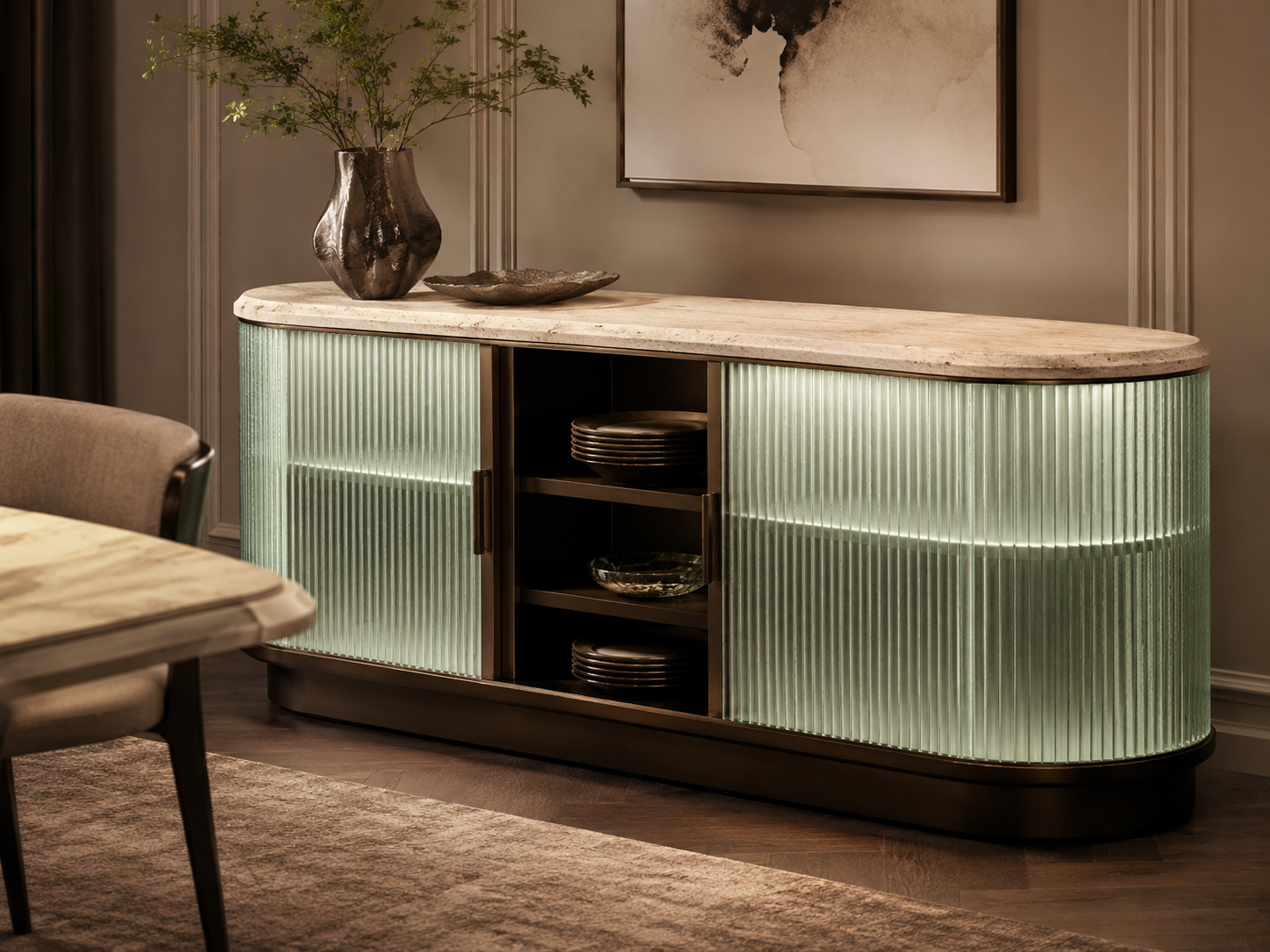
The future of furniture and interior design will not be defined only by new shapes.
It will also be defined by new ways of using materials.
For decades, designers have relied on a familiar material vocabulary: wood for warmth, stone for permanence, metal for precision, glass for transparency, leather and textiles for softness.
These materials remain essential, but contemporary design is asking new questions.
Can furniture appear substantial without looking heavy?
Can a material interact with light instead of simply reflecting it from the surface?
Can one material move easily between furniture, lighting, display, sculpture, and architecture?
Can custom pieces be manufactured with greater precision while still maintaining an artistic identity?
Can furniture create visual impact without filling a space with excessive decoration?
These questions are helping synthetic crystal acrylic move into a new position.
Once treated primarily as a transparent substitute for glass or a practical material for displays, high-quality acrylic is increasingly being reconsidered by designers as a creative medium in its own right.
Its appeal comes from a rare combination of qualities.
It is transparent but substantial.
It can appear visually weightless while maintaining strong physical presence.
It can be machined, polished, bonded, engraved, formed, and combined with other materials.
It can respond dramatically to light.
It can preserve architectural views.
It can create optical depth.
And, when handled correctly, it can transform an ordinary piece of furniture into something closer to a sculptural object.
This is why more designers are beginning to see synthetic crystal acrylic not simply as a current trend, but as a material direction for the future.
1. Why Material Innovation Is Becoming Central to Contemporary Design
The role of materials in design is changing.
In traditional furniture design, materials were often selected primarily according to function.
Wood was chosen because it could be cut and joined.
Metal was selected because of structural strength.
Stone was used for durability and luxury.
Glass was selected when transparency was required.
Today, designers are considering materials in a much broader way.
A material is no longer only part of the construction.
It is also part of the experience.
The texture of a surface affects how a room feels.
The transparency of a table influences how large the room appears.
The reflectivity of a finish changes how lighting behaves.
The thickness of a material changes the perception of quality.
The relationship between two materials can create emotional contrast.
As interiors become more carefully curated, these details matter more.
This shift is particularly visible in luxury residential, hospitality, retail, and commercial design.
Clients are not simply asking for expensive furniture.
They are asking for distinctive environments.
A luxury hotel wants a lobby that guests remember.
A fashion boutique wants furniture that supports the identity of the brand.
A high-end residence needs custom pieces that feel connected to the architecture.
A showroom wants materials that communicate innovation.
This has increased demand for materials that can do more than perform one traditional role.
Synthetic crystal acrylic fits naturally into this environment.
It can function as furniture.
It can act as a visual filter.
It can become part of a lighting concept.
It can provide a transparent structural element.
It can form a display platform.
It can become a sculptural installation.
This multifunctional quality is one reason designers are paying more attention to it.
Another reason is the changing definition of luxury.
Luxury interiors are becoming less dependent on heavy decoration.
Many premium spaces now emphasize balance, proportion, negative space, natural light, sophisticated textures, and a smaller number of carefully selected objects.
In this context, material quality becomes more visible.
A room with fewer objects gives each object more responsibility.
A transparent console positioned against a stone wall may look simple, but its thickness, polishing, proportion, and edge quality become highly noticeable.
This is where premium acrylic can perform exceptionally well.
Its apparent simplicity can highlight manufacturing precision.
Rather than hiding behind decoration, the material reveals the quality of the object.
This aligns strongly with contemporary design thinking.
The future of luxury is increasingly about refinement rather than excess.
Synthetic crystal acrylic can express that refinement through clarity.
2. Transparency and Optical Depth as a New Luxury Language
Transparency is often the first characteristic people notice about acrylic.
But transparency alone does not explain why designers find the material interesting.
Its real power comes from how transparency interacts with thickness, light, reflection, refraction, and surrounding materials.
A transparent object behaves differently from an opaque object.
An opaque table occupies space visually and physically.
A transparent table occupies the same physical space but allows the background to remain visible.
The floor continues beneath it.
A carpet pattern remains visible.
A feature wall can still be seen.
Natural light continues through the object.
This changes the perception of space.
In high-end interiors, this is extremely valuable.
Designers often want furniture to be present without visually interrupting the architecture.
A large acrylic coffee table can create a generous functional surface while preserving the visual openness of the room.
A transparent console can provide display space without covering an expensive stone wall.
Acrylic dining chairs can reduce visual density around a large dining table.
Clear pedestals can support products or artworks while appearing almost invisible.
This quality makes acrylic particularly relevant to modern architecture, where open plans, panoramic windows, large surfaces, and uninterrupted lines of sight are common.
But premium acrylic offers more than simple transparency.
Thickness creates optical depth.
A thin clear sheet may look lightweight and practical.
A thick polished acrylic block can create a completely different experience.
Light enters the material.
Edges become more pronounced.
Objects behind the acrylic appear subtly shifted.
Reflections appear inside the volume.
The material begins to resemble crystal rather than conventional plastic.
This optical depth is one reason synthetic crystal acrylic can feel luxurious.
It allows simple geometry to become visually rich.
A rectangular table base may be extremely minimal in form, yet the internal reflections make it interesting from multiple angles.
As people move around the object, its appearance changes.
Light changes.
Reflections change.
The surrounding interior becomes part of the furniture.
This dynamic quality is difficult to achieve with many traditional materials.
It also gives designers a way to create visual interest without decorative complexity.
A highly ornamental object can become tiring over time.
A transparent acrylic object can remain visually quiet while still producing continuously changing effects.
This is a sophisticated form of design.
The product does not demand attention aggressively.
Instead, it rewards observation.
This relationship with light also makes acrylic especially valuable in hospitality and retail interiors.
Lighting designers can deliberately position spotlights to activate polished acrylic edges.
Warm lighting can create a softer appearance.
Cool lighting can make the material feel technological.
Colored lighting can transform clear acrylic dramatically.
Under certain conditions, a transparent element can almost disappear.
Under other conditions, it can glow.
This adaptability gives designers greater control over atmosphere.
It is one reason acrylic is moving beyond the category of furniture material and entering the language of spatial design.
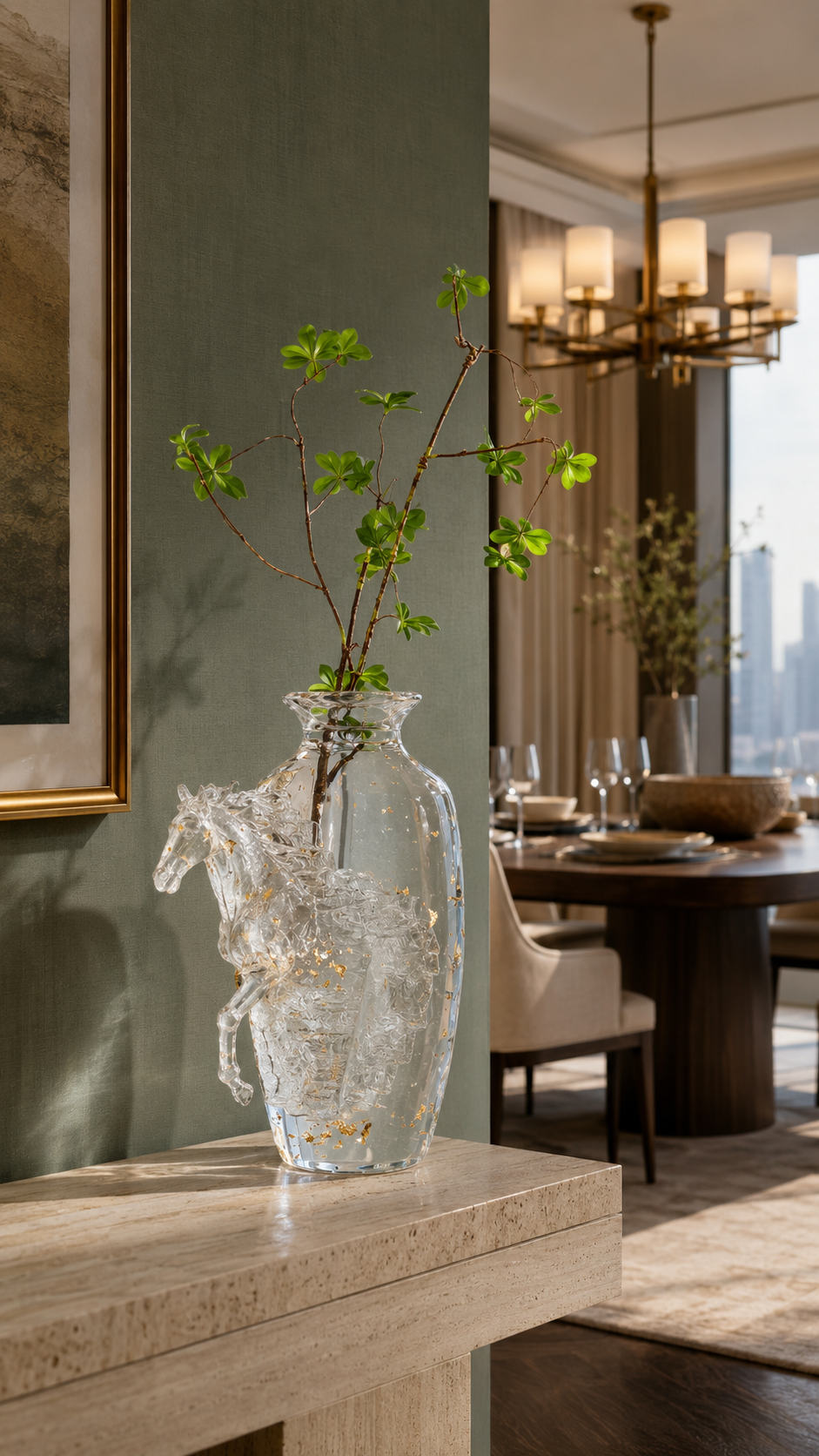
3. Freedom of Form: Breaking the Limits of Traditional Furniture Materials
Every material imposes limitations.
These limitations often influence the shape of furniture.
Wood is cut, joined, laminated, carved, or bent within certain constraints.
Stone is beautiful but heavy.
Glass provides transparency but requires careful treatment and has limitations in complex fabrication.
Metal offers strength and precision but remains visually opaque.
Synthetic crystal acrylic provides a different combination of possibilities.
It can be CNC machined.
It can be cut.
It can be drilled.
It can be engraved.
It can be heat formed.
It can be polished.
It can be bonded.
It can be fabricated in different thicknesses.
It can be combined with metal, stone, wood, lighting components, textiles, and other materials.
This opens a large design territory.
For designers, form freedom is extremely important.
Acrylic makes it possible to create continuous curves, layered forms, transparent blocks, sculptural bases, floating structures, and unusual combinations of geometry.
A console does not need to look like a traditional console.
A chair does not need to visually separate legs, seat, and back.
A table base does not need to behave like a conventional support.
The transparent structure itself can become the design.
For example, a dining table may use thick acrylic slabs arranged to create an architectural composition.
Because the supports are transparent, the structure can be visually dramatic without feeling heavy.
A side table might be formed from one continuous curved acrylic sheet, creating a smooth and uninterrupted silhouette.
A chair could combine a transparent sculptural frame with an upholstered seat that appears to float.
A shelving system may allow the wall behind it to remain visible, creating the impression that objects are suspended.
These possibilities allow furniture to move beyond familiar typologies.
This is particularly important as designers seek originality.
The global furniture market is highly saturated.
Many products have similar shapes.
Minimalist wooden tables, marble consoles, metal-framed chairs, and glass coffee tables are available from countless brands.
For a designer, discovering a material that allows familiar furniture types to be reinterpreted is valuable.
Acrylic offers this opportunity.
The material can make a traditional form look unexpectedly contemporary.
It can also support entirely new forms.
Digital manufacturing further increases this potential.
CNC machining allows increasingly precise geometry.
Complex joints can be developed.
Edges can be treated with greater consistency.
Repeated components can be produced accurately.
Custom dimensions can be manufactured more efficiently.
This relationship between acrylic and digital fabrication is especially significant for future design.
Furniture is moving toward greater customization.
Designers want products that fit specific interiors rather than forcing interiors to adapt to standardized products.
Acrylic can respond well to this model.
Dimensions can change.
Thickness can change.
Curves can be adjusted.
Metal details can be modified.
Stone inserts can be selected.
Colors and finishes can vary.
The product can remain part of a recognizable design family while being adapted for an individual project.
This balance between design identity and customization is likely to become increasingly important.
4. A Material That Connects Furniture, Lighting, and Architecture
One reason designers view synthetic crystal acrylic as future-oriented is that it does not belong to only one category.
Traditional materials are often strongly associated with specific applications.
Acrylic is more fluid.
It can become furniture.
It can become a partition.
It can become a display.
It can become a lighting element.
It can become signage.
It can become a decorative installation.
It can become part of a reception desk.
It can become an architectural feature.
This ability to move between categories is highly relevant to contemporary design because the boundaries between disciplines are becoming less rigid.
Furniture designers increasingly collaborate with architects.
Interior designers collaborate with lighting designers.
Retail designers work with brand strategists.
Artists create functional objects.
Furniture manufacturers produce architectural installations.
The most interesting spaces often emerge from these overlaps.
Synthetic crystal acrylic supports this interdisciplinary approach.
Consider a luxury retail store.
A clear acrylic pedestal can display merchandise.
If lighting is integrated, the pedestal also becomes a lighting object.
If several pedestals are arranged together, they become a spatial installation.
If they guide customer movement, they begin to influence architecture.
One material can therefore perform several roles simultaneously.
The same principle can apply in a hotel lobby.
A large acrylic structure may function as a console, room divider, sculptural centerpiece, and lighting feature.
Instead of adding four separate elements, the designer creates one integrated object.
This creates visual clarity.
It can also strengthen the identity of the space.
The ability to integrate lighting is particularly important.
Transparent and translucent materials respond naturally to light.
LED systems can be concealed inside or around acrylic elements.
Edges can catch illumination.
Engraved patterns can become more visible when lit.
Thick clear blocks can carry reflections through their volume.
The light source itself can remain hidden while the material appears to glow.
This creates opportunities for furniture that changes character between day and night.
During the day, the product may appear almost invisible.
In the evening, lighting can transform it into a focal point.
This dynamic quality is especially valuable in hotels, bars, restaurants, clubs, boutiques, galleries, and entertainment spaces.
Architecture also benefits from the visual lightness of acrylic.
Acrylic dividers can organize space without creating heavy walls.
Transparent shelving can define zones without blocking sightlines.
Large furniture pieces can separate functional areas while preserving spatial continuity.
This is increasingly useful in open-plan interiors.
Modern spaces often need flexibility.
Designers want to divide functions without making rooms feel smaller.
Acrylic provides a way to create boundaries that remain visually open.
This makes the material relevant not only to furniture manufacturing, but to broader spatial planning.
5. Hybrid Materials and Bespoke Design Are Expanding Its Value
The future of synthetic crystal acrylic may not be purely transparent.
Some of the most interesting designs combine acrylic with contrasting materials.
This is important because material contrast creates emotional depth.
Acrylic is smooth, clear, visually light, and technologically refined.
Stone is heavy, natural, textured, and permanent.
Wood is warm and organic.
Metal is precise and reflective.
Leather and textiles are soft and tactile.
When these materials are combined, each becomes more noticeable.
Acrylic and Stone
A marble surface supported by transparent acrylic legs can appear to float.
The visual weight of stone is reduced.
At the same time, the acrylic gains a stronger sense of luxury through association with natural material.
This combination works especially well in dining tables, consoles, side tables, and reception furniture.
The contrast between transparency and natural veining creates a strong visual identity.
Acrylic and Metal
Metal gives acrylic structure and definition.
Brass can introduce warmth.
Stainless steel creates a more technological aesthetic.
Black metal can add graphic contrast.
Bronze can produce a sophisticated luxury character.
Metal details can also solve structural problems while becoming decorative features.
Instead of hiding every joint, designers can intentionally highlight certain connections.
This makes construction part of the design language.
Acrylic and Wood
Wood can soften the technological quality of acrylic.
The combination is particularly effective in residential interiors.
A wooden tabletop on a transparent acrylic base can feel both familiar and contemporary.
A timber cabinet supported by clear acrylic legs appears visually lighter.
Wood grain becomes even more noticeable when contrasted with transparent surfaces.
This allows designers to combine modern clarity with natural warmth.
Acrylic and Upholstery
Seating offers another important application.
Transparent chair frames can make upholstered seats appear suspended.
Leather, velvet, bouclé, woven textiles, and other premium fabrics can create strong contrast against clear acrylic.
The transparency reduces visual mass.
The upholstery introduces softness and comfort.
Together, the two materials create furniture that feels both sculptural and functional.
This type of hybrid design is closely connected with bespoke furniture.
Luxury projects increasingly demand products that are difficult to find in standard catalogs.
Designers need custom dimensions.
They need specific metal finishes.
They want stone selected for a particular interior.
They may need exact fabric coordination.
They may request unusual acrylic thicknesses or geometry.
For manufacturers, this creates an important opportunity.
Acrylic is well suited to project-based customization.
A base design can be adapted according to the needs of the interior.
This allows a manufacturer to move away from purely standardized products and toward higher-value design collaboration.
The manufacturer becomes part of the creative process.
Architects and designers may provide a concept.
The manufacturer helps determine acrylic thickness, connection methods, structural support, polishing requirements, material combinations, and installation strategy.
This technical collaboration can create far more value than simple product supply.
It also makes acrylic particularly suitable for the future of premium interiors, where individuality is becoming more important.
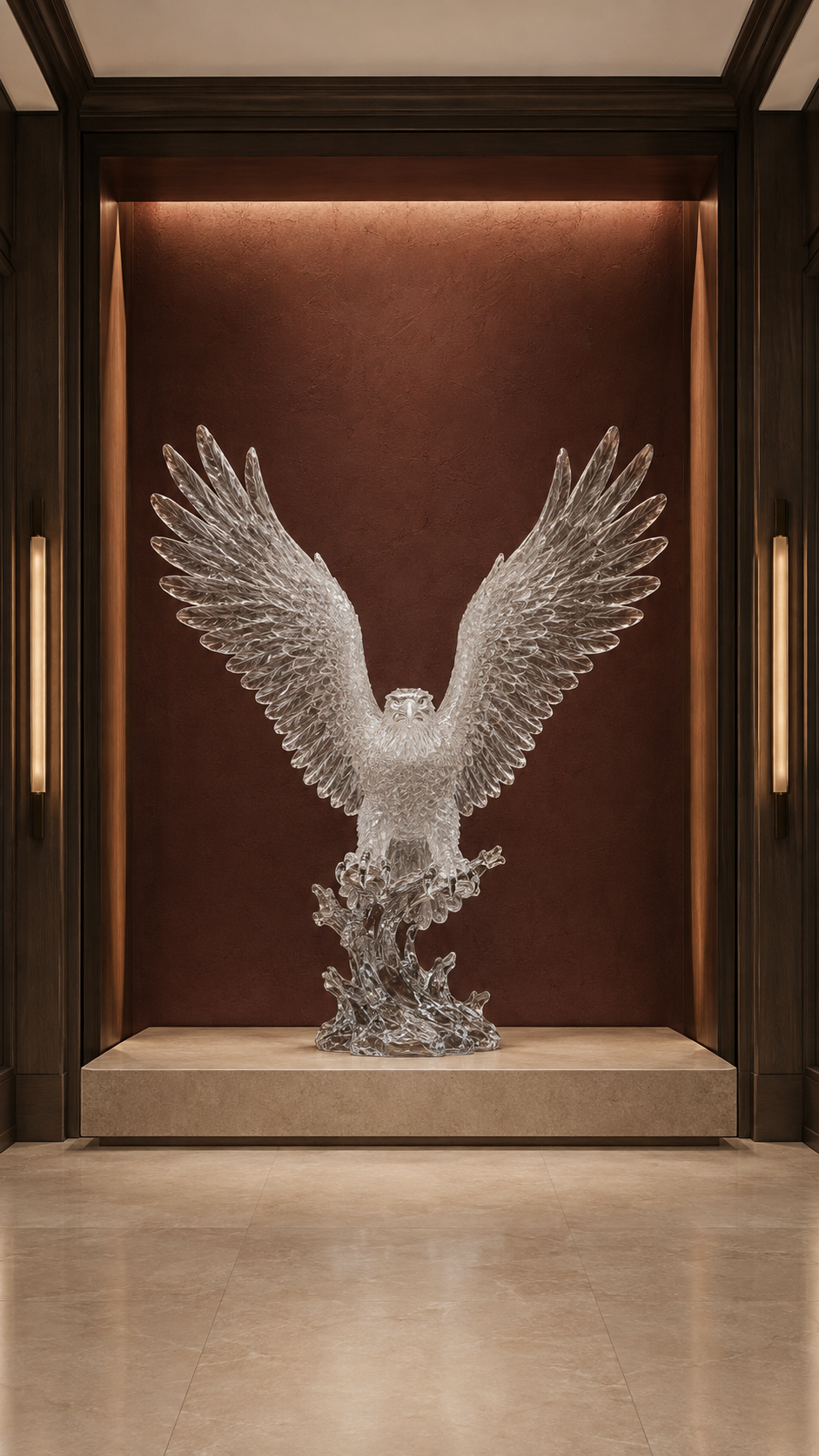
6. Why Designers See Acrylic as a Material for the Future
The growing interest in synthetic crystal acrylic is connected with several larger changes in design culture.
The first is personalization.
Clients increasingly want spaces that feel unique.
Luxury consumers are moving away from interiors that look copied from a standard showroom.
They want custom pieces, special materials, and memorable objects.
Acrylic supports this because it can be adapted in many ways.
The second is visual lightness.
Architecture is becoming more open.
Large windows, open-plan layouts, continuous flooring, panoramic views, and integrated living spaces are common in premium projects.
Heavy furniture can conflict with this architecture.
Transparent acrylic provides function without introducing the same degree of visual obstruction.
The third is interdisciplinary design.
Furniture, art, lighting, architecture, and retail display are increasingly overlapping.
Acrylic can participate in all of these fields.
This gives designers a material that can connect multiple elements of a project.
The fourth is digital fabrication.
CNC machining and precision manufacturing are making complex custom forms easier to realize.
Designers can develop more detailed geometries and communicate them digitally to manufacturers.
Acrylic is highly compatible with this workflow.
As fabrication technologies improve, the design possibilities are likely to expand further.
The fifth is experiential retail and hospitality.
Physical spaces increasingly need to offer memorable experiences.
A store must provide more than merchandise.
A hotel lobby must provide more than seating.
A showroom must communicate more than product specifications.
Materials that create optical effects, interact with light, and support custom installations can contribute significantly to these experiences.
Acrylic is particularly well positioned here.
The sixth is the growing importance of visual communication.
Interior projects today are photographed constantly.
Hotels appear on social media.
Retail installations become campaign imagery.
Restaurants are discovered through images.
Homes are shared online.
Furniture therefore exists not only in physical space but also in photographs and video.
Distinctive materials help create recognizable images.
Acrylic can produce reflections, transparency, layering, and lighting effects that translate strongly into visual content.
This gives the material additional commercial value.
Finally, designers are becoming more interested in materials that can create contrast without excessive decoration.
The combination of acrylic with stone, wood, metal, or upholstery provides exactly this possibility.
A simple piece can become visually complex through material interaction rather than ornament.
This approach aligns strongly with contemporary luxury.
Conclusion: Acrylic Is Becoming More Than a Material
The reason more designers are looking toward synthetic crystal acrylic is not difficult to understand.
It solves several contemporary design challenges at the same time.
It creates transparency without eliminating physical presence.
It allows furniture to occupy space without making that space feel excessively heavy.
It interacts with light.
It creates optical depth.
It supports complex geometry.
It works with digital fabrication.
It combines effectively with stone, metal, wood, leather, and textiles.
It can move between furniture, architecture, lighting, display, and sculpture.
Most importantly, it gives designers another way to create identity.
This is critical.
The future of furniture will not simply depend on making more products.
It will depend on creating products that are more specific, more memorable, more adaptable, and more connected to the spaces around them.
Synthetic crystal acrylic supports this direction exceptionally well.
A table can become a transparent architectural object.
A chair can make upholstery appear to float.
A display pedestal can disappear visually while highlighting the product above it.
A reception desk can become a luminous installation.
A shelving system can organize space while preserving the architecture behind it.
A sculptural acrylic form can function simultaneously as furniture and art.
These possibilities explain why acrylic is increasingly being discussed not just as an alternative material, but as a material platform.
Its value lies in its versatility.
Its future lies in interpretation.
The strongest designers will not use synthetic crystal acrylic simply because it is transparent.
They will use it because transparency can be engineered.
Thickness can be expressive.
Light can become part of the object.
Connections can become details.
Negative space can become structure.
Furniture can become architecture.
And manufacturing can become part of a broader creative process.
This is why synthetic crystal acrylic is increasingly relevant to designers who are thinking beyond today's furniture market.
It offers a way to design objects that feel lighter, more adaptable, more sculptural, and more connected to contemporary architecture.
It does not need to replace traditional materials.
Its strongest future may come from working alongside them.
Stone can provide permanence.
Wood can provide warmth.
Metal can provide precision.
Textiles can provide softness.
Synthetic crystal acrylic can provide clarity, depth, lightness, and visual transformation.
Together, these materials can create an entirely new generation of furniture and spatial experiences.
For designers searching for materials that can move easily between function and art, product and architecture, transparency and structure, synthetic crystal acrylic is becoming increasingly difficult to ignore.
That is why more designers are beginning to see it not simply as a material for today, but as one of the directions shaping the future of design.
READ MORE:
- How Can a Design Rendering Become Reality? The Critical Role of Synthetic Crystal Furniture in Connecting Design and Construction
- The Material Selection Challenge in High-End Interior Design: Why Transparent Crystal Furniture Is Becoming a New Choice for Designers
- From Sample Approval to Mass Production: How Synthetic Crystal Furniture Can Make Project Delivery Smoother
- How to Avoid Repeated Material Revisions in Hotel and Commercial Space Projects
- Why More High-End Projects Are Building Unified Material Selection Standards: A New Solution with Synthetic Crystal Furniture
- Synthetic Crystal Acrylic Furniture: A New Breakthrough for High-End Brand Differentiation
- Synthetic Crystal Acrylic Furniture: How Can Products Gain Stronger Visual Competitiveness?
- From Furniture Manufacturing to Spatial Art: New Possibilities Created by Synthetic Crystal Acrylic
- Synthetic Crystal Acrylic Furniture: Why Do High-End Spaces Increasingly Need a Sense of “Light Luxury Transparency”?


