
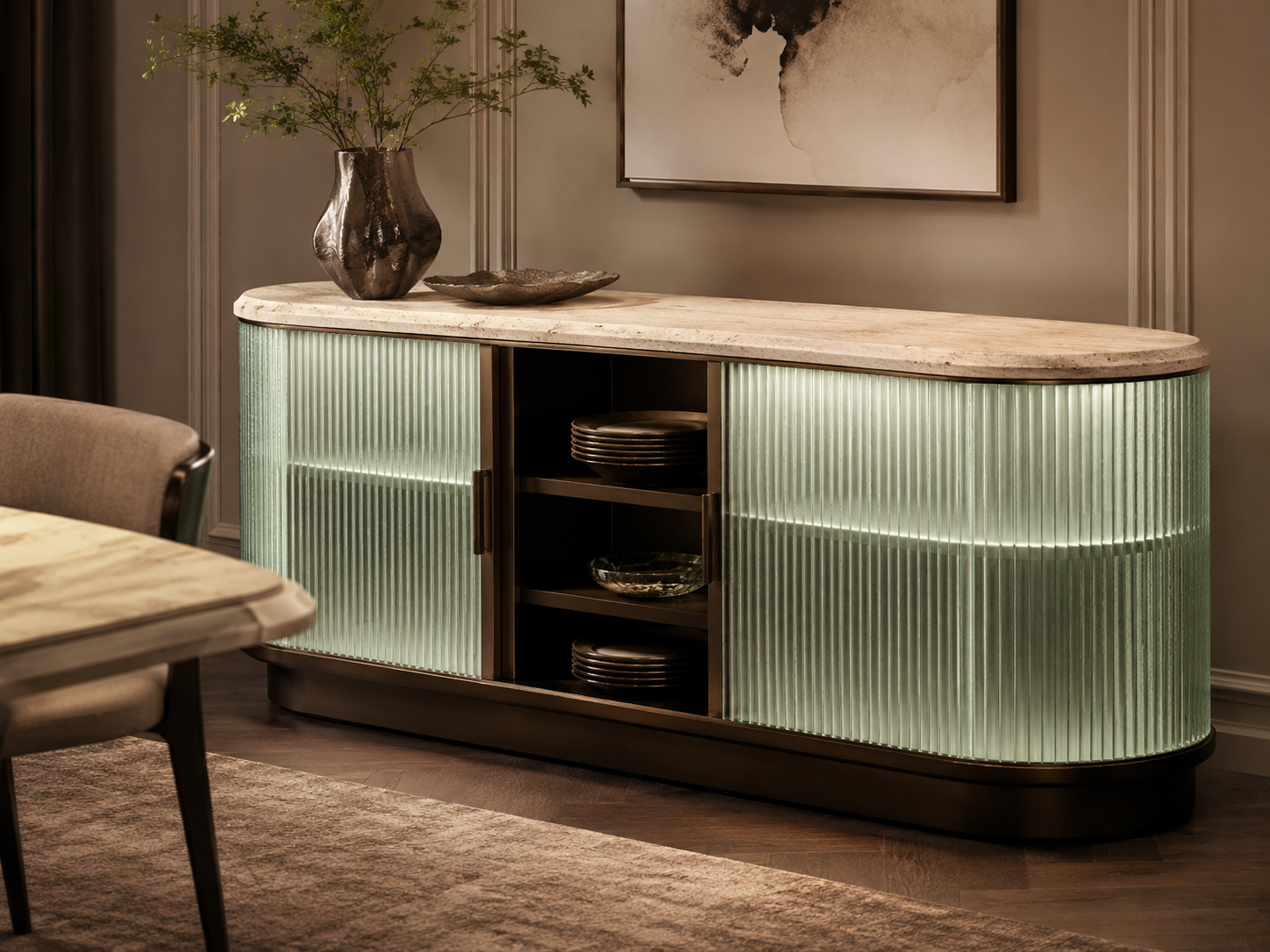
Material selection has always been central to luxury interior design, but the decision is becoming more complicated. Designers are no longer choosing materials only for color, texture and price. In hotels, luxury residences, flagship retail stores, clubs and premium commercial spaces, materials are increasingly expected to satisfy aesthetics, brand identity, durability, maintenance, documentation, production consistency and future replacement requirements at the same time.
The scale of development makes these decisions even more important. Lodging Econometrics reported that the global hotel construction pipeline reached a record 15,922 projects and more than 2.43 million rooms at the end of 2025. The luxury segment alone reached a record 1,328 projects and 252,544 rooms. For international hotel groups and design practices working across multiple properties, material decisions increasingly need to be both distinctive and reproducible.
This is one reason transparent furniture is receiving renewed attention. Clear and translucent furniture can introduce a strong sculptural element without creating the same visual weight as many opaque materials. More importantly, today's designers are no longer limited to conventional glass. Transparent synthetic crystal, high-end cast resin and premium acrylic—including Platinum Acrylic furniture—give designers a broader vocabulary of clarity, color, depth and form.
For high-end projects, however, the real opportunity is not simply to use a fashionable transparent material. It is to understand where these materials solve genuine design problems.
1. The Real Material Challenge Is No Longer “What Looks Luxurious?” but “What Works with Everything Else?”
Luxury interiors are rarely built around a single material. A hotel lobby may combine natural stone flooring, metal screens, timber veneer, decorative plaster, textiles, artwork and architectural lighting. A flagship store may need polished metal, specialty stone, display lighting and furniture to coexist without visually competing with the products being sold.
This creates a problem: every additional solid material adds another color, texture and visual mass to the space.
The American Institute of Architects' Materials Pledge reflects how broad material decision-making has become. Its framework asks architects and designers to consider human health, climate health, ecosystem health, social health and equity, and circular-economy principles rather than evaluating products through appearance alone. AIA also encourages practices to develop specifications and product libraries that make material decisions more consistent across projects.
For designers, this means a beautiful piece of furniture can still be the wrong piece of furniture if it interrupts the wider interior composition.
Imagine a luxury hotel lobby with a dramatic book-matched stone floor. A visually heavy timber or stone coffee table may cover an important part of that pattern. In another project, a large solid console may create too much mass in front of an architectural wall or artwork. A retail boutique may require several display tables but cannot allow those tables to compete visually with handbags, jewelry or fashion products.
Transparent furniture changes this relationship.
Architectural Digest has previously highlighted how clear acrylic and glass furniture can reduce visual clutter because flooring, wall colors and other design elements remain visible through the furniture. The publication specifically noted the usefulness of transparent benches, coffee tables and consoles when designers want furniture to occupy physical space without creating equivalent visual bulk.
That principle becomes particularly valuable in high-end interiors: the furniture is present, but the architecture can remain dominant.
2. Transparent Crystal Furniture Can Create a Statement Without Making the Space Feel Heavier
Designers frequently face an apparent contradiction. Clients want a memorable statement piece, but they also want the interior to feel open, refined and uncluttered.
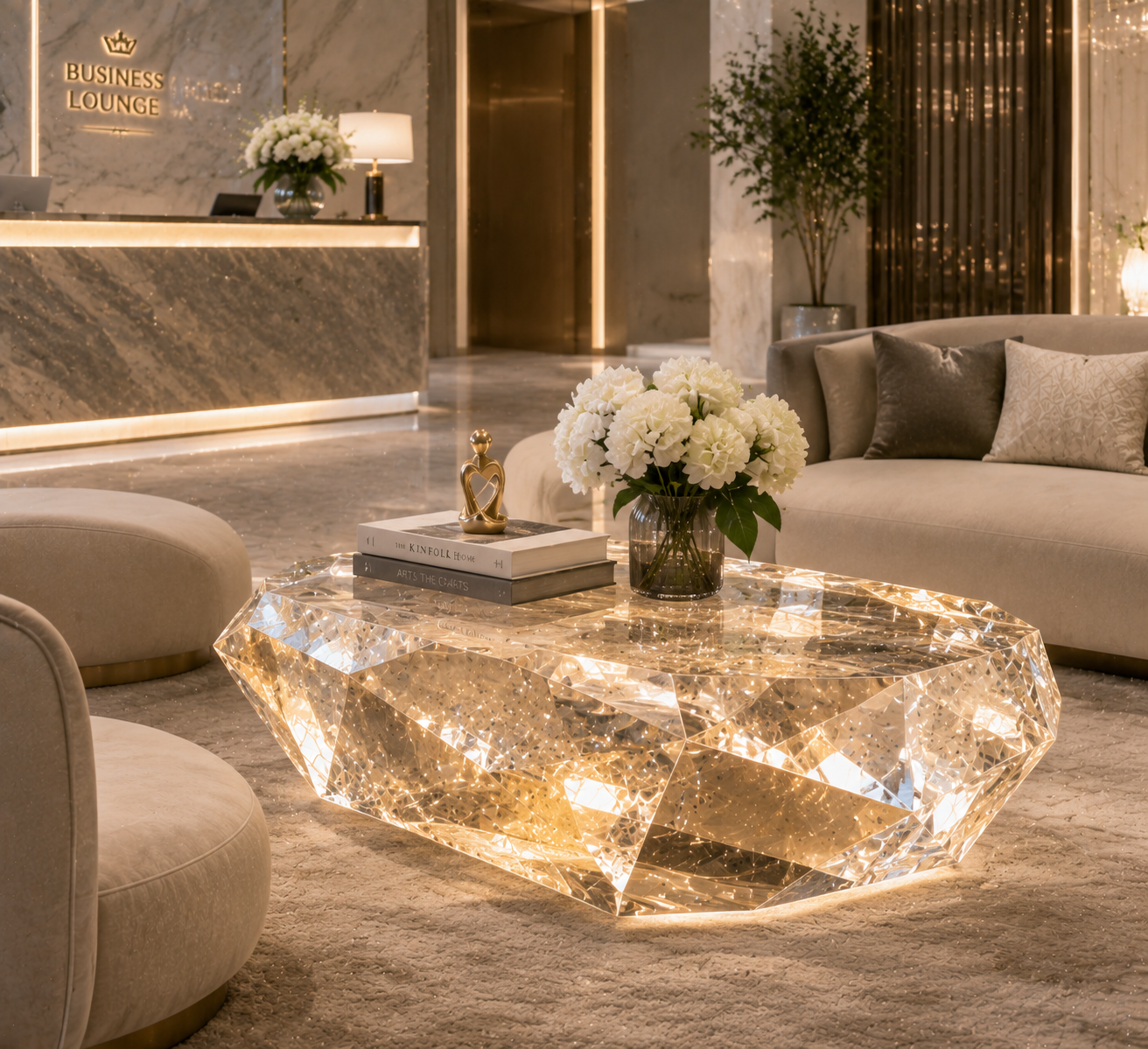
Traditional statement furniture often achieves impact through mass: a large marble table, a heavily textured timber console, an upholstered sculptural form or a substantial metal structure. Transparent synthetic crystal furniture offers another possibility—creating impact through light, volume, color and optical depth rather than opacity.
A thick transparent synthetic crystal console, for example, can have considerable physical presence while allowing the wall, flooring and light behind it to remain part of the visual composition. A clear dining-table base can support a dramatic tabletop without creating a visually crowded lower half. A translucent side table can become more or less visible depending on the lighting around it.
This is not an entirely new design language. Transparent materials have a significant history in collectible and experimental furniture. Wallpaper's recent examination of Japanese designer Shiro Kuramata highlighted his influential exploration of lightness, perception and transparency, including the famous Miss Blanche chair, created in clear acrylic resin with artificial roses appearing to float within the material.
Contemporary designers continue to explore the same territory. Wallpaper has documented Draga & Aurel's collectible furniture using colored resin, plexy and glass, while its 2026 coverage described the designers' jewel-like resin pieces as part of a broader contemporary collectible-design practice.
The significance for commercial interiors is that transparency does not have to mean “invisible.”
A synthetic crystal coffee table can incorporate controlled color gradients, internal layers or decorative effects. High-end resin can create translucent amber, smoke, champagne or jewel-like tones. Platinum Acrylic furniture can deliver a cleaner, more architectural transparent expression when the project requires sharp geometry and polished clarity.
Designers can therefore choose between almost invisible transparency and intentionally dramatic transparency.
That makes clear furniture especially useful in spaces where the design needs both openness and a focal point—hotel lobbies, presidential suites, luxury boutiques, VIP lounges, galleries, showrooms and high-end residential living spaces.
3. Synthetic Crystal, High-End Resin and Premium Acrylic Expand the Designer's Vocabulary Beyond Glass
When designers think about transparent furniture, glass is often the first material that comes to mind. But engineered transparent materials create different aesthetic and manufacturing possibilities.
Synthetic crystal furniture can be developed around visual depth, clarity, refraction-like effects and sculptural mass. High-end resin offers another language: pigmentation, translucent layers, embedded effects, gradients and complex cast forms can transform a table or console into something closer to functional art.
Wallpaper has followed designer Wonmin Park's work in pigmented resin for more than a decade, describing furniture created from intersecting translucent resin planes whose color, opacity and overlapping surfaces generate an ethereal visual effect.
This is an important reference for commercial designers because it demonstrates that resin is not simply a substitute material. Its value can come from what the material uniquely allows designers to express.
Industrial material development points in the same direction. Covestro has documented a polyurethane-based solid-surface technology using reaction injection molding to create seamless furniture forms that would be difficult to achieve using traditional solid-surface fabrication. The example is not technically identical to every decorative resin furniture product, but it demonstrates how engineered polymer systems can combine controlled manufacturing with forms that conventional fabrication methods may restrict.
Premium acrylic occupies yet another position.
ASTM D4802, the current standard specification for PMMA acrylic sheet, includes methods for evaluating properties such as luminous transmittance, haze, water absorption, tensile properties, impact strength, abrasion resistance, coating adhesion and chemical resistance. Clear PLEXIGLAS products can achieve light transmission of up to approximately 92%, depending on product grade and configuration, illustrating why high-quality PMMA can create exceptionally transparent components.
For a designer, therefore, synthetic crystal, high-end resin and premium acrylic should not be treated as interchangeable versions of “clear plastic.”
They occupy different design territories.
A large synthetic crystal dining table may be selected for optical depth and jewelry-like presence. A cast resin console may be chosen because a customized translucent color becomes part of the project's identity. A Platinum Acrylic bench, pedestal or side table may be appropriate when the design demands cleaner geometry and a highly controlled contemporary appearance.
The material should follow the design intent—not the other way around.
4. The Biggest Opportunity for Designers Is Controlled Customization
One of the reasons natural materials remain attractive in luxury interiors is their individuality. Every piece of stone or timber can contain subtle differences. But those differences can also become challenging when a project requires repeated furniture across guestrooms, restaurants, public areas or multiple properties.
Engineered transparent materials offer a different proposition: customization can potentially be developed within a controlled system.
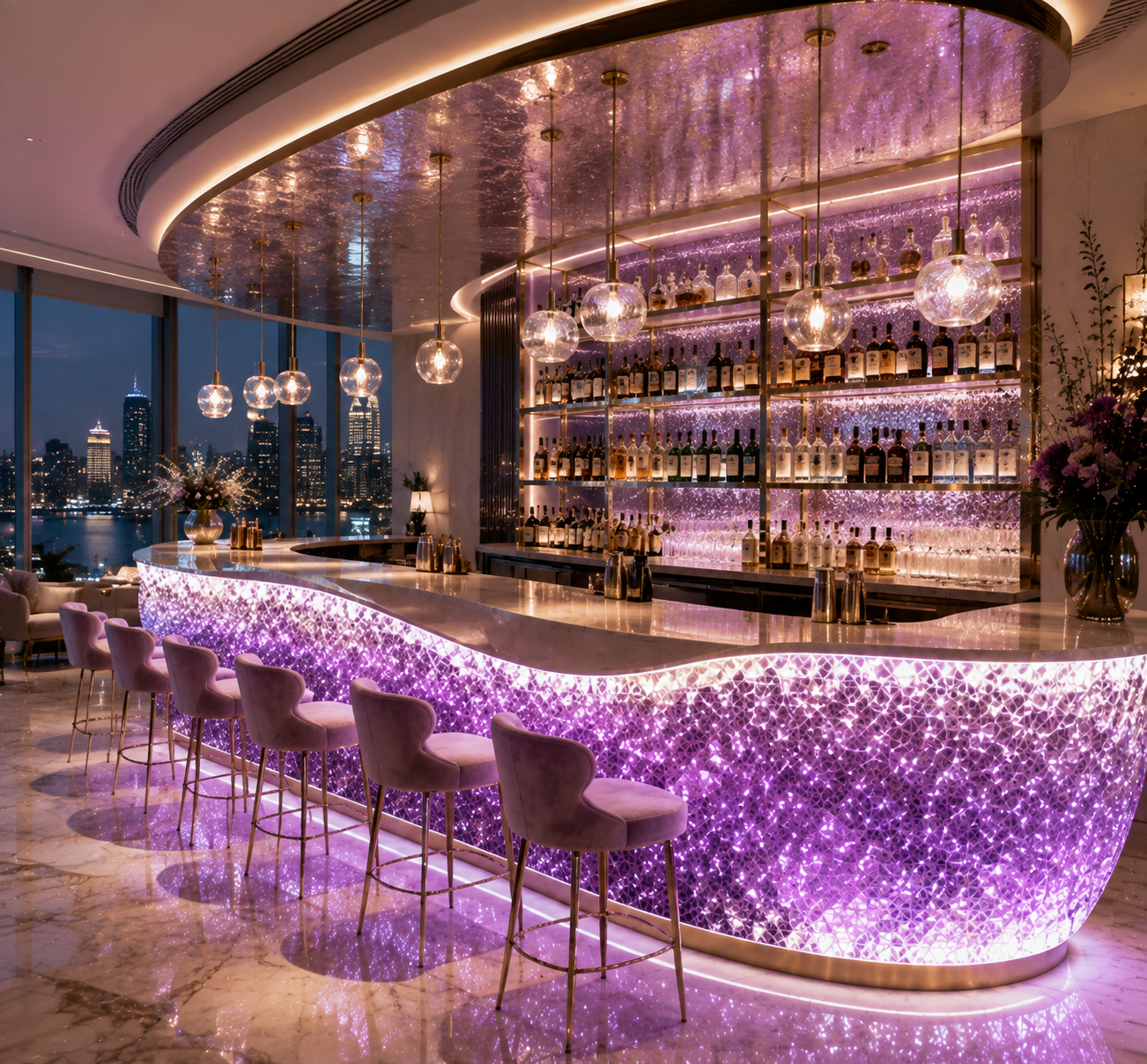
A designer could establish a specific champagne tint for a synthetic crystal furniture collection, then use that visual language across a lobby console, coffee table, side table and private-suite dining table. A translucent resin tone could be developed around a hotel brand's interior palette and then translated into different forms rather than selecting an unrelated material for every furniture item.
That does not mean perfect batch consistency should be assumed. Cast materials can still show production variation, and the acceptable level of variation needs to be defined through sampling, formulation control and quality inspection.
The commercial furniture industry increasingly emphasizes this type of systematic evaluation. ANSI approved the revised ANSI/BIFMA e3-2024 Furniture Sustainability Standard in April 2025. BIFMA says the revision was developed with stakeholders including furniture manufacturers, government agencies, architects and designers, and maintains alignment with systems including LEED and WELL.
For a transparent furniture supplier, this suggests a more professional way of working with design firms.
Instead of sending designers dozens of unrelated samples, the manufacturer can help create an approved material palette. A master sample can establish color, transparency, internal visual effects, gloss, edge treatment and acceptable variation. Larger mock-ups can then demonstrate how the material behaves at furniture scale.
Once approved, these standards can become part of the project's material library.
This matters because color seen in a small sample does not always appear identical in a thick cast table leg or a large transparent panel. Light passes through different volumes of material differently, while adjacent stone, carpet, metal and architectural lighting can also affect perception.
The goal is therefore not simply customization. It is repeatable customization.
For designers responsible for international hotel groups, branded residences or luxury retail rollouts, that distinction can be much more valuable than having unlimited color choices.
5. Transparency Requires More Technical Discipline, Not Less
Transparent furniture can look effortless, but specifying it well requires careful technical thinking.
Clear materials reveal details that opaque materials can hide. Edge quality becomes more visible. Joints can become part of the design. Scratches, fingerprints, dust and improper cleaning may be easier to notice. Lighting conditions can dramatically change the apparent color and transparency of thick resin or synthetic crystal components.
That means designers should evaluate transparent furniture under realistic conditions rather than approving it exclusively from a rendering.
A lobby console should be considered under the project's actual lighting temperature. A translucent resin table should be reviewed against the intended flooring. A clear acrylic pedestal used in retail should be tested with the products and lighting it will actually support.
Maintenance should also be specified rather than assumed. Architectural Digest's guide to acrylic furniture care, for example, notes that acrylic requires appropriate plastic cleaners and soft microfiber cloths and warns that certain household cleaners containing ammonia can damage or cloud acrylic surfaces.
This is particularly relevant to hospitality projects, where furniture may be cleaned multiple times every day by different members of an operations team.
Material-health and documentation requirements should be considered equally early. USGBC's LEED guidance recommends researching low-emitting furniture and collecting appropriate documentation such as safety information, certificates and test reports during procurement. WELL likewise addresses furniture and furnishings in areas including VOC emissions, material transparency and cleanability.
Consequently, suppliers should avoid vague claims such as “scratch-proof,” “never yellows,” “zero VOC” or “completely maintenance-free” unless those statements are supported for the specific material formulation and use condition.
A better approach is to provide project-relevant documentation and clearly state both capabilities and limitations.
This is especially important with synthetic crystal and resin because the exact chemistry can vary between manufacturers. The term “synthetic crystal” describes an engineered visual material category rather than one universal chemical composition. Performance should therefore be assessed according to the actual product being specified.
For Platinum Acrylic furniture, if the material is PMMA-based, appropriate PMMA standards and test methods can provide a technical reference. For resin furniture, testing should correspond to the resin system, surface treatment and intended application.
High-end design does not require materials with no limitations. It requires materials whose limitations are understood before installation.
6. Transparent Furniture Is Most Powerful When It Becomes Part of the Space's Material Strategy
The strongest case for transparent synthetic crystal furniture is not that it should replace marble, timber, metal or glass.
It should complement them.
Luxury interiors depend on hierarchy. Some materials need to provide warmth. Others create permanence, texture, reflection or softness. Transparent furniture is particularly valuable when the designer wants an object to occupy space while preserving visual continuity around it.
Consider a hotel lobby dominated by expressive natural stone. Instead of introducing another heavily patterned material, the designer could use a transparent synthetic crystal coffee table that allows the stone to remain visible through it.
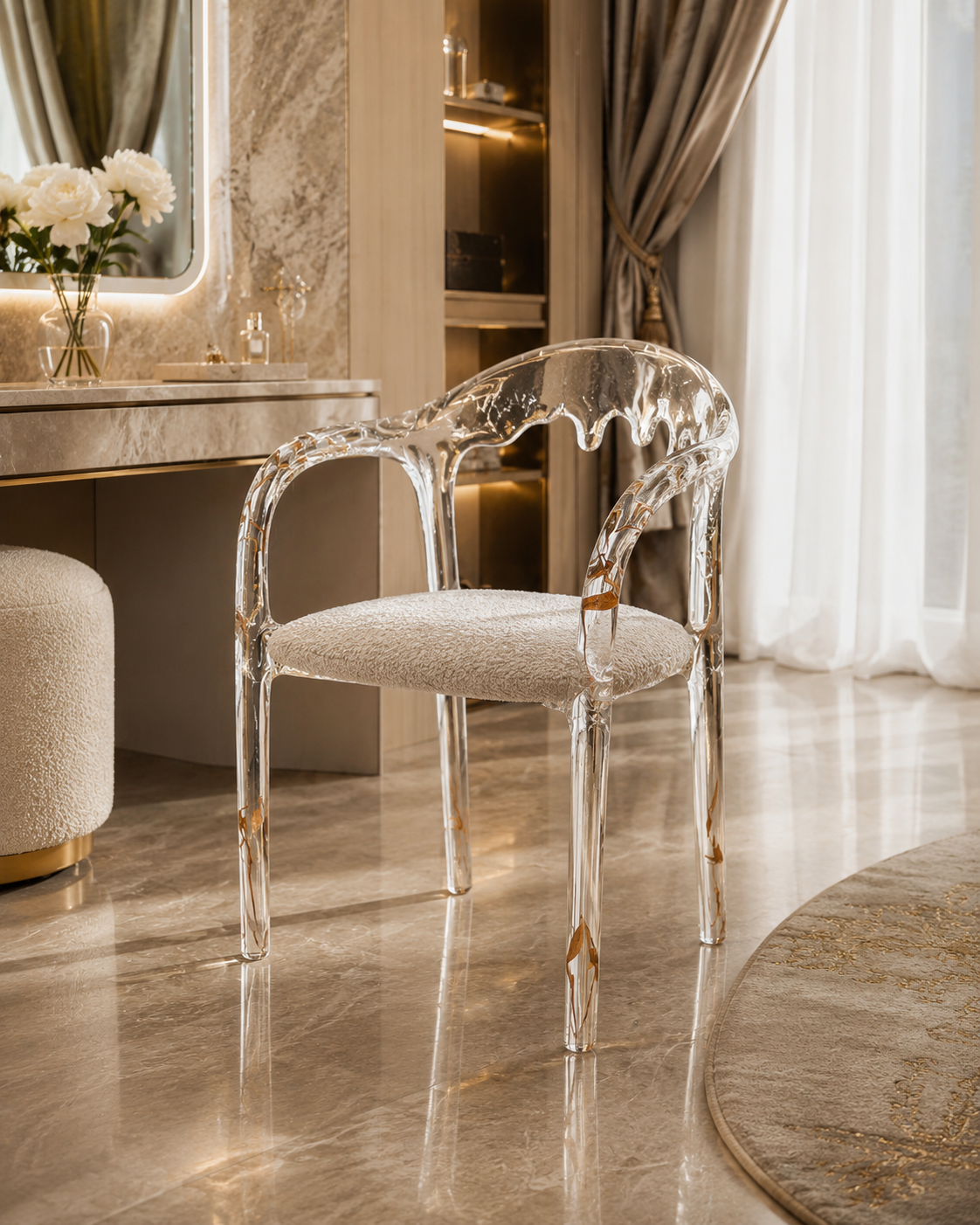
In a luxury jewelry boutique, clear Platinum Acrylic display tables or pedestals can reduce the visual competition around the merchandise while still providing precisely designed furniture volumes.
In a private club or high-end residence, a deep amber high-end resin console can work almost like a functional sculpture, introducing color without introducing another opaque surface.
A synthetic crystal dining table can combine a transparent sculptural base with metal, stone or another approved tabletop material. Bedside tables, benches, display units, reception consoles and occasional tables can use related transparent finishes to establish continuity across the project.
This approach is particularly relevant as designers build more sophisticated material libraries. AIA's Materials Pledge explicitly encourages the design community to improve how materials and manufacturers are evaluated and incorporated into specifications and product libraries. At the same time, the continued expansion of luxury hospitality means that designers increasingly need material ideas that can move from one exceptional prototype to a repeatable project solution.
That is where transparent furniture has evolved.
It is no longer simply the “invisible table” placed in a small room. Contemporary resin, synthetic crystal and premium acrylic allow transparency itself to become a design material—sometimes quiet, sometimes colored, sometimes architectural and sometimes highly sculptural.
For designers, the real question is therefore not, “Should we use transparent furniture?”
The better question is, “What problem does transparency solve in this space?”
If the challenge is excessive visual weight, transparent furniture can open the composition. If the project needs to protect the visibility of stone, carpet, artwork or merchandise, it can reduce obstruction. If the designer needs a customized statement piece without adding another opaque material, synthetic crystal or colored resin can introduce depth and character through light. If an international project needs a recognizable family of furniture, a controlled transparent material palette can help create repeatable brand identity.
This is why transparent synthetic crystal furniture is becoming a meaningful new choice in high-end interiors.
Its value does not come from transparency alone. It comes from the ability to combine visual lightness, sculptural presence, controlled customization and a distinctive material identity within the same object.
And in a luxury market where designers are constantly asked to create spaces that feel new without becoming visually excessive, that combination can be extremely powerful.

READ MORE:
- How Can a Design Rendering Become Reality? The Critical Role of Synthetic Crystal Furniture in Connecting Design and Construction
- From Sample Approval to Mass Production: How Synthetic Crystal Furniture Can Make Project Delivery Smoother
- How to Avoid Repeated Material Revisions in Hotel and Commercial Space Projects
- Why More High-End Projects Are Building Unified Material Selection Standards: A New Solution with Synthetic Crystal Furniture
- Synthetic Crystal Acrylic Furniture: A New Breakthrough for High-End Brand Differentiation
- Why Are More Designers Seeing Synthetic Crystal Acrylic as a Material of the Future?
- Synthetic Crystal Acrylic Furniture: How Can Products Gain Stronger Visual Competitiveness?
- From Furniture Manufacturing to Spatial Art: New Possibilities Created by Synthetic Crystal Acrylic
- Synthetic Crystal Acrylic Furniture: Why Do High-End Spaces Increasingly Need a Sense of “Light Luxury Transparency”?


