In the world of boutique hospitality and luxury interiors, beautiful design is no longer enough. Guests, clients, and visitors expect spaces to feel distinctive, emotionally engaging, and visually memorable. The most successful environments are not simply well-decorated; they create an experience that lingers in the mind long after someone leaves.
This is one reason crystal-like furniture is becoming increasingly relevant in premium interior projects.
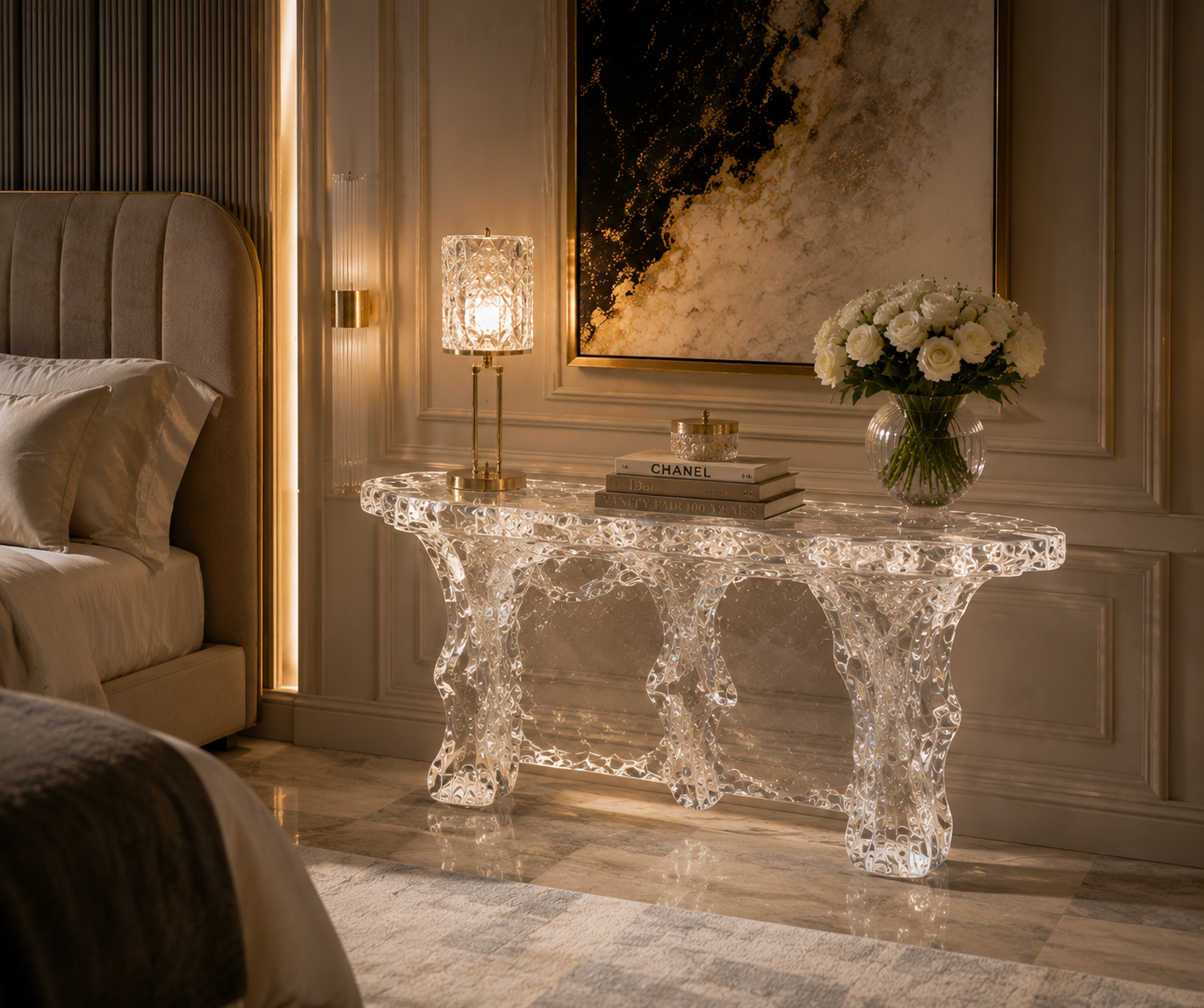
Made from high-end synthetic crystal, these furniture pieces combine transparency, optical depth, sculptural form, and strong customization potential. They can appear almost weightless while still having impressive physical presence. They can reflect architectural lighting, reveal surrounding materials, and introduce a sense of visual rarity that conventional furniture often cannot achieve.
For boutique hotels, luxury lounges, private clubs, high-end restaurants, flagship retail spaces, villas, and premium residential projects, synthetic crystal furniture offers more than function. It becomes part of the atmosphere, the brand identity, and the emotional memory of the space.
That distinction matters because modern luxury is increasingly about how a place makes people feel.

Luxury Spaces Are Designed Around Memory
A memorable interior is rarely created by one element alone.
Architecture, lighting, scent, sound, furniture, artwork, materials, and service all contribute to the experience. Yet certain objects have a disproportionate impact because they immediately attract attention and become visual reference points.
Statement furniture often plays this role.
A guest may not remember the exact finish of a wall, but they may remember the extraordinary transparent table in the center of a hotel lobby.
They may forget the color of a corridor, but remember the sculptural console that appeared to glow under the lighting.
This is especially important for boutique hotels and luxury hospitality spaces, where differentiation is essential.
Large hotel chains often rely on recognizable brand standards. Boutique hotels, by contrast, usually compete through personality, uniqueness, and emotional storytelling.
Synthetic crystal furniture supports this objective because it can be customized into forms that feel exclusive to a particular project.
Instead of simply furnishing a room, designers can create an object that becomes part of the identity of the property.
Why Crystal-Like Furniture Fits Modern Luxury
Traditional luxury interiors frequently relied on visual weight.
Marble, dark timber, brass, velvet, carved details, and other substantial materials communicated richness and permanence.
These materials remain important, but modern luxury has expanded.
Today, many designers are creating environments that feel lighter, more open, and more refined. Rather than emphasizing decoration, they focus on proportion, material quality, spatial clarity, and carefully controlled visual contrast.
Synthetic crystal fits naturally into this approach.
Its transparency introduces luxury without visual heaviness.
A large synthetic crystal coffee table can occupy a significant amount of physical space while allowing the floor beneath it to remain visible.
A transparent console can add function without covering architectural details.
A sculptural side table can introduce visual interest without making the room feel crowded.
This balance between presence and lightness makes the material especially useful in contemporary luxury environments.
The Power of Transparency in Hospitality Design
Transparency changes how people perceive space.
Opaque furniture creates visual boundaries. Transparent furniture can soften them.
In a hotel lobby, where designers often want to create a feeling of openness, transparent furniture can help maintain long sightlines.
In smaller boutique properties, this can make public areas feel more spacious.
In luxury suites, transparent furniture can preserve views toward windows, artwork, or architectural features.
The effect is subtle but powerful.
A clear synthetic crystal table does not disappear completely. Its polished edges, thickness, and reflections create presence. Yet because the viewer can see through it, the object feels less visually dominant than a comparable piece made from opaque material.
This makes synthetic crystal particularly effective when designers want furniture to support the architecture rather than compete with it.
Boutique Hotels Need Signature Moments
Boutique hotels succeed when guests feel they have discovered something unique.
This requires more than good service and comfortable rooms. The interior must contain memorable visual moments.
These moments might include a dramatic staircase, an unusual chandelier, a distinctive piece of artwork, or a custom furniture installation.
Synthetic crystal furniture can become one of these signature elements.
A large transparent reception desk, for example, can create an immediate first impression.
A sculptural table positioned beneath a feature light can define the center of a lounge.
A custom console in a corridor can transform a transitional area into a design moment.
Because synthetic crystal can be produced in customized dimensions and forms, designers have the freedom to create pieces that respond directly to the architecture.
This allows furniture to become part of the storytelling of the hotel.
Arrival Experience Matters More Than Ever
The first few minutes inside a luxury property are critical.
Guests quickly form impressions about quality, originality, and atmosphere.
This is why hotel lobbies and reception areas receive so much design attention.
Furniture in these spaces must do more than provide seating or surfaces.
It must communicate the identity of the property.
Synthetic crystal can be especially effective in arrival zones because it interacts strongly with lighting and architectural scale.
A carefully designed transparent reception element can feel futuristic and refined.
A thick synthetic crystal console can create depth and brilliance without blocking the visual flow of the lobby.
When paired with stone, metal, or textured wall finishes, the contrast can make the furniture appear even more distinctive.
The result is a first impression that feels intentional rather than generic.
Crystal-Like Furniture Responds Beautifully to Light
Lighting is one of the most important tools in luxury hospitality design.
It creates mood.
It influences color.
It guides attention.
It changes how materials are perceived.
Synthetic crystal can become an active participant in this process.
Light can pass through transparent surfaces, reflect from polished edges, emphasize thickness, and create subtle visual depth.
During the day, natural light may make the furniture appear clean and almost invisible.
At night, warm or directional lighting can transform the same piece into something more dramatic.
This ability to change throughout the day is particularly valuable in hotels and luxury restaurants, where spaces often need to support different moods.
A lounge may feel bright and open in the afternoon, then intimate and atmospheric in the evening.
Synthetic crystal furniture can adapt visually without physically changing.
Restaurants and Bars Use Furniture to Shape Atmosphere
High-end restaurants and bars increasingly compete through design as much as cuisine.
Guests want environments that feel special.
They want to sit somewhere that feels different from everyday life.
Furniture contributes significantly to this experience.
A synthetic crystal table or bar element can create visual contrast against softer materials such as leather, velvet, or wood.
Transparent furniture can also prevent smaller hospitality spaces from feeling overcrowded.
This is especially useful when designers need to maximize seating while maintaining an upscale atmosphere.
Statement pieces can also become photography points.
A distinctive table near a window, a sculptural transparent console, or a dramatic bar installation can encourage guests to take photos and share them online.
This extends the impact of the interior beyond the physical space.
Social Media Has Changed the Definition of Memorable Design
Luxury interiors are now experienced both in person and through screens.
Guests photograph hotel lobbies, restaurant tables, bathrooms, lounges, suites, and decorative details.
These images become part of the property's public identity.
This has changed the role of furniture.
A visually distinctive piece can contribute to organic social media exposure.
Synthetic crystal is well suited to this environment because it creates interesting reflections, depth, and interactions with light.
It can appear different from multiple angles.
It can create unusual photographic compositions.
And because transparent materials allow more of the surrounding space to remain visible, they can help produce visually layered images.
This makes synthetic crystal furniture not only a design feature, but potentially part of the marketing experience.
Luxury Retail Uses Transparent Furniture Differently
Luxury retail spaces have a different objective from hotels, but the design challenge is similar.
The environment must feel premium without distracting from the product.
Synthetic crystal offers a strong solution.
Transparent display furniture can support merchandise while remaining visually quiet.
A handbag placed on a clear pedestal can appear more prominent because the support structure does not compete with it.
Jewelry displayed on a transparent table can feel more elevated.
Cosmetics, watches, accessories, and decorative objects can gain visual emphasis through contrast with the clarity of the furniture.
At the same time, the polished quality of synthetic crystal reinforces the overall sense of luxury.
This balance is difficult to achieve with many conventional materials.
Private Clubs and Exclusive Lounges Need Distinction
Private clubs and invitation-only spaces depend heavily on atmosphere.
Their value is often linked to exclusivity.
Members expect environments that feel more curated, more private, and more distinctive than ordinary commercial interiors.
Furniture therefore becomes an important part of the experience.
Synthetic crystal pieces can introduce a sense of rarity without becoming visually excessive.
A custom side table, bar table, or sculptural console can create the impression that the furniture was designed specifically for the club.
This is important because exclusivity is strengthened when guests encounter objects they have not seen elsewhere.
Customization becomes part of the luxury proposition.
Customization Creates Stronger Emotional Connection
One of the biggest advantages of synthetic crystal furniture is the ability to customize.
Boutique hotels and luxury properties often require furniture that fits specific architectural conditions.
Standard products may not provide the correct dimensions, proportions, or visual identity.
Custom synthetic crystal furniture can be developed around the exact needs of the project.
Designers can adjust dimensions.
They can explore different thicknesses.
They can create geometric or sculptural forms.
They can consider clear, tinted, or other visual effects depending on the design direction.
This freedom allows furniture to become more closely connected to the architecture.
When a piece fits a space perfectly, it feels intentional.
That sense of intentionality is one of the strongest signals of luxury.
Transparency Enhances Other Premium Materials
Synthetic crystal works especially well when combined with contrasting materials.
Natural stone provides texture and visual weight.
Metal introduces precision and structure.
Wood brings warmth.
Leather and textiles add softness.
Synthetic crystal contributes clarity and lightness.
When these materials are combined carefully, each can make the others feel more expressive.
For example, a stone tabletop supported by a transparent synthetic crystal base can appear almost suspended.
A synthetic crystal console positioned against textured plaster can create a striking contrast between smooth clarity and tactile surface.
A clear side table beside velvet seating can make the softness of the fabric feel more pronounced.
These relationships help designers create richer material compositions.
Furniture Can Guide Movement Through a Space
Luxury interior design is not only about what people see.
It is also about how they move.
Furniture helps define circulation.
In hotel lobbies, tables and seating arrangements guide guests toward reception areas, elevators, lounges, and restaurants.
In retail spaces, display furniture influences how customers move through the store.
Transparent furniture can guide movement without creating strong visual barriers.
This is a valuable design advantage.
A large transparent table can organize a seating zone while still allowing visitors to understand the wider space.
A synthetic crystal display structure can define a retail area without blocking views toward other products.
This creates a more fluid experience.
The Illusion of Weightlessness Creates Emotional Impact
One of the most fascinating qualities of synthetic crystal furniture is the contrast between physical mass and visual lightness.
A thick piece of transparent material may be substantial, yet the viewer can still see through it.
This creates a sense of visual contradiction.
The furniture looks solid and almost immaterial at the same time.
Designers often use this effect to create surprise.
A large dining table may appear to float.
A console may seem lighter than its actual dimensions suggest.
A sculptural object may appear almost invisible from one angle and highly reflective from another.
These moments of visual discovery make spaces more engaging.
They encourage people to look again.
Craftsmanship Determines Whether the Effect Feels Luxurious
Synthetic crystal furniture only creates a premium impression when it is manufactured properly.
Because the material is transparent, every detail is exposed.
Edges must be refined.
Joints must be controlled.
Surfaces must be polished consistently.
Geometry must be precise.
Poor execution can quickly make transparent furniture look ordinary.
This is why craftsmanship is especially important in hospitality projects.
Guests may encounter furniture from multiple angles and very close distances.
They may touch the surfaces.
They may see the furniture under strong lighting.
High-end pieces must withstand this level of visual inspection.
Luxury is not created by transparency alone.
It is created by how carefully transparency is executed.
Statement Furniture Can Strengthen Brand Identity
A successful boutique hotel or luxury venue often has a recognizable visual language.
This may include certain colors, materials, shapes, or decorative motifs.
Custom synthetic crystal furniture can reinforce these ideas.
A hotel with a highly geometric brand identity may use angular transparent furniture.
A more organic property may prefer softer curves.
A fashion-focused hotel may use bold sculptural pieces.
A wellness resort may choose minimal transparent forms that maintain a calm atmosphere.
The material itself is adaptable.
Its identity comes from the design.
This makes synthetic crystal a useful tool for brand expression.
High-End Residential Spaces Use the Same Principles
The same strategies used in boutique hotels are increasingly appearing in luxury residences.
Homeowners want spaces that feel distinctive.
They want interiors that reflect personal taste rather than standard furniture collections.
Synthetic crystal can provide a strong statement without overwhelming the architecture.
A transparent dining table can make a room feel more spacious.
A sculptural coffee table can become the visual center of a living area.
A console can frame artwork without competing with it.
These pieces help create the kind of personalized atmosphere that luxury residential clients increasingly expect.
Large Spaces Benefit From Sculptural Scale
Hotel lobbies, villas, clubs, and luxury retail spaces often have generous architectural dimensions.
Small furniture can look insignificant in these environments.
Synthetic crystal allows designers to work at larger scales without creating excessive visual heaviness.
A substantial table can anchor a large room while preserving openness.
A wide console can provide architectural presence without blocking a wall treatment.
A large transparent installation can become a focal point while still allowing surrounding details to remain visible.
This makes the material particularly effective for large-volume spaces.
Smaller Spaces Benefit From Visual Lightness
Synthetic crystal is equally useful in compact luxury environments.
Boutique hotels often work with limited floor area.
Restaurants may need to maximize seating.
Retail stores may have narrow circulation paths.
Transparent furniture can reduce visual congestion.
A clear table occupies the same physical footprint as an opaque one, but the room may feel more open because the furniture does not create the same visual barrier.
This can make a significant difference in smaller spaces.
It allows designers to preserve functionality without sacrificing atmosphere.
Furniture Can Become a Destination Within the Interior
Some furniture pieces are so distinctive that they become destinations themselves.
Guests walk toward them.
They photograph them.
They sit around them.
They ask about them.
This level of interaction is valuable in hospitality design.
A dramatic synthetic crystal piece can become a social focal point.
In a lobby, it may define a gathering area.
In a lounge, it can create a central conversation zone.
In a restaurant, it may become the table guests specifically request.
These moments strengthen the connection between furniture and experience.
Durability and Practicality Still Matter
Memorable design must also function.
Hospitality spaces experience constant use.
Furniture must tolerate regular cleaning, repeated contact, movement, and daily operation.
Synthetic crystal furniture should therefore be designed with the specific application in mind.
Thickness must be appropriate.
Structural requirements must be understood.
Edges and surfaces must be suitable for the intended use.
Maintenance should be considered from the beginning.
For commercial projects, the best results come from balancing visual ambition with practical performance.
A furniture piece should not only look extraordinary on opening day.
It should remain convincing over time.
Designers Benefit From Early Manufacturer Collaboration
Custom synthetic crystal furniture often involves decisions that affect both aesthetics and engineering.
Designers may want unusual dimensions, large thicknesses, seamless forms, or complex geometry.
These ideas can require technical evaluation.
Early collaboration with an experienced manufacturer can help refine the concept before production begins.
The manufacturer can provide guidance on material behavior, structural requirements, bonding methods, polishing, transportation, and installation.
This does not reduce creative freedom.
It helps protect it.
When technical considerations are addressed early, designers are less likely to compromise the concept later.
The Best Luxury Furniture Feels Specific to the Place
One of the strongest signs of a well-designed luxury interior is that the furniture feels as though it belongs nowhere else.
It responds to the architecture.
It matches the scale.
It supports the lighting.
It reinforces the brand.
It fits the mood.
This is where custom synthetic crystal furniture becomes particularly valuable.
Instead of selecting a product designed for a general market, designers can create pieces that exist specifically for one environment.
That sense of specificity is powerful.
Guests may not know why the furniture feels right.
They simply feel that it does.
Memorable Experiences Are Built Through Layered Details
No single piece of furniture can create an entire luxury experience.
But furniture can play a major role.
The most effective hospitality interiors are created through layers.
Lighting supports furniture.
Furniture supports architecture.
Materials create contrast.
Artwork adds narrative.
Service adds emotional connection.
Synthetic crystal can become one of these layers.
Its transparency allows it to interact with everything around it rather than competing for dominance.
This is why it can feel both subtle and memorable.
Why Synthetic Crystal Is Becoming More Relevant in Luxury Projects
The growth of synthetic crystal furniture reflects wider changes in luxury design.
Clients want personalization.
Brands want differentiation.
Hotels want memorable environments.
Restaurants want visual identity.
Retailers want displays that support products.
Designers want materials that offer creative flexibility.
Synthetic crystal answers many of these needs at once.
It can be bold or quiet.
It can be minimal or sculptural.
It can occupy large spaces or support compact interiors.
It can stand alone or combine with other premium materials.
This versatility is one of its greatest strengths.
Choosing the Right Synthetic Crystal Furniture Manufacturer
For boutique hotels and luxury projects, manufacturing quality is essential.
A strong design can lose its impact if the material lacks clarity, the proportions are poorly executed, or the finishing is inconsistent.
Designers should therefore look beyond basic production capability.
A suitable manufacturer should understand custom dimensions, high-end polishing, precise bonding, structural requirements, visual proportion, packaging, and installation.
Communication is equally important.
Luxury projects often evolve.
Drawings may change.
Details may be refined.
The manufacturer should be capable of supporting this process while protecting the original design intention.
The goal is not simply to manufacture furniture.
It is to translate a design idea into a finished object that performs beautifully inside the space.
Conclusion: From Beautiful Spaces to Unforgettable Ones
Boutique hotels and luxury interiors are increasingly designed around experience, not decoration alone.
Guests remember how a space made them feel.
They remember the unexpected detail in the lobby, the extraordinary table in the lounge, the way light moved through a transparent surface, or the piece of furniture that seemed to belong nowhere else in the world.
Synthetic crystal furniture can help create these moments because it combines visual lightness, optical depth, customization, sculptural possibility, and a strong relationship with architecture and lighting.
For hotel developers, interior designers, luxury brands, and private clients, its value lies in more than its appearance. The right piece can guide movement, strengthen identity, enhance other materials, create social moments, and turn an ordinary functional object into part of the emotional memory of a place.
In luxury design, the most successful furniture does not simply fill the space between walls; it helps transform the space into a story people want to remember.
And when one unforgettable piece becomes the image guests carry home with them, the next question becomes impossible to ignore: what could your space make people remember before they even realize why?
READ MORE:
- The Hidden Factors That Make Transparent Furniture Look Expensive or Cheap
- Why Luxury Buyers Choose Statement Furniture Instead of Ordinary Interior Pieces
- How Designers Are Redefining Acrylic as a Premium Material for Modern Commercial Spaces
- Why High-End Acrylic Furniture Is Becoming a New Choice for Luxury Interior Projects
- Il mobile non deve essere soltanto un mobile: creare un punto focale negli spazi commerciali con il cristallo sintetico
- Far risplendere lo spazio più di notte che di giorno: 3 strategie di illuminazione per gli arredi in cristallo sintetico
- Want a More Memorable Commercial Space? Try Synthetic Crystal Furniture That "Catches the Light"
- Quando si accende la luce, il mobile cambia: come gli arredi in cristallo sintetico diventano installazioni di luce e ombra?
- Come creare un senso di lusso stratificato negli spazi commerciali con luce, ombra e arredi in cristallo sintetico


