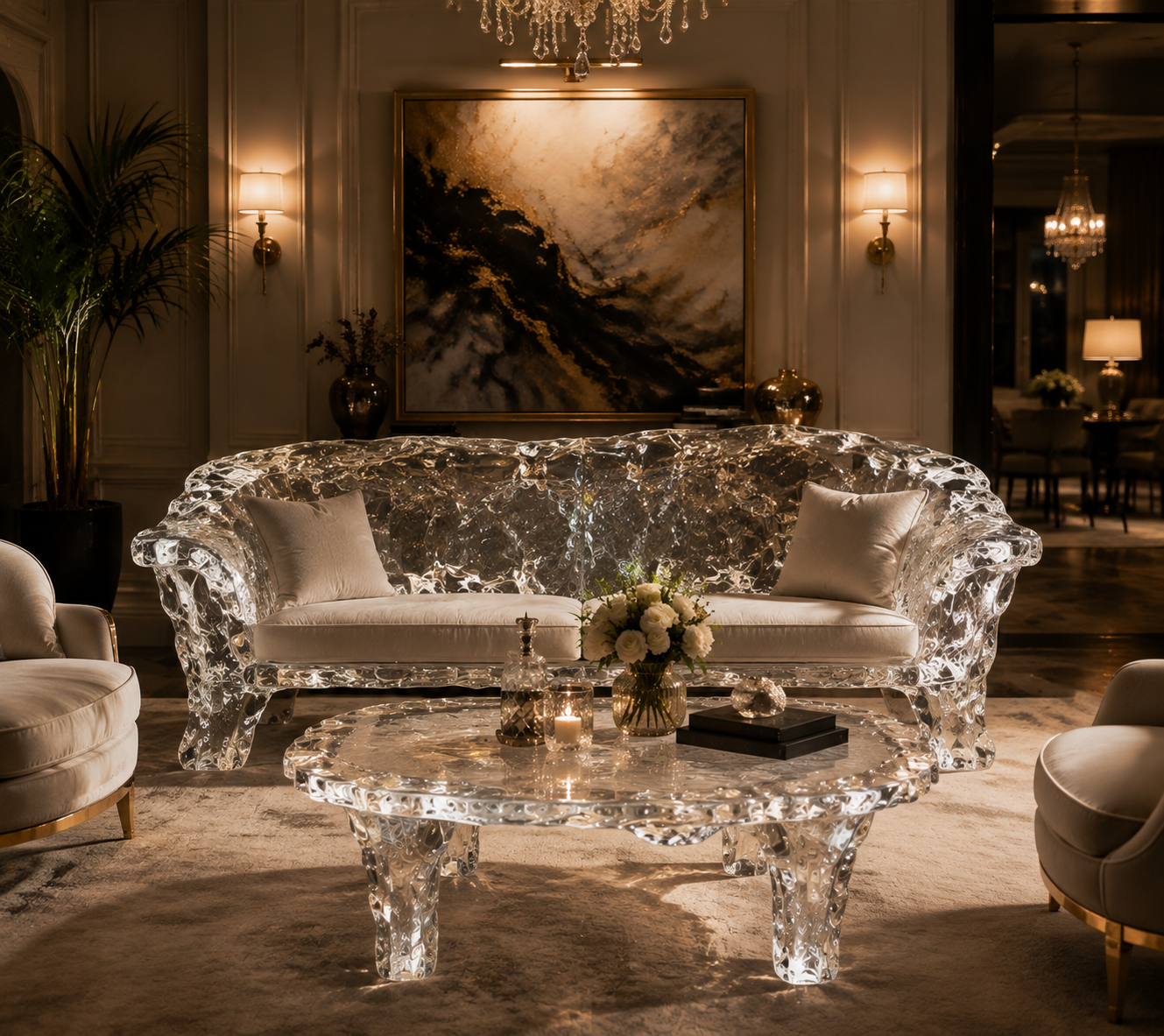
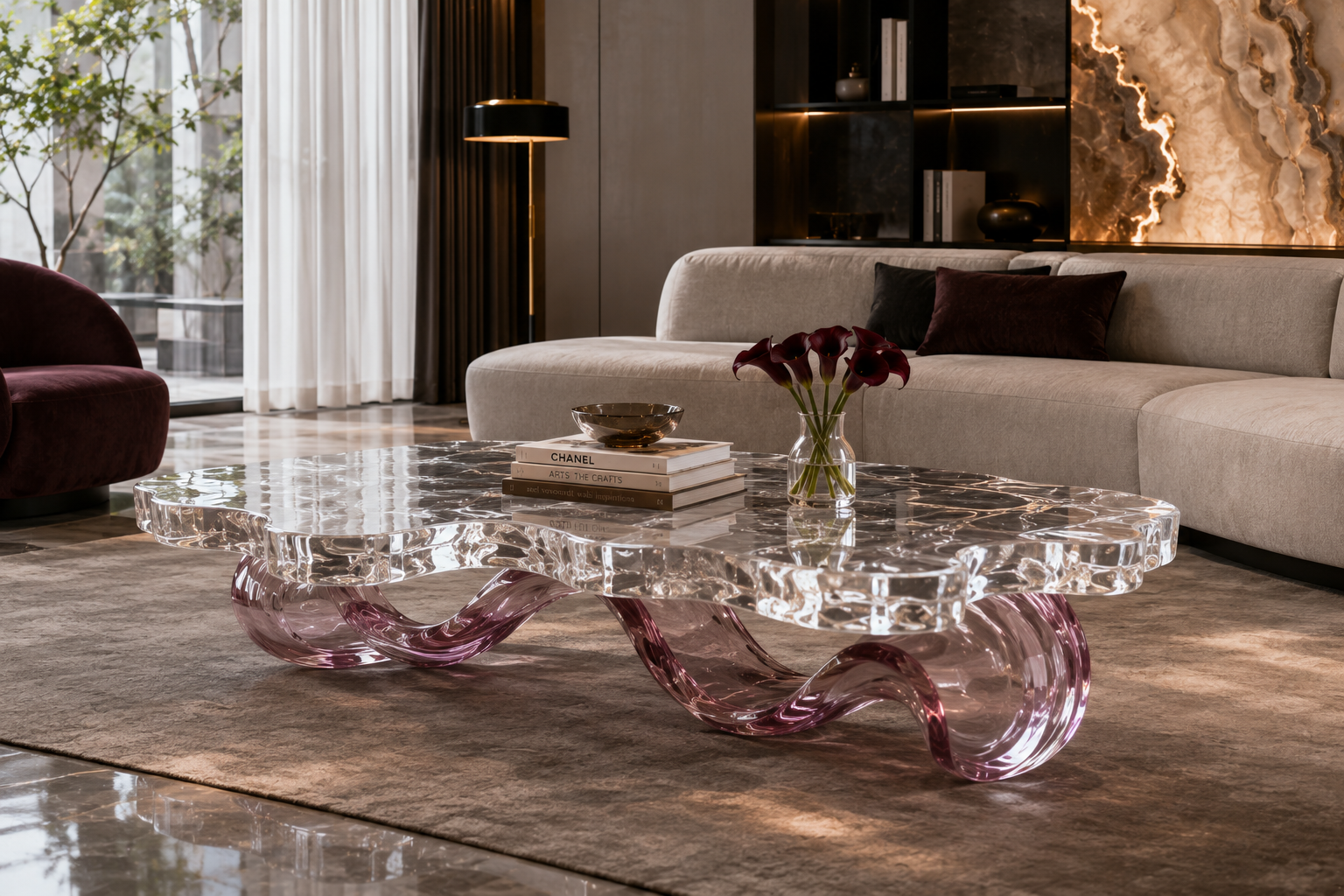
For luxury furniture, material selection is often discussed in terms of appearance first: transparency, depth, color, gloss, sculptural freedom, and the ability to create a visual statement. Yet for furniture made from synthetic crystal, high-end resin, or premium “platinum” acrylic, the factor that often determines whether a project still looks successful several years later is much less visible at the specification stage: weather resistance.
Weather resistance is not only an outdoor-furniture issue. Transparent furniture positioned beside floor-to-ceiling windows, hotel lobby installations exposed to strong daylight, poolside tables, resort furniture, retail displays, yacht interiors, and semi-outdoor hospitality spaces can all experience combinations of ultraviolet radiation, heat, moisture, temperature cycling, cleaning chemicals, and physical wear.
That is why a beautiful prototype is not enough. A material must remain beautiful under the conditions in which the furniture will actually be used.
1. Weather Resistance Is a Project Risk, Not Just a Material Specification
When a furniture project fails because of weathering, the problem rarely remains limited to the material itself. A transparent table that gradually yellows can change the visual language of an entire hotel lobby. A resin console that develops surface haze may no longer match the luxury finish approved by the designer. An acrylic component that moves excessively during thermal cycling can place stress on bonded joints or metal connections.
For contract furniture projects, these changes can create replacement costs, installation disruption, warranty disputes, delayed handovers, and damage to the reputation of the designer, contractor, supplier, and furniture manufacturer.
The furniture industry increasingly recognizes that environmental durability must be considered as part of performance engineering. BIFMA, the Business and Institutional Furniture Manufacturers Association, noted in its 2025 Outdoor Furniture Whitepaper that manufacturers developing outdoor products must account for environmental conditions including direct UV exposure, high heat and humidity, cold, and moisture. The whitepaper also highlights an important engineering reality: creating one material-independent accelerated-weathering rule that reliably connects laboratory aging with complete furniture safety and performance is extremely difficult.
That point matters when buying synthetic crystal or transparent resin furniture. A statement such as “UV resistant” should never be treated as the final specification. Weather resistance depends on the polymer chemistry, stabilizer package, pigments, casting process, thickness, curing condition, surface treatment, assembly design, and final environment.
International test standards reflect the same approach. ISO 4892-3:2024 describes exposure of plastics to fluorescent UV radiation, heat, and water in equipment intended to reproduce important weathering effects associated with solar radiation and moisture. ASTM D4329 similarly addresses deterioration of plastics associated with light, heat, and water.
In other words, weather resistance should be discussed at the beginning of a furniture project, not after discoloration appears.
2. What Weathering Actually Does to Transparent Furniture Materials
Weathering becomes particularly critical for transparent and translucent furniture because degradation is much easier to see.
With wood or an opaque painted surface, a small color shift may be visually tolerable. In a crystal-clear dining table, transparent pedestal, resin sculpture, acrylic bench, or decorative console, even a relatively small change in yellow tone, haze, gloss, or internal clarity can alter the perceived quality of the entire product.
Synthetic crystal furniture is often produced from specially formulated cast resin systems designed to create optical depth and a crystal-like appearance. High-end resins also allow manufacturers to create thick sections, embedded decorative effects, unusual geometries, gradients, and sculptural forms that would be difficult to manufacture from conventional glass. The advantage is enormous design freedom, but resin chemistry must be matched carefully to the environment.
Scientific research shows why. A peer-reviewed study published in Polymer Testing investigated epoxy and vinyl ester resins under thermal, UV, and natural aging. The researchers found that resin yellowing was associated with oxidation reactions that generate light-absorbing chemical structures known as chromophores. The study also found different yellowing behavior between resin chemistries, demonstrating that “resin” cannot be treated as one universal material category.
Moisture and temperature matter as well. Research into hygrothermal aging of a common amine-cured epoxy found that yellowing could occur under heat-and-humidity conditions even when the material was protected from UV radiation. The researchers reported that the discoloration was not reversed simply by drying the material again.
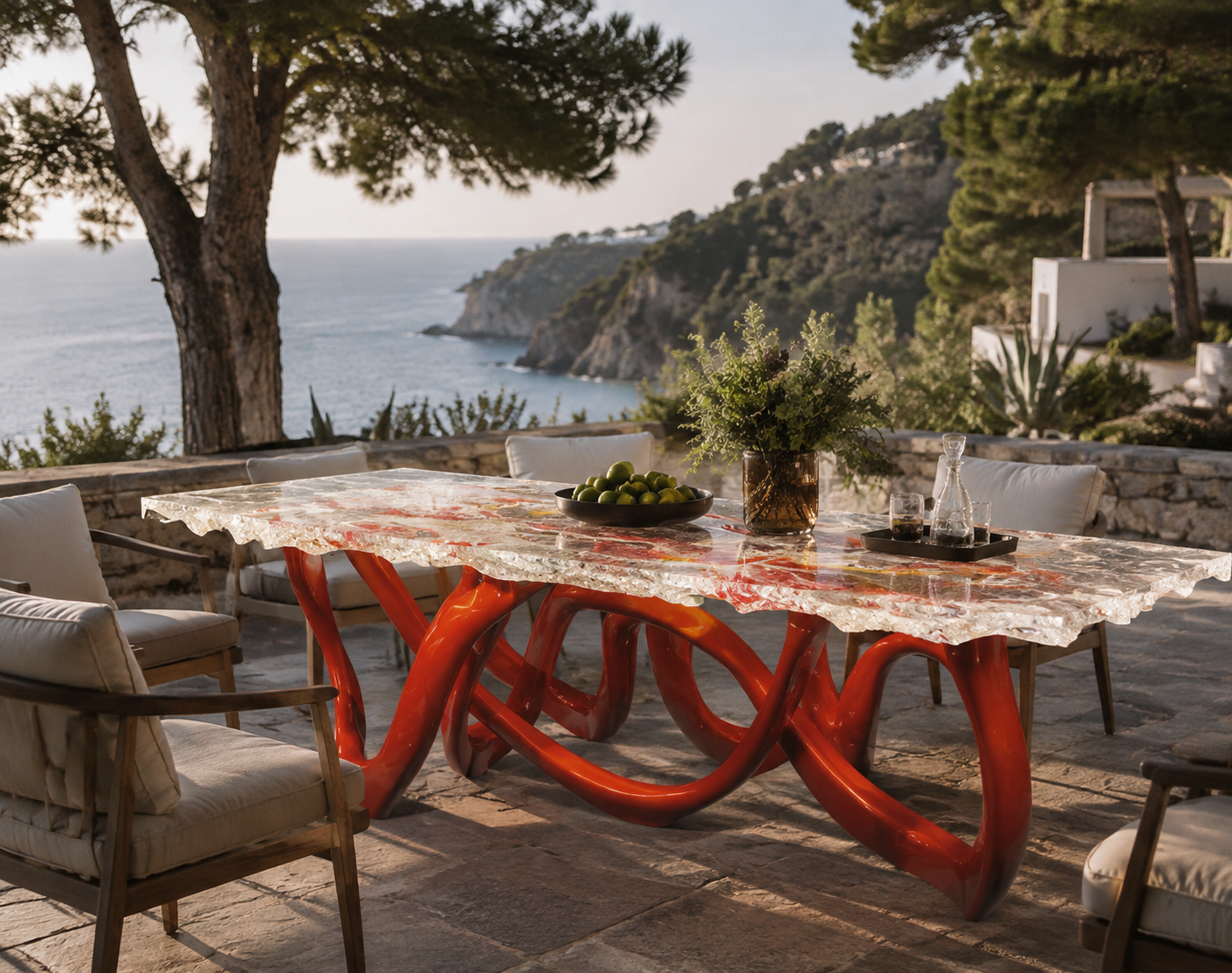
This is highly relevant to hospitality and residential furniture. Consider a transparent resin side table installed beside a swimming pool. During the day it may experience sunlight and elevated surface temperatures; at night, temperature drops and condensation may occur. The furniture may also encounter water, sunscreen, cleaning products, and repeated wet-dry cycles. A material selected only because a showroom sample looked clear on the day of approval has not necessarily demonstrated that it can survive that service environment.
Premium acrylic, including high-quality cast PMMA often marketed in the luxury furniture sector as platinum or ultra-clear acrylic, has a different performance profile. PMMA is widely selected where long-term optical quality and weatherability are important, but grade, processing quality, surface condition, joint design, and intended application still matter. Material family alone does not eliminate the need for engineering.
3. Key Material-Selection Factor No. 1: Ask for Weathering Evidence for the Exact Material System
The first selection rule is simple: do not buy a weather-resistance claim; buy evidence.
When a supplier describes synthetic crystal, high-end resin, or acrylic as “anti-yellowing,” “UV resistant,” or “outdoor grade,” the next question should be: tested according to what method, under what conditions, for how long, and what changed after exposure?
ASTM D4329 is useful because it addresses fluorescent-UV exposure of plastics while emphasizing that the operating conditions must be documented. ASTM also recommends comparison with a material of known performance and notes that multiple specimens should be tested; the standard recommends at least three replicates for statistical evaluation. Just as importantly, ASTM warns that the exposure does not reproduce every local environmental factor, specifically including conditions such as atmospheric pollution, biological attack, and saltwater exposure.
That last detail can completely change a real furniture specification.
If a synthetic crystal table is intended for a luxury coastal resort, a UV-weathering report alone should not automatically be interpreted as evidence of resistance to a marine environment. If the furniture will stand beside a swimming pool, resistance to pool chemicals and cleaning agents also needs consideration. If the product will remain indoors but directly behind architectural glazing, the relevant light exposure may differ from full outdoor exposure; ISO 4892 specifically recognizes both global solar radiation and solar radiation filtered through window glass in weathering methodology.
The best material evaluation therefore begins with the project environment and works backward toward the test program.
This principle also explains why premium grades command higher prices when their performance is properly documented. Röhm, one of the major global PMMA manufacturers, markets specific PLEXIGLAS products with strong weatherability claims; for some designated products it provides a 30-year guarantee against yellowing. That should not be interpreted as a 30-year guarantee for every acrylic sheet on the market. Instead, it demonstrates exactly why the specific grade, formulation, production control, and documented performance behind the material matter.
For luxury furniture buyers, the correct comparison is therefore not simply resin versus acrylic. It is tested formulation versus unverified formulation.

4. Key Material-Selection Factor No. 2: Protect Color and Optical Clarity, Not Only Structural Strength
The second key factor is to define what “failure” means for transparent furniture.
A material can remain mechanically intact and still fail a luxury project aesthetically.
Suppose a 60-millimeter-thick synthetic crystal coffee table remains strong after environmental exposure but develops a noticeable yellow cast. From an engineering perspective, the table may still carry its design load. From the perspective of an interior designer who specified a water-clear appearance, however, the project has already failed.
For transparent furniture, weathering evaluation should therefore include objective optical measurements rather than depending exclusively on visual inspection.
ASTM D2244 provides procedures for calculating instrumental color differences and identifies modern color-difference measurements such as ΔE00 as useful for industrial and commercial color evaluation, including plastics. This allows manufacturers and buyers to compare a reference sample with an aged sample and quantify color change instead of describing it vaguely as “slightly yellow.”
ASTM D1003 addresses haze and luminous transmittance in transparent plastics and specifically notes that these measurements are useful for quality-control and specification purposes. For crystal-clear furniture, this is critical. A material may retain much of its light transmission while increased light scattering creates a smoky or hazy appearance that makes the furniture look older or lower in quality.
This is where synthetic crystal, high-end resin, and platinum acrylic should be evaluated differently according to the visual objective.
A sculptural resin console containing intentional pigment, clouds, inclusions, or artistic textures may tolerate a small optical shift differently from an absolutely water-clear acrylic dining table. A colored synthetic crystal pedestal may require tighter control of hue consistency from batch to batch. A transparent acrylic table designed for a luxury boutique may be especially sensitive to haze, polishing marks, adhesive lines, and surface scratching because strong retail lighting makes every imperfection visible.
For this reason, an effective specification should define the appearance that must be maintained after environmental exposure. The discussion should not end with “no cracking.” It should also address acceptable color change, haze development, gloss retention, surface condition, and the appearance of joints.
In transparent luxury furniture, optical durability is functional durability.
5. Key Material-Selection Factor No. 3: Design for Heat, Moisture, Joints, and the Real Service Environment
The third factor is to remember that a piece of furniture is a system, not a laboratory coupon.
A perfectly weather-resistant material can still produce a poor furniture project if the design ignores dimensional movement, moisture, fastening methods, bonding systems, edge finishing, metal interfaces, or maintenance conditions.
ASTM D570, the standard test method for water absorption of plastics, explains that moisture content can be related to changes in properties including mechanical strength, appearance, and dimensions. It also notes that water absorption can differ according to factors such as specimen geometry and exposed edges.
For furniture designers, this is a reminder that material data from a flat test specimen must be translated into the geometry of the finished product.
A thick cast-resin base, for example, may respond differently to heating and cooling than a thin decorative resin panel. A transparent acrylic top mounted to a stainless-steel frame brings together materials with different thermal movement characteristics. If the fastening system is too rigid, environmental temperature changes can concentrate stress around holes or bonded joints. If an adhesive is visible through a clear component, discoloration or deterioration of the adhesive can become an aesthetic defect even when the acrylic itself remains transparent.
This is one reason experienced transparent-furniture manufacturers pay close attention to tolerances, edge geometry, bonding area, polishing sequence, connection design, and installation conditions rather than treating fabrication as a purely cosmetic process.
The intended cleaning regime is equally important. Furniture in a private residence may be cleaned gently once a week. Furniture in a hotel, restaurant, luxury retail store, or commercial lobby may be cleaned several times a day using products chosen by the facility operator rather than the furniture manufacturer. Surface durability therefore has to be considered together with environmental durability.
For a real project, the correct question is not “Is this material weather resistant?”
The better question is: “Will this material, with this thickness, surface finish, joint design, adhesive system, color, installation method, cleaning regime, and environmental exposure, maintain the appearance and performance promised to the client?”
That is the question that separates material purchasing from furniture engineering.
6. Choosing Between Synthetic Crystal, High-End Resin, and Platinum Acrylic for a Successful Project
There is no single best transparent furniture material. The best choice depends on what the designer is trying to achieve and where the furniture will be used.
Synthetic crystal is especially valuable when the project demands visual depth, thick monolithic forms, artistic casting, embedded elements, unusual colors, or highly sculptural geometry. It can create furniture that looks closer to a carved crystal object than to a conventional plastic component. For this category, resin formulation and curing control are critical because the final optical performance depends on the complete material system, not merely on the word “resin.”
High-end resin provides similar freedom and can be engineered for different levels of transparency, color, hardness, impact behavior, and weather resistance. Yet peer-reviewed aging research demonstrates that resin chemistry strongly influences discoloration behavior, making it important to select formulations developed and validated for the intended exposure rather than assuming that every clear resin will age in the same way.
Premium platinum acrylic, generally based on high-quality PMMA, is particularly attractive for designs requiring high transparency, crisp edges, polished surfaces, precision-machined components, and consistent optical appearance. Its established use in demanding transparent applications and the long-term weatherability documented for specific premium PMMA products illustrate why it is often considered for high-end furniture with significant light exposure.
The right decision may also involve combining materials. A project could use platinum acrylic for highly exposed transparent structural elements, synthetic crystal for sculptural cast components, and specialized high-end resin for decorative or colored sections. The objective should not be to force one material into every design, but to use each material where its performance and manufacturing advantages create the greatest value.
For architects, interior designers, furniture brands, dealers, and hospitality procurement teams, weather resistance should therefore become part of the design conversation from the first sample review. Ask where the furniture will be installed. Define UV, moisture, temperature, and cleaning exposure. Request relevant test data. Establish acceptable optical change. Review the complete assembly rather than the raw material alone.
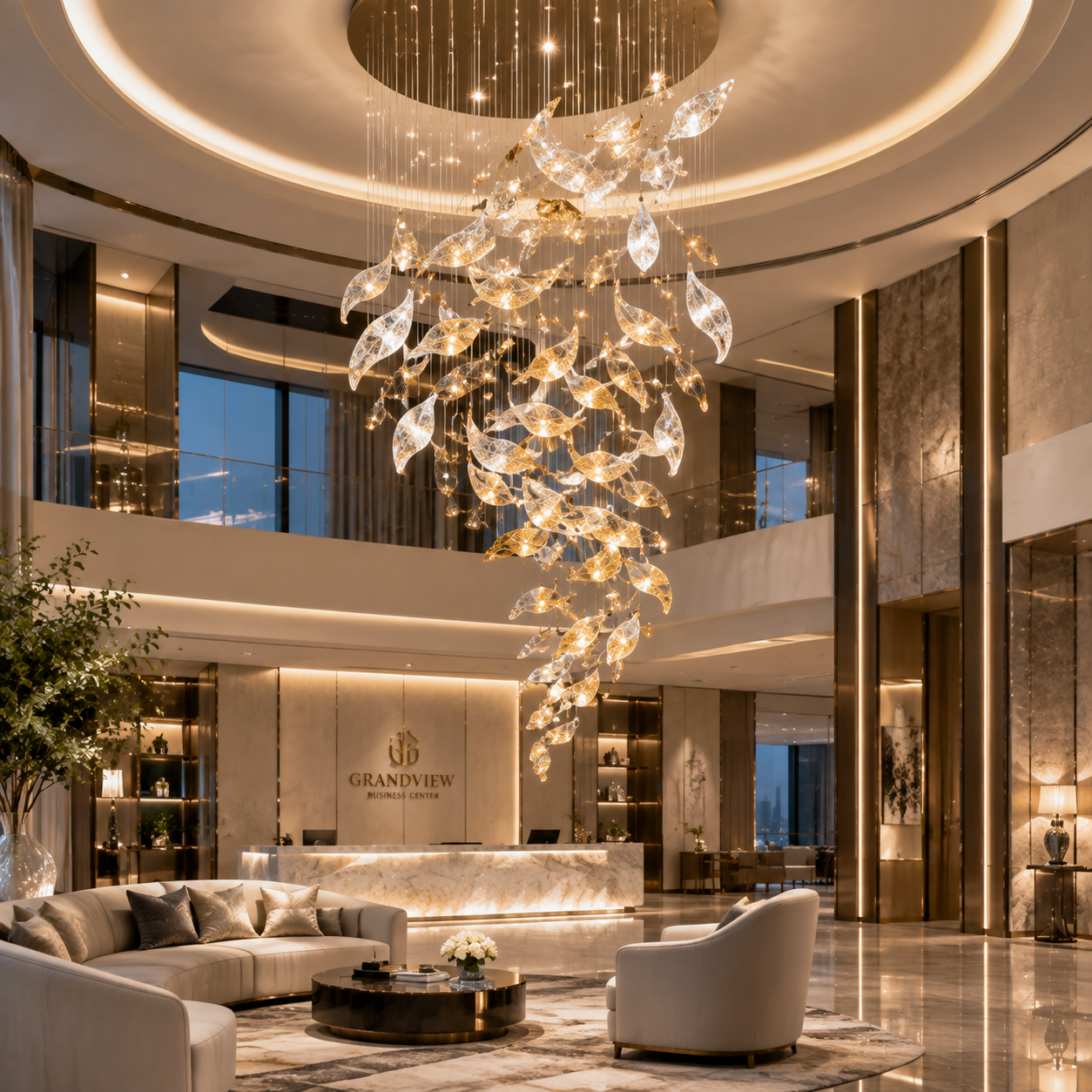
Luxury furniture is ultimately purchased for the way it makes a space feel. A synthetic crystal table, transparent resin console, or platinum acrylic installation may be selected precisely because it creates an extraordinary impression of lightness, depth, and clarity.
Weather resistance is what helps preserve that impression.
When material selection is based on real service conditions and measurable performance rather than appearance alone, weatherability stops being a technical afterthought and becomes what it should be: one of the foundations of a successful furniture project.
READ MORE:
- Perché alcuni mobili trasparenti diventano il punto focale della stanza anche senza colore, decorazioni o forme eccessive
- Dal piedistallo alla consolle: quali mobili in cristallo sintetico valorizzano meglio opere d’arte, prodotti e oggetti da collezione
- Un tavolo quasi invisibile può cambiare una stanza: come il volume visivo dei mobili influenza la percezione dello spazio
- Perché hotel, boutique e showroom scelgono mobili trasparenti quando vogliono mostrare di più senza riempire di più
- Quando un mobile trasparente funziona davvero: come usare il cristallo sintetico senza rendere lo spazio freddo o impersonale
- Which Overseas Projects Are Suitable for Synthetic Crystal Furniture? A Material Guide Based on Temperature, Humidity, and Light Exposure
- Why Does the Same Crystal Furniture Need Different Material Specifications in Different Countries?
- How Should Furniture Materials Be Selected for High-Temperature, High-Humidity, and High-Light Environments?
- How Does Furniture Material Selection Change Across Different Climate Regions?


