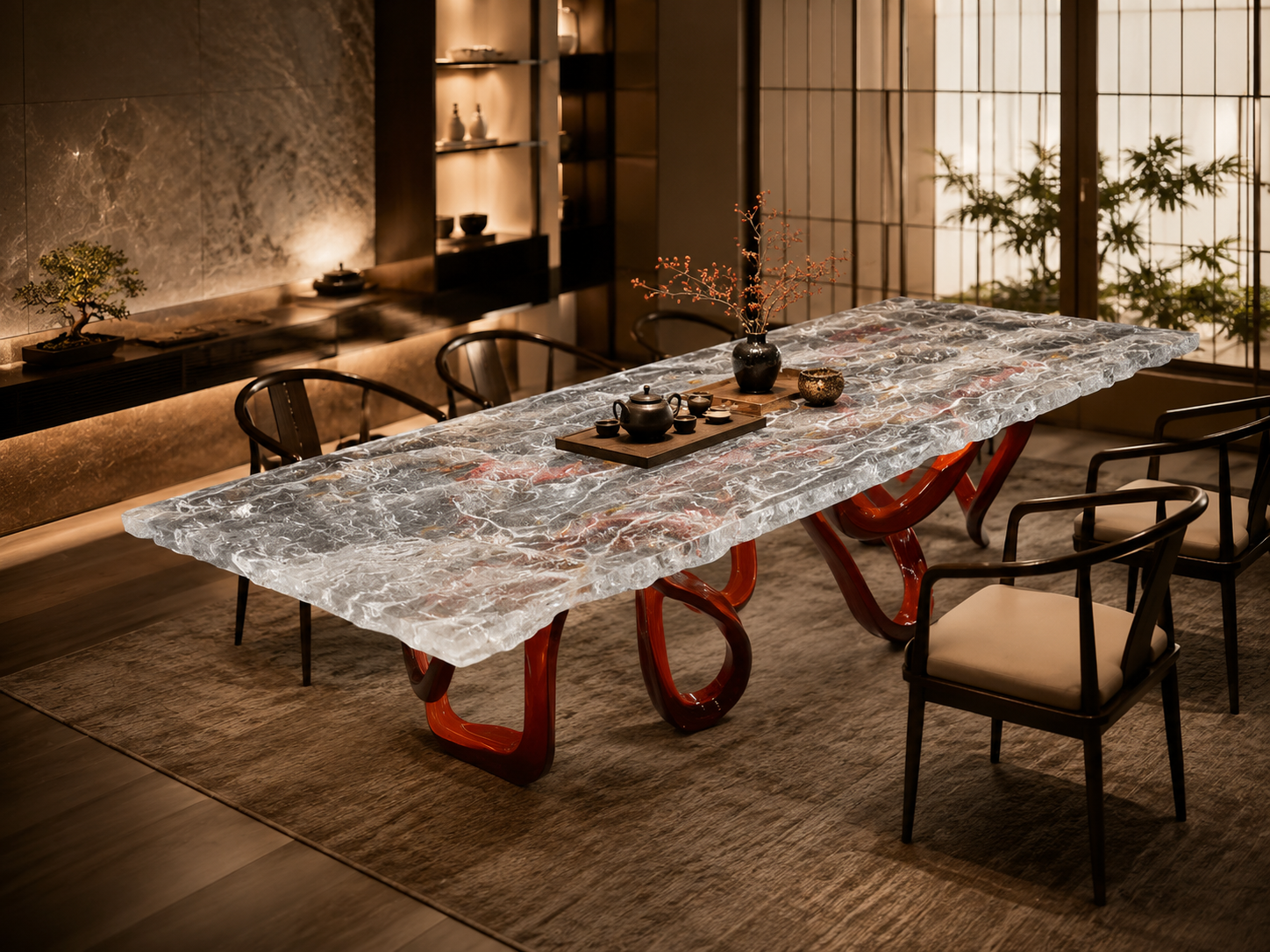
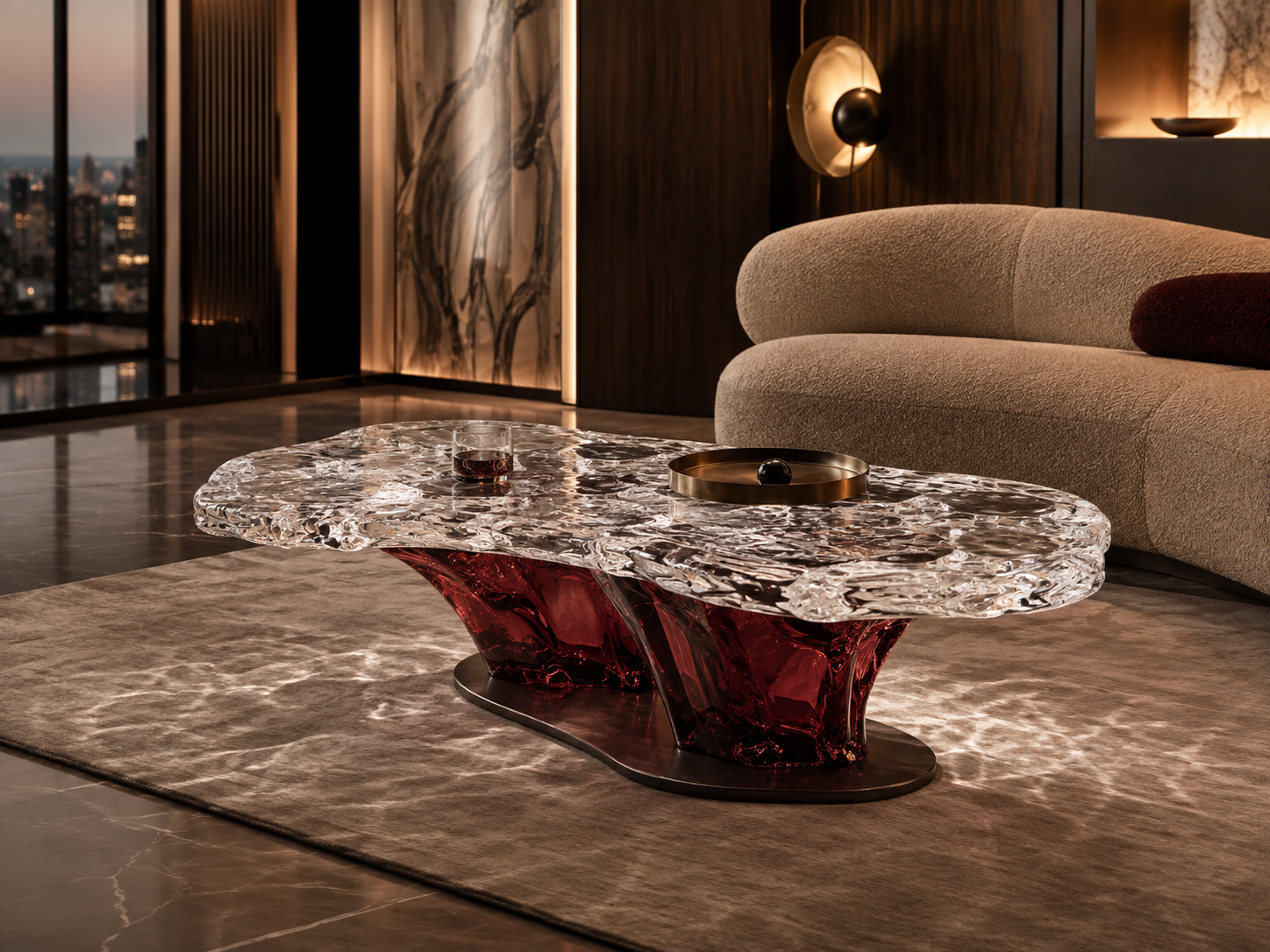
A customer may enter a hotel lobby, luxury residence, boutique, restaurant, or showroom without knowing anything about interior materials. Yet within seconds, certain spaces feel more refined than others. Their attention may settle on the edge of a transparent console, the glow inside a resin table, the reflection moving across an acrylic chair, or the way daylight passes through a sculptural furniture piece.
This reaction is not accidental.
People do not experience furniture only as an object with a function. They experience the interaction between material, light, proportion, surface quality, surrounding finishes, and space. This is particularly important for transparent and translucent furniture made from synthetic crystal materials, premium casting resins, and high-clarity acrylic.
These materials can manipulate light in ways that conventional opaque furniture cannot. When properly designed and manufactured, they can create depth without visual heaviness, establish focal points without overcrowding a room, and make furniture appear different as lighting conditions change.
Understanding why customers notice these details helps explain why material selection has become such an important part of luxury interior design.
1. The Eye Often Notices Light Before It Understands the Furniture
When people walk into an unfamiliar interior, they rarely analyze every chair, table, wall finish, and decorative object individually. Their visual system first responds to broader differences in brightness, contrast, reflection, color, shape, and movement.
Transparent and highly polished materials are particularly interesting because their appearance changes with their surroundings.
Research published in Vision Research by material-perception scientist Roland Fleming explains that humans are remarkably skilled at identifying materials visually, even though the appearance of a material can change dramatically depending on its lighting, viewpoint, and shape. Rather than simply measuring a surface physically, the brain interprets patterns such as reflections and highlights to understand what it is seeing.
This helps explain why a clear synthetic crystal side table can attract attention even when its form is relatively simple.
A solid transparent leg positioned near a window may capture daylight along its polished edges. A cast-resin coffee table may reveal different layers of depth as a person walks around it. A premium acrylic console can almost disappear from one angle, then produce a strong highlight from another.
The furniture is therefore not visually static.
It continually responds to the environment.
For designers, this means the attraction of transparent furniture does not necessarily come from making the shape more complicated. In many projects, a cleaner form actually gives light more opportunity to become part of the design.
Consider a luxury hotel reception area with marble flooring, textured plaster walls, and a large synthetic crystal console. If the console is positioned where natural or architectural lighting reaches its edges, the object can provide visual interest without requiring another color or decorative pattern.
This is an important distinction in high-end interiors. Luxury does not always need to mean adding more. Sometimes it means giving one carefully selected material enough space and light to express itself.
2. Transparency Changes the Visual Weight of Furniture and the Perception of Space
One of the most practical advantages of transparent furniture is its unusual relationship with visual mass.
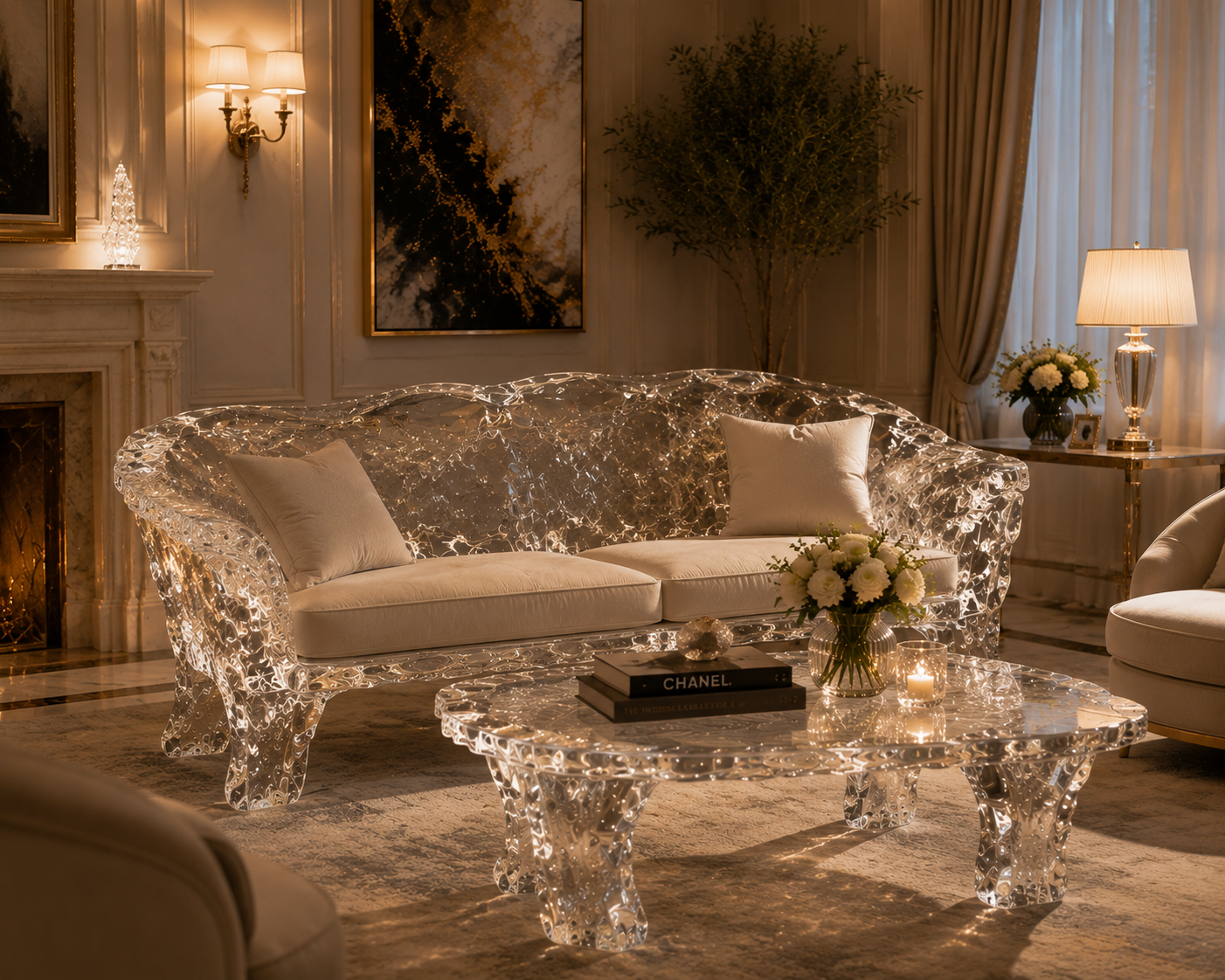
An opaque stone, timber, or lacquered table clearly interrupts the viewer's sightline. A transparent acrylic or synthetic crystal table may occupy approximately the same physical dimensions while appearing considerably lighter because the surrounding floor, wall, rug, or architectural elements remain partially visible through it.
This can be especially valuable in interiors where designers want substantial furniture without making the space feel crowded.
High-clarity PMMA demonstrates why acrylic-based materials are so effective in this role. Röhm reports that colorless PLEXIGLAS® PMMA grades can achieve visible light transmission of up to 92%, with relatively low absorption of visible light.
That figure should not be assumed for every acrylic formulation or every finished piece, since additives, thickness, coloration, surface treatment, and manufacturing quality all affect optical performance. However, it illustrates the fundamental reason premium clear acrylic can achieve such strong visual transparency.
The design consequences are significant.
Imagine a large dining table in a luxury apartment. A conventional dark timber base may visually divide the dining area. A thick, high-clarity acrylic base can support an equally impressive tabletop while allowing the flooring and surrounding architecture to remain visually continuous.
The same principle applies to synthetic crystal consoles in hotel corridors, clear pedestals in luxury boutiques, resin benches in galleries, acrylic side tables beside statement sofas, and transparent desks in contemporary residential interiors.
Thickness also creates another useful contradiction.
A transparent furniture component can be physically substantial while remaining visually light. A thick cast-resin leg, for example, may communicate solidity and craftsmanship through its dimensions, but because light can enter the material, it does not necessarily produce the same visual heaviness as an opaque block.
This combination of physical presence and optical lightness is one reason transparent furniture works particularly well in sophisticated interiors. The object can feel important without overpowering its surroundings.
For customers, the result is often experienced intuitively: the room feels open, yet the furniture still feels valuable.
3. Customers Read Material Quality Through Gloss, Depth, Edges, and Surface Detail
Customers may not know the technical terminology behind material finishing, but they are often surprisingly sensitive to differences in surface quality.
A 2024 scientific review of gloss perception notes that visual appearance is strongly influenced by four major attributes: color, gloss, texture, and translucency. The researchers also describe gloss as one of the important attributes people use to interpret the appearance of a surface.
This is directly relevant to synthetic crystal, premium resin, and high-end acrylic furniture.
In transparent furniture, manufacturing details are unusually exposed. With an opaque painted cabinet, certain internal structures or joints can be concealed. With a clear table leg or transparent sculptural base, the material itself becomes the display.
Internal haze, uncontrolled bubbles, inconsistent coloration, scratches, poorly polished edges, visible bonding marks, distorted reflections, and careless connections can therefore affect perceived quality much more strongly.
The reverse is also true.
A precisely polished edge can produce a narrow line of light that makes the entire piece appear sharper. A carefully cast resin block can create visual depth that invites customers to inspect the object from several angles. Controlled pigments, metallic inclusions, cloudy gradients, embedded decorative elements, or intentionally created crystalline textures can give premium resin furniture an artistic identity rather than making it look like conventional plastic.
This is where high-end transparent furniture separates itself from low-cost transparent furniture.
The difference is not simply “clear versus not clear.” It is the quality of the optical experience.
For example, a synthetic crystal coffee table in a luxury living room may appear simple from a distance. At closer range, the customer notices how the corners have been finished, how the surface reflects the ceiling light, how thick sections bend and concentrate light, and whether connections disturb the purity of the form.
These small observations accumulate into a judgment about quality.
For manufacturers, this means craftsmanship should not be considered a secondary production issue. With transparent furniture, craftsmanship is part of the visual language. The customer is effectively looking into the product rather than only looking at its surface.
4. Lighting Can Turn Transparent Furniture Into a Changing Spatial Experience
Transparent furniture becomes significantly more interesting when designers stop treating lighting as something that merely illuminates the object and begin treating light and material as one system.
The International WELL Building Institute emphasizes that lighting quality affects visual acuity, comfort, color perception, and the broader experience of an indoor environment. WELL also specifically addresses surface reflectivity because reflected light contributes significantly to the amount and quality of light experienced within buildings.
The U.S. General Services Administration similarly recommends layered lighting using ambient, task, and accent sources, noting that accent lighting can create visual variety and highlight architectural features. Its guidance also stresses coordinating lighting with the reflectance of furniture and interior surfaces.
For synthetic crystal and acrylic furniture, this relationship becomes particularly visible.
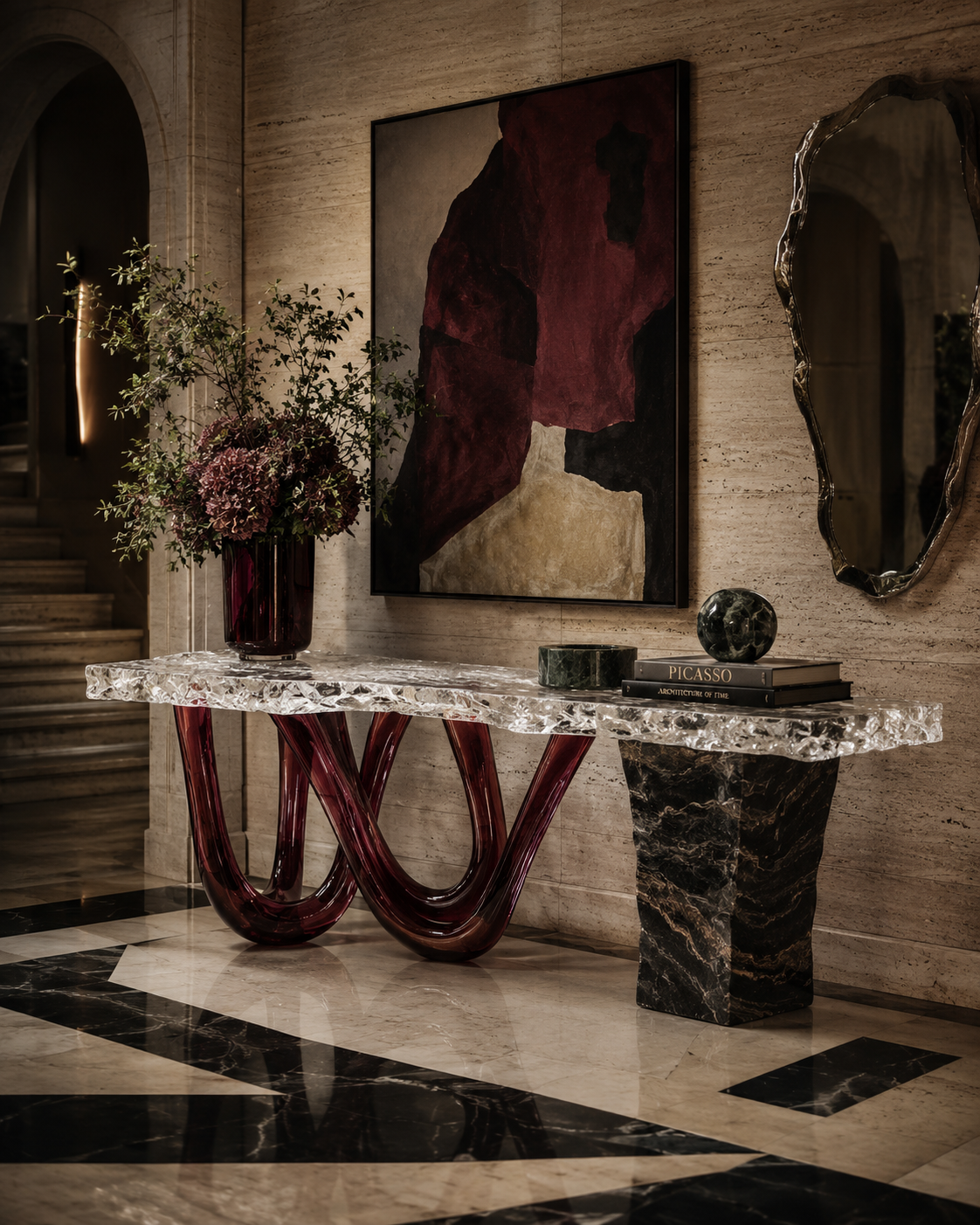
During the day, a clear console near a window may produce soft reflections and subtle edge highlights. In the evening, directional architectural lighting may transform those same edges into bright lines. A translucent premium-resin table may appear restrained in daylight but develop a deeper glow when illuminated by warm light after dark.
In hospitality design, this means one furniture piece can effectively provide two different experiences without physically changing.
Lighting direction matters as much as brightness. Light striking the front surface may reveal gloss, while light entering from an edge can emphasize thickness and internal depth. Backlighting may create a completely different result in translucent resin. Narrow accent lights can emphasize sculptural geometry, while diffuse lighting creates a softer, quieter appearance.
The objective, however, should not simply be maximum reflection.
Poorly controlled lighting can create distracting glare, expose scratches, or make highly polished transparent furniture uncomfortable to view. WELL's lighting guidance specifically recognizes the importance of glare control and balanced luminance.
The most sophisticated result therefore comes from controlling light rather than adding as much light as possible.
When lighting designers and furniture manufacturers collaborate early, polished edges, curved surfaces, resin transparency, color, thickness, and lighting position can be designed together. At that point, the furniture stops being an isolated product and becomes part of the architecture of light.
5. Transparent Materials Feel More Luxurious When They Are Used in Contrast, Not Isolation
Another reason spatial details attract customers is that people perceive materials comparatively.
A transparent acrylic table looks different against limestone than it does against white porcelain tile. A warm amber resin console produces a different emotional effect beside walnut than beside polished stainless steel. Synthetic crystal furniture can appear sharper against matte plaster and softer beside reflective metal.
This means the perceived value of a material depends partly on what surrounds it.
In practical luxury interiors, transparent furniture is often most effective when it provides contrast to materials with very different visual or tactile characteristics.
A polished synthetic crystal side table beside a textured bouclé sofa creates a contrast between optical precision and softness. A transparent resin console positioned against natural travertine combines controlled clarity with geological irregularity. A platinum acrylic table base beneath a timber or stone top allows a visually substantial natural material to appear almost suspended.
This approach also prevents a common design mistake: using too many glossy transparent objects in the same space.
When every table, chair, decorative element, and partition is reflective, the eye has no hierarchy. What initially appears glamorous can quickly become visually noisy.
Luxury interiors usually benefit from restraint.
One synthetic crystal statement table in the right location may have more impact than six transparent pieces competing with one another. A sculptural premium-resin bench can become the focal point of an otherwise quiet lobby. A pair of high-clarity acrylic side tables may introduce lightness beside a visually heavy sofa without changing the overall material palette.
This is particularly important for architects, interior designers, and furniture buyers specifying bespoke products. Instead of asking only, “Which material looks expensive?” the more useful question is, “What role should this material play within the complete composition?”
Transparent furniture can create separation without visual obstruction, emphasis without excessive color, and luxury without relying on traditional decorative ornament.
The material therefore becomes valuable not because it demands attention at all times, but because it controls attention precisely.
That subtlety is often what distinguishes a professionally designed environment from a room filled with individually expensive objects.
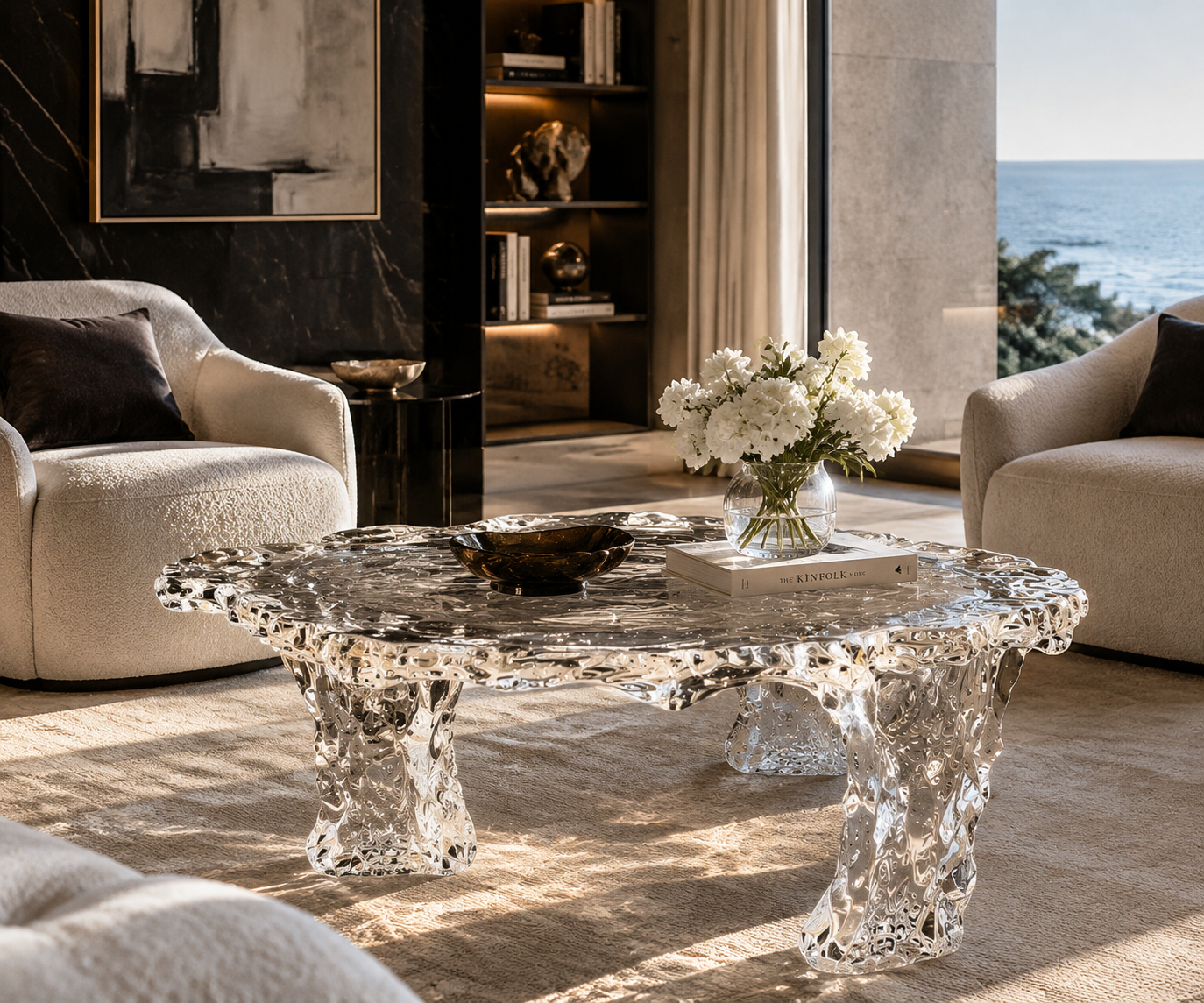
6. A Memorable Furniture Detail Can Become Part of the Customer's Memory of the Entire Space
Ultimately, customers are attracted to spatial details because distinctive details give them something to remember.
Gensler's Experience Index, based on research involving more than 4,000 respondents, found a measurable relationship between physical design and the quality of people's experiences. According to Gensler, experiences in the “best-designed” spaces were rated nearly twice as highly as those in the “worst-designed” spaces. The research also reported that people were 10 times more likely to share an in-store experience on social media when stores contained unique design features.
For hospitality, retail, restaurant, showroom, and luxury residential projects, that finding has important implications.
A memorable interior does not necessarily require every component to be unusual. Often it needs one or two highly recognizable moments.
That moment might be a massive transparent reception desk, a synthetic crystal console glowing beneath controlled lighting, a sculptural colored-resin table, an unusually thick acrylic dining base, or a series of clear furniture pieces that visually disappear against dramatic architecture.
The furniture becomes part of the story people tell about the place.
A hotel guest may not remember the manufacturer of a lobby table, but they may remember “the transparent table that seemed to glow at night.” A restaurant customer may photograph a colored resin communal table because light passing through it creates an unusual image. A luxury homeowner may choose a synthetic crystal console because it provides the visual impact of sculpture without blocking a carefully designed view.
Gensler's more recent hospitality research makes a similar argument: memorable environments are created when materiality, lighting, scale, and other sensory cues reinforce the same emotional experience rather than competing with one another.
That is the real opportunity for synthetic crystal, premium resin, and high-grade acrylic furniture.
Their value is not limited to transparency.
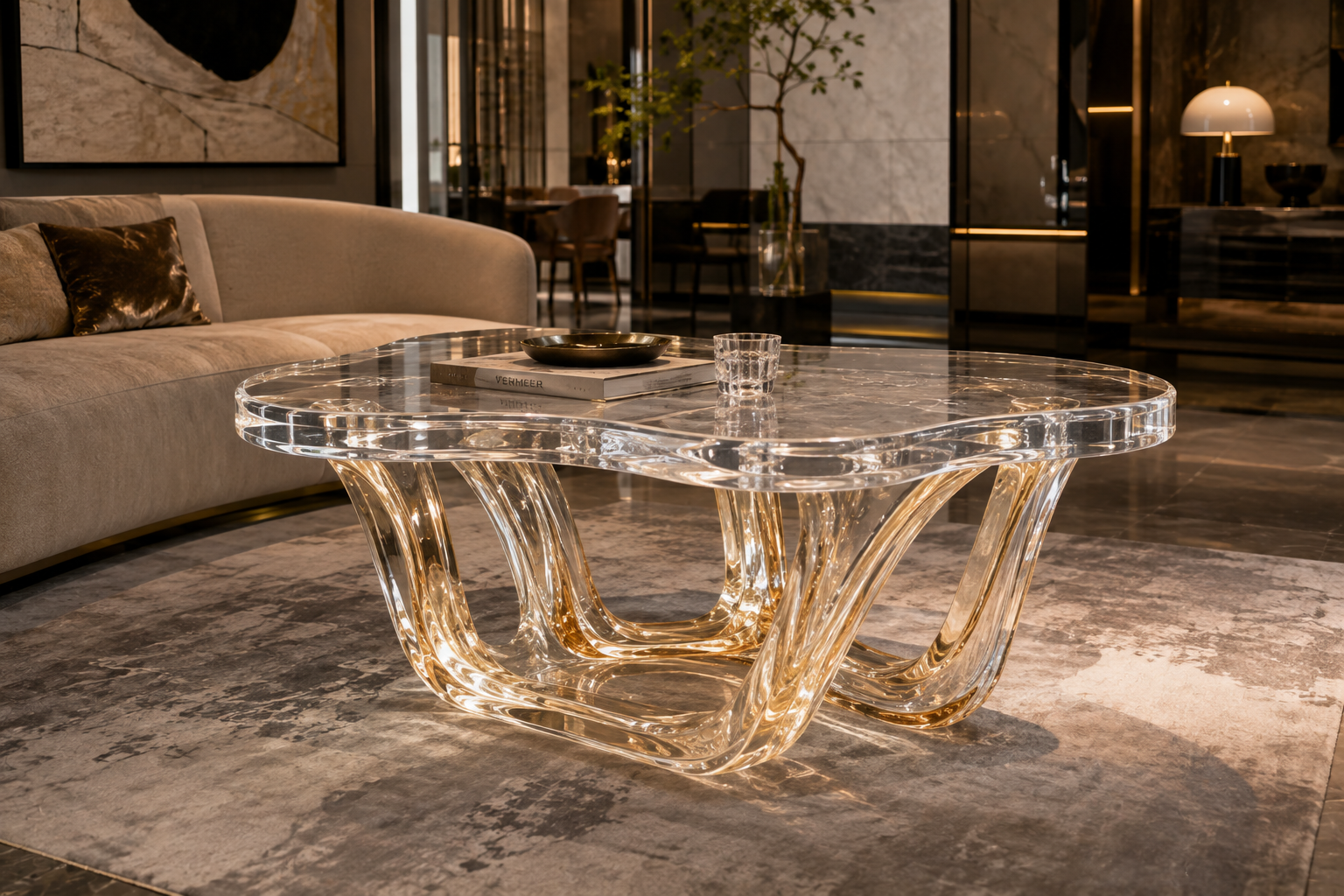
Through thickness, casting, coloration, polishing, edge treatment, sculptural geometry, and carefully planned lighting, these materials can create moments that change as customers move through the room. They can make substantial furniture feel visually weightless. They can capture light instead of simply sitting beneath it. Most importantly, they can turn an ordinary functional object into a recognizable spatial signature.
Customers may not consciously analyze every one of these details.
But they notice how the details make the space feel.
And in high-end design, that feeling is often what they remember.
READ MORE:
- Lighting + Synthetic Crystal: How Light and Shadow Details Make Commercial Spaces More Attractive
- The Spatial Perception Value of Synthetic Crystal Furniture
- How Material Texture Shapes Brand Trust: Application Ideas for Synthetic Crystal Furniture in Commercial Spaces
- Make Your Store Unforgettable at First Sight: How Synthetic Crystal Furniture Becomes a Visual Focal Point
- Synthetic Crystal Acrylic Furniture: How Innovative Materials Are Upgrading the Value of Furniture
- Why Transparent Furniture Is Moving from a Niche Design Choice to a High-End Trend
- Synthetic Crystal Acrylic Furniture: A New Design Language for Future High-End Spaces
- From Visual Appeal to Brand Value: The Long-Term Competitiveness of Synthetic Crystal Acrylic Furniture
- Synthetic Crystal Acrylic Furniture: Why High-End Projects Are Increasingly Focused on “Material Differentiation”


