
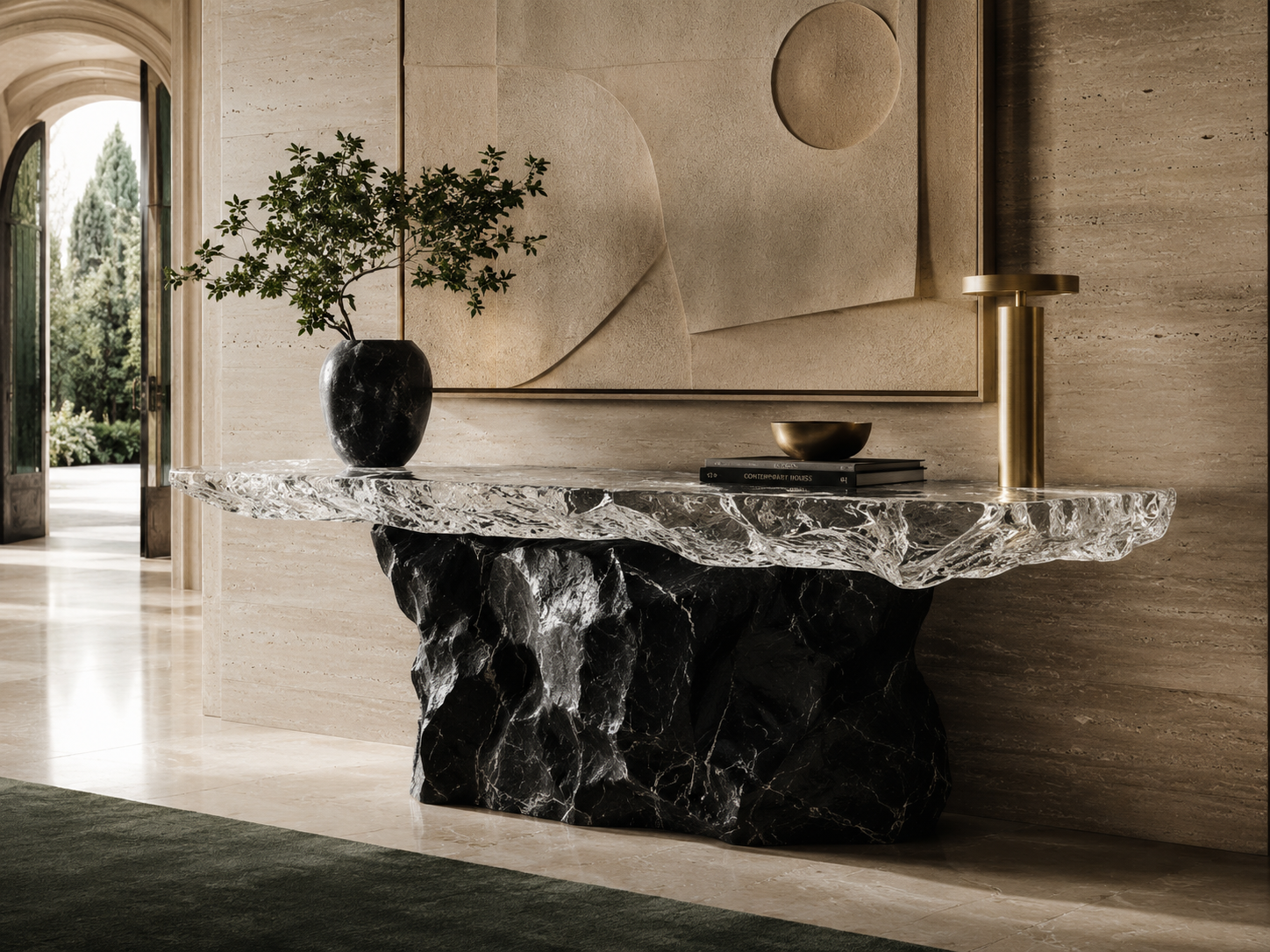
Walk into a luxury hotel lobby, a flagship boutique, a private residence, or a high-end restaurant today, and one change is becoming increasingly visible: furniture no longer has to look heavy to communicate value. The traditional vocabulary of luxury—dark timber, marble, brass, leather, and substantial visual mass—is being complemented by another language built around light, transparency, depth, and sculptural form.
This is where synthetic crystal furniture, high-end casting resin, and premium or platinum-grade acrylic are becoming increasingly relevant.
At first glance, the attraction appears obvious. Transparent furniture makes a space feel lighter and gives designers more freedom to work with light. But that explanation is incomplete. For architects, interior designers, hospitality operators, luxury retailers, and property owners, the growing interest in synthetic crystal furniture is connected to a broader shift in how premium spaces are designed and experienced.
The material can reduce visual weight without eliminating physical presence. It can transform light into part of the furniture itself. It can support highly customized forms, colors, embedded details, and oversized sculptural pieces. And when the right material formulation and manufacturing process are used, it can remain visually relevant across multiple interior styles.
The real value of synthetic crystal furniture, therefore, is not that it is transparent. It is that transparency becomes a new design tool.
1. High-End Interiors Are Moving From “Visual Weight” to “Visual Space”
Luxury used to be communicated largely through material abundance. Thick stone, substantial hardwood, elaborate upholstery, and decorative metalwork signaled cost and craftsmanship. These materials remain important, but contemporary luxury increasingly values something different: space itself.
A high-end interior does not necessarily need more objects. It needs the right objects to create a stronger spatial experience.
Transparent furniture is particularly effective because it occupies physical space without creating the same visual obstruction as an opaque piece. Architectural Digest has noted that clear acrylic, glass, and related transparent furniture can appear to almost disappear within an interior, allowing surrounding colors, finishes, and architectural details to remain visible. This ability to reduce perceived visual bulk is one reason transparent furniture has historically been recommended for smaller spaces, but the same principle becomes even more powerful in large premium interiors.
Consider a luxury hotel lobby with an expensive stone floor. A conventional solid console placed in the center of the room may interrupt the visual continuity of that flooring. A clear synthetic crystal or platinum acrylic console can perform the same functional role while allowing the stone pattern to remain visually uninterrupted.
In a fashion flagship store, the logic is even stronger. Retail furniture must support merchandise rather than compete with it. Transparent pedestals, acrylic display tables, resin consoles, and crystal-like plinths can create physical display surfaces while allowing products, lighting, and architectural finishes to remain dominant.
This is one reason synthetic crystal furniture should not simply be described as “clear furniture.” Its real contribution is visual subtraction.
A well-designed transparent table can have considerable physical mass while appearing almost weightless. A thick synthetic crystal pedestal may feel monumental when viewed closely, yet from a distance it does not create the same visual barrier as stone or timber.
For designers working with increasingly open interiors, panoramic windows, dramatic flooring, integrated lighting, and carefully controlled sightlines, that ability has significant value.

2. Synthetic Crystal Turns Light Into Part of the Furniture
Most furniture responds to light at its surface. Synthetic crystal, acrylic, and clear casting resin can interact with light through the entire volume of the object.
That difference fundamentally changes what a designer can do.
When light enters a transparent or translucent furniture component, it can travel through the body, reflect along polished edges, pass through tinted layers, or interact with bubbles, textures, pigments, metallic inclusions, and embedded decorative elements. Instead of simply illuminating the furniture, light becomes part of its visual composition.
This effect explains why material quality is so important.
ASTM International’s D1003 standard provides methods for measuring haze and luminous transmittance in transparent plastics. ASTM explains that scattered light can create a hazy or smoky appearance and specifically notes that haze and light-transmission measurements are useful for quality control and material specification.
For a luxury furniture buyer, this technical language translates into something very practical: two materials that look “transparent” in a photograph may behave very differently in an actual interior.
One may appear exceptionally clear through a thick table leg or pedestal. Another may develop a slightly cloudy or milky appearance as material thickness increases. Polishing quality, internal inclusions, color consistency, casting control, and material formulation all influence the final effect.
Premium PMMA demonstrates how significant optical engineering can be. PLEXIGLAS reports visible-light transmission of up to 92% for certain clear products. The manufacturer also states that specified clear grades can retain up to 90% light transmission after 30 years, depending on material type and region. These figures relate specifically to PLEXIGLAS products rather than acrylic furniture universally, but they illustrate why grade selection matters when optical clarity is a core design requirement.
For platinum-grade acrylic furniture, synthetic crystal dining-table bases, clear resin consoles, and illuminated display pedestals, transparency should therefore be treated as an engineered property—not simply a color choice.
In high-end interiors, clarity itself becomes craftsmanship.
3. The Material Offers Designers a Sculptural Freedom Traditional Materials Cannot Easily Replicate
Another reason designers are paying attention to synthetic crystal and high-end resin is freedom of form.
Furniture made from conventional materials tends to reveal how it is constructed. Wood communicates joints and grain direction. Metal often reveals welding, bending, or separate structural components. Stone depends on cutting, machining, and the limitations of the original slab.
Casting materials create a different opportunity. They allow volume itself to become the design.
A resin side table can be designed as a single geometric mass. A synthetic crystal dining-table base can resemble a block of ice, a cut gemstone, a flowing column, or an abstract sculpture. Pigments can move gradually through the object instead of sitting on its surface. Decorative elements can appear suspended inside the furniture rather than applied afterward.
There is important design history behind this approach.
The Museum of Modern Art’s collection includes Shiro Kuramata’s iconic Miss Blanche Chair from 1988, constructed using acrylic resin, aluminum, and synthetic flowers. MoMA describes the roses as appearing to float inside the transparent acrylic body. Each artificial rose was carefully positioned while the resin hardened, transforming the material itself into part of the conceptual design rather than merely using it as a transparent substitute for glass.
That distinction remains highly relevant today.
The most interesting contemporary synthetic crystal furniture is rarely trying to imitate ordinary glass. Instead, manufacturers can use casting depth, controlled color, transparency, gradients, embedded objects, textures, and highly polished surfaces to create something that conventional glass or acrylic sheet fabrication would struggle to achieve.
This is particularly valuable for custom hospitality and residential projects. A designer may require a 1.8-meter dining-table base in a specific champagne tint, a resin console inspired by natural ice, jewel-toned side tables for a hotel suite, or synthetic crystal columns designed to interact with architectural lighting.
When production is sufficiently controlled, the furniture becomes closer to functional sculpture than standardized furnishing.
That distinction is precisely where much of its luxury value originates.
4. Transparent Furniture Can Create Identity Without Overpowering the Interior
High-end interiors face a difficult design problem: they need memorable pieces, but too many statement objects can quickly create visual noise.
Synthetic crystal furniture offers an unusual solution because it can be highly distinctive without necessarily becoming visually heavy.
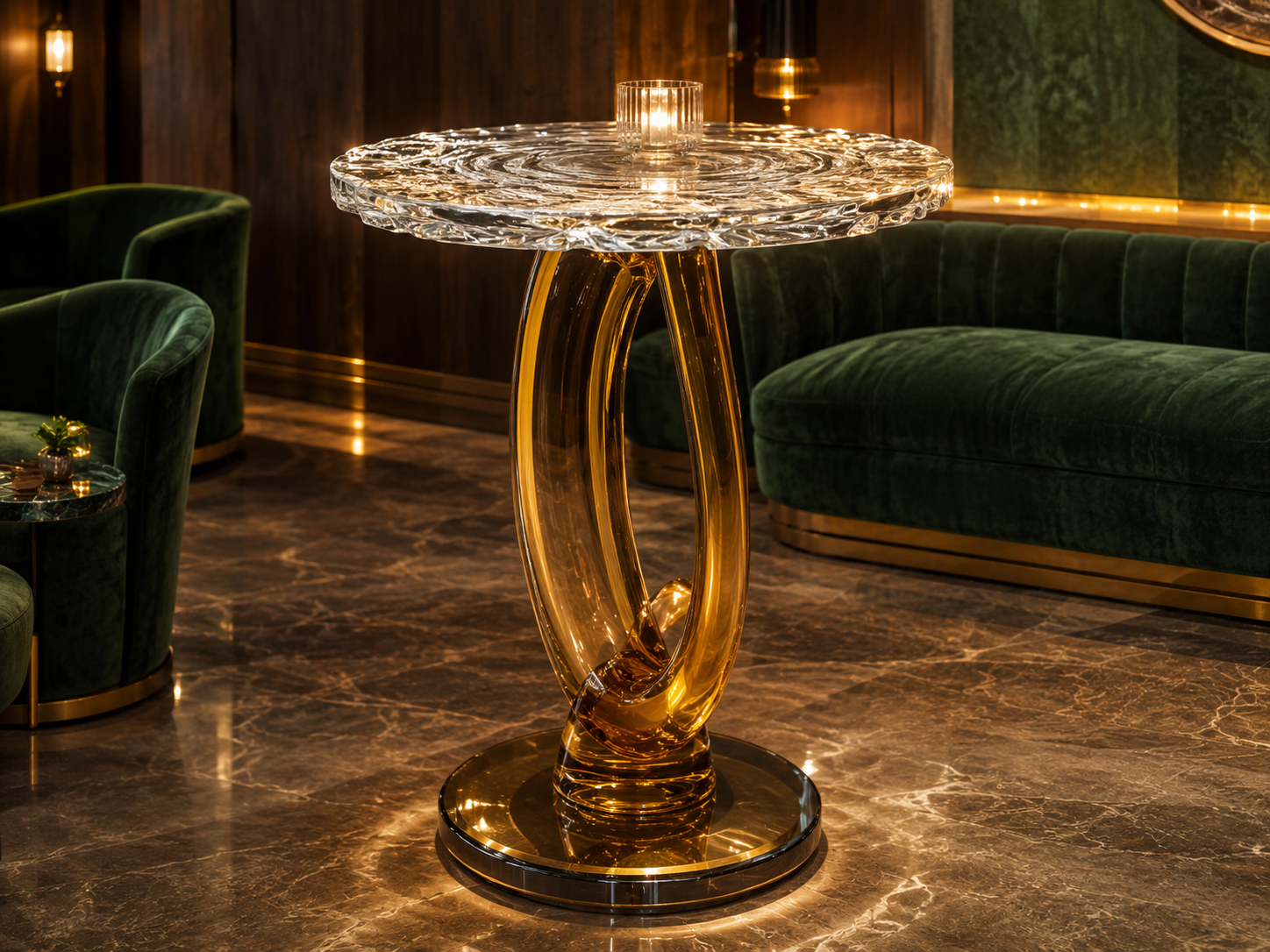
Imagine a large amber resin coffee table in an otherwise neutral hotel lounge. Its color creates a focal point, but its translucency allows carpets, flooring, and surrounding furniture to remain visible through the object. A pale blue synthetic crystal console can introduce color without behaving like a solid blue cabinet. A platinum acrylic dining base can be physically dramatic while allowing the tabletop to appear almost suspended.
For luxury brands, this balance between identity and restraint is particularly useful.
Flagship retail stores, boutique hotels, private clubs, beauty salons, jewelry stores, and premium residential developments increasingly need interiors that are recognizable in photographs and social media without looking like temporary installations. Custom-colored resin and synthetic crystal pieces can introduce a material signature that is difficult to reproduce with catalogue furniture.
Color can also be developed as part of the object rather than applied as a coating. Depending on the resin system and manufacturing process, designers can explore transparent champagne, cognac, smoke, emerald, sapphire, amber, rose, or custom brand colors, as well as gradients and layered effects.
This gives designers an intermediate option between completely transparent furniture and conventional opaque furniture.
It also allows furniture to respond differently throughout the day. A tinted synthetic crystal table beside a window may appear relatively restrained in soft morning light, become luminous under direct sunlight, and transform again beneath warm architectural lighting at night.
The furniture therefore does not simply occupy the interior.
It participates in it.
That changing relationship between material, light, and surrounding architecture can produce the sense of exclusivity that high-end spaces increasingly seek.
5. For Luxury Projects, Long-Term Material Performance Matters as Much as Initial Appearance
There is an important difference between furniture designed for a photograph and furniture designed for a five-star hotel.
The first only needs to look exceptional once. The second must continue looking exceptional after cleaning, touching, sunlight exposure, moving, and daily use.
This is where buyers should distinguish between generic transparent plastics, basic resin furniture, and carefully engineered high-end materials.
Not every resin system offers the same UV resistance, color stability, hardness, curing quality, or polishability. Likewise, the word “acrylic” alone says very little about grade, manufacturing method, internal stress, surface finish, or long-term optical performance.
PLEXIGLAS, for example, offers a 30-year guarantee against visible yellowing for specified products. That should not be interpreted as evidence that every acrylic product will perform identically; rather, it demonstrates how significant material formulation and verified performance can be.
Maintenance also needs to be considered from the design stage. Transparent surfaces make scratches, haze, poor polishing, and inappropriate cleaning more visible than many opaque materials. For high-traffic environments, designers should therefore ask practical questions before specifying synthetic crystal, resin, or platinum acrylic furniture.
What cleaning products will housekeeping use? How much direct sunlight will the piece receive? Can superficial marks be repolished? Is the material appropriate for the required thickness? How are joints finished? How consistent is the transparency between production batches?
These questions become particularly important for hotels, luxury retail, restaurants, and commercial spaces where furniture may be cleaned several times every day.
Indoor environmental performance can also matter in sophisticated projects. UL notes that people in industrialized societies spend approximately 90% of their time indoors and highlights furniture and building-material emissions as an important indoor-air-quality consideration. Its GREENGUARD programs are designed around testing chemical emissions from products.
For professional buyers, the lesson is clear: high-end transparent furniture cannot rely on appearance alone.
Material specifications, manufacturing quality, appropriate testing, maintenance guidance, and project-specific performance all form part of the luxury product.
6. High-End Spaces Are Increasingly Valuing Furniture That Can Stay Relevant Longer
The strongest argument for synthetic crystal furniture may ultimately be neither transparency nor novelty. It may be longevity of design relevance.
Premium interiors are expensive to renovate. Hotels, restaurants, residences, and retail stores do not replace furniture only because it physically fails. They often replace it because it begins to look visually outdated, worn, or incompatible with a new interior concept.
That has significant consequences.
The U.S. Environmental Protection Agency reports that approximately 12.1 million tons of furniture and furnishings entered the U.S. municipal solid-waste stream in 2018. About 80.1% of that furniture and furnishing waste was landfilled.
The U.S. Green Building Council has also highlighted the cumulative impact of interior renovation. Citing research based on typical interior-element service lives of approximately 12 to 15 years, USGBC notes that repeated replacement of interiors over a building's lifetime can create embodied-carbon impacts that equal or potentially exceed the original structure and enclosure. Furniture is specifically identified as an area where reuse and reduced replacement deserve greater attention.
This makes aesthetic longevity commercially important.
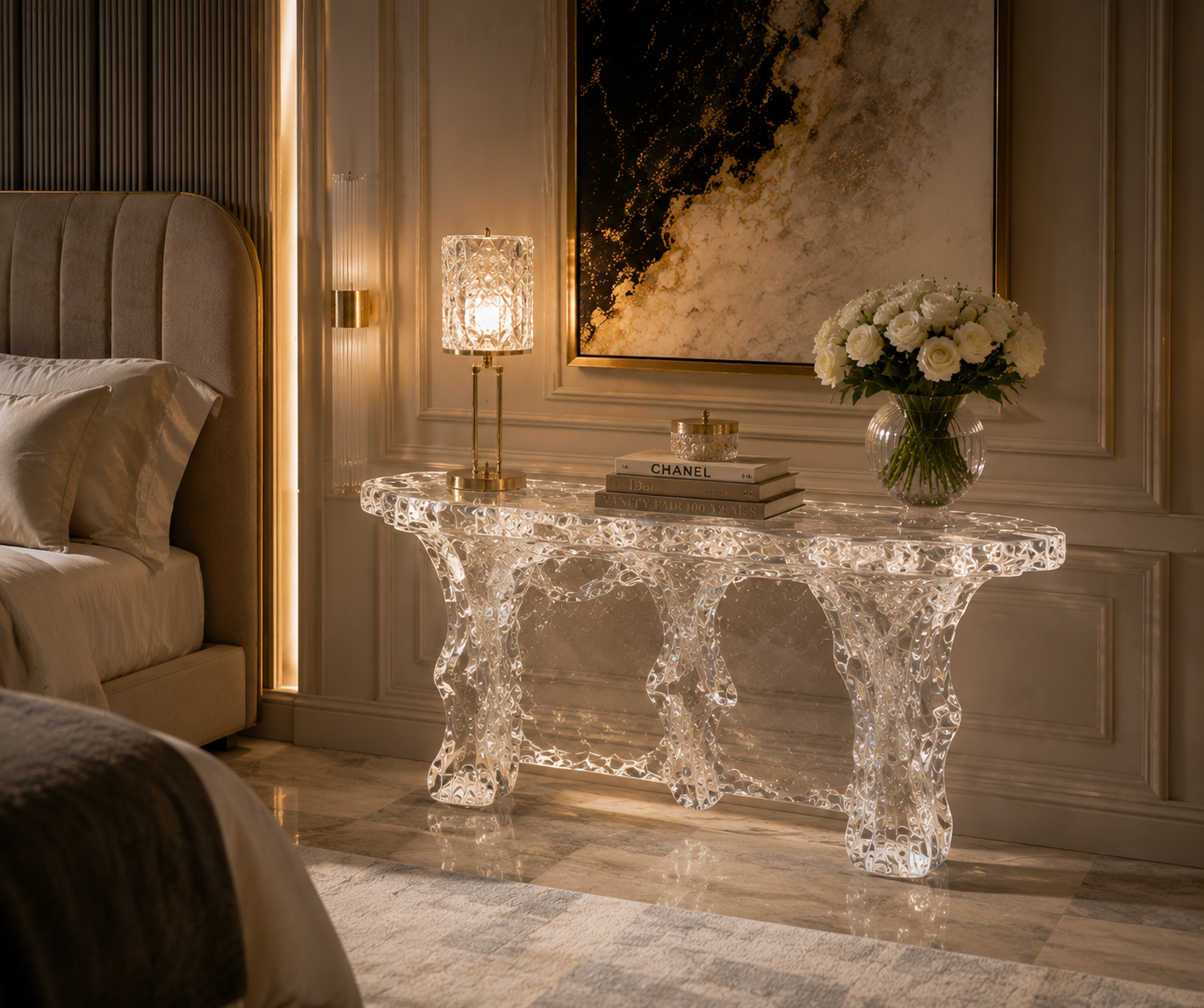
Clear or lightly tinted furniture has an advantage because it is less dependent on a particular decorative palette. A transparent synthetic crystal console that works with beige stone and bronze accents today may continue working after the room is redesigned around darker timber or colorful artwork. A clear platinum acrylic table base can remain relevant when chairs, rugs, wall finishes, and lighting are replaced.
High-end resin offers another type of longevity: uniqueness. A carefully developed custom casting, sculptural resin table, or synthetic crystal installation can become part of a project's identity rather than an interchangeable furniture item.
That increases the likelihood that the piece is retained, relocated, refinished, or incorporated into a future design instead of being discarded simply because a trend has changed.
For luxury interiors, this may represent a more mature definition of premium furniture.
The question is no longer simply whether a piece looks expensive when it is installed. The more important question is whether its material, craftsmanship, and design can continue creating value years later.
That is why the growing interest in synthetic crystal furniture should not be dismissed as another fascination with transparent objects.
Synthetic crystal, high-end resin, and platinum-grade acrylic are giving designers something much broader: the ability to create substantial furniture without visual heaviness, use light as part of the design, explore sculptural forms that conventional materials cannot easily achieve, develop customized colors and optical effects, and create statement pieces capable of adapting to evolving interiors.
Transparency may be what people notice first.
But in genuinely high-end spaces, it is rarely the only reason these materials are being chosen.

READ MORE:
- Beyond Decoration: How Statement Furniture Pieces Shape Brand Identity for Hotels, Retail Spaces, and Luxury Homes
- Why Some Transparent Furniture Looks Expensive While Others Feel Ordinary: A Buyer's Guide to Quality Differences
- How Luxury Interior Designers Use Transparent Materials to Create More Sophisticated Spaces
- What Makes Synthetic Crystal Furniture Valuable? Understanding the Details Behind Premium Transparent Designs
- Why High-End Buyers Are Rethinking Acrylic Furniture: From "Plastic Alternative" to Modern Luxury Material
- How Can One Piece of Furniture Change the Feel of an Entire Space? Understanding the Details of Luxury Through Synthetic Crystal
- If You Want a Commercial Space to Look Premium for Years, Furniture Materials Matter More Than Fashionable Styles
- Reducing Visual Aging: How Synthetic Crystal Furniture Keeps Spaces Light, Transparent, and Modern
- How Long Does Luxury Last? Why Furniture Materials Determine a Space's "Visual Shelf Life"


