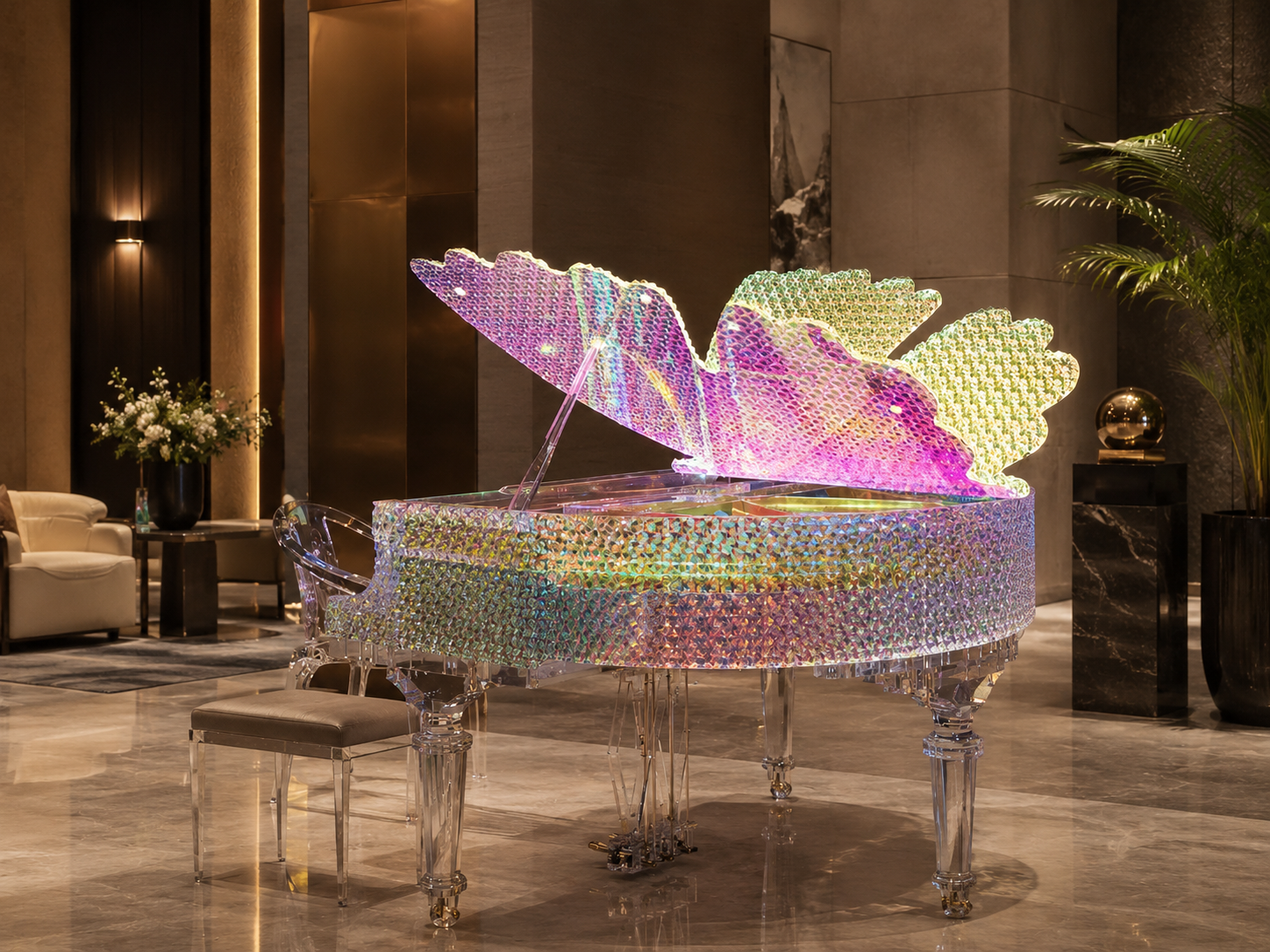
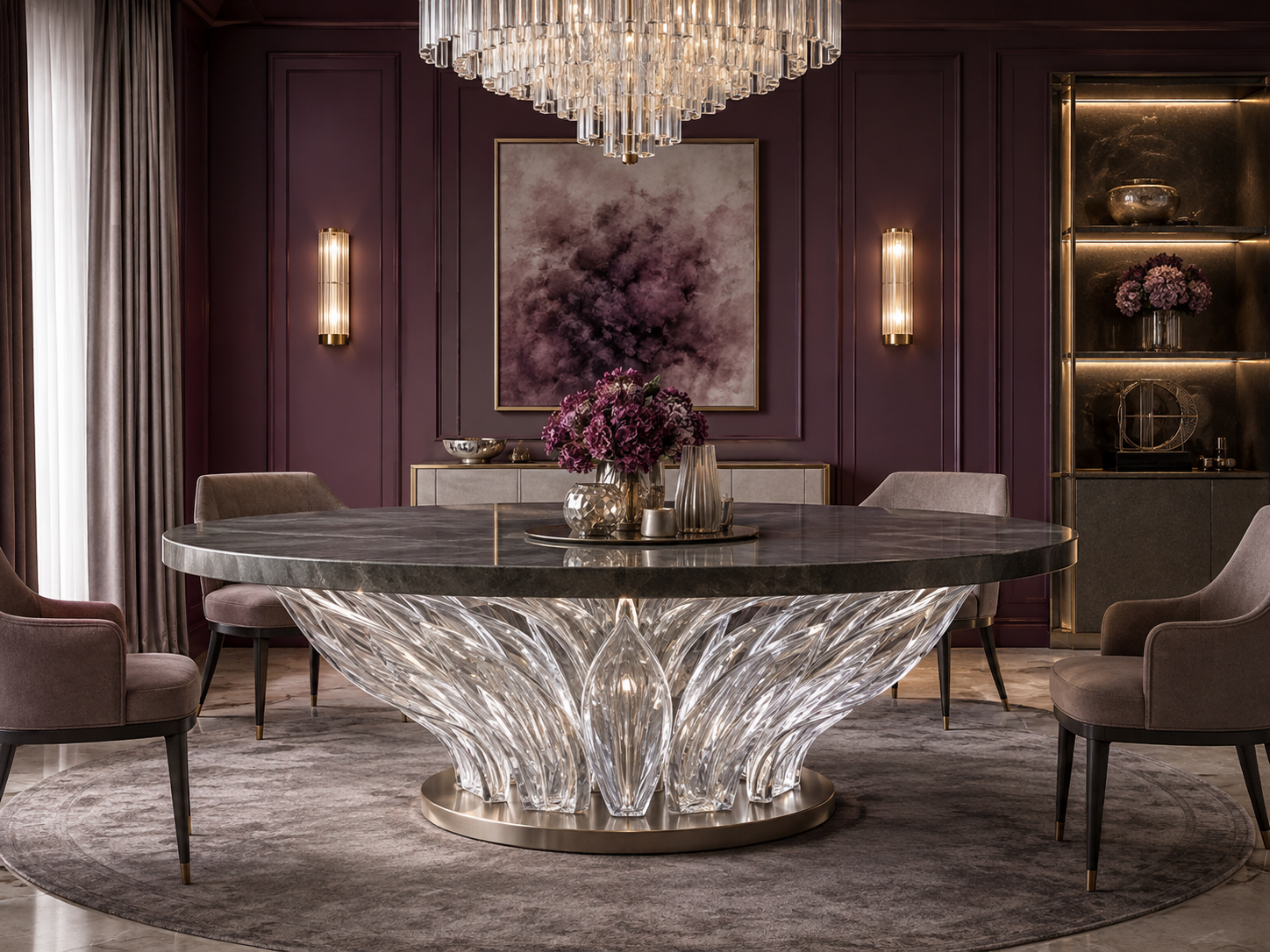
A newly opened hotel lobby, flagship store, restaurant, private club, or luxury showroom can look impressive almost regardless of the furniture chosen. Everything is new. Surfaces are clean, lighting has been carefully adjusted, and the design reflects the visual language of the moment.
The more difficult question is what the same space will look like three, five, or ten years later.
Commercial interiors age differently from residential spaces. Furniture is touched more frequently, cleaned more aggressively, exposed to greater traffic, moved more often, and photographed by thousands of visitors. At the same time, trends change quickly. A silhouette that once looked instantly recognizable can begin to date an interior long before the furniture has physically failed.
For that reason, businesses that want a space to maintain a premium identity over the long term should pay less attention to whether a piece is currently fashionable and more attention to what it is made from, how the material ages, how easily it can be maintained, and whether its visual character can survive changing design trends.
Synthetic crystal, high-end casting resin, and premium or platinum-grade acrylic furniture are particularly interesting in this context. Their value is not simply that they can look luxurious when new. When correctly formulated, fabricated, specified, and maintained, these materials can help designers create furniture with visual lightness, sculptural presence, optical depth, and an aesthetic that is less dependent on short-lived decorative trends.
1. Trends Tell You What Looks New; Materials Determine What Still Looks Good Years Later
Commercial interiors face an unavoidable tension. Brands want spaces that feel current, but a hotel, restaurant, showroom, or luxury retail store cannot realistically replace major furniture every time the visual trend cycle changes.
That is why timeless commercial design rarely means eliminating personality. It means separating short-cycle design decisions from long-cycle investments.
The Whole Building Design Guide provides a surprisingly direct illustration of this principle. The U.S. Air Force Corporate Facility Standards recommend incorporating durability into life-cycle cost analysis, choosing long-lasting and low-maintenance materials, and creating a professional image while explicitly advising designers to “avoid trendy patterns and textures.”
Although a luxury hotel is obviously different from a government facility, the economic logic is the same. A fashionable cushion can be replaced relatively easily. A decorative object can be changed next season. A major reception desk, feature table, console, display pedestal, or sculptural installation is far more expensive and disruptive to replace.
This is where material-led furniture can outperform trend-led furniture.
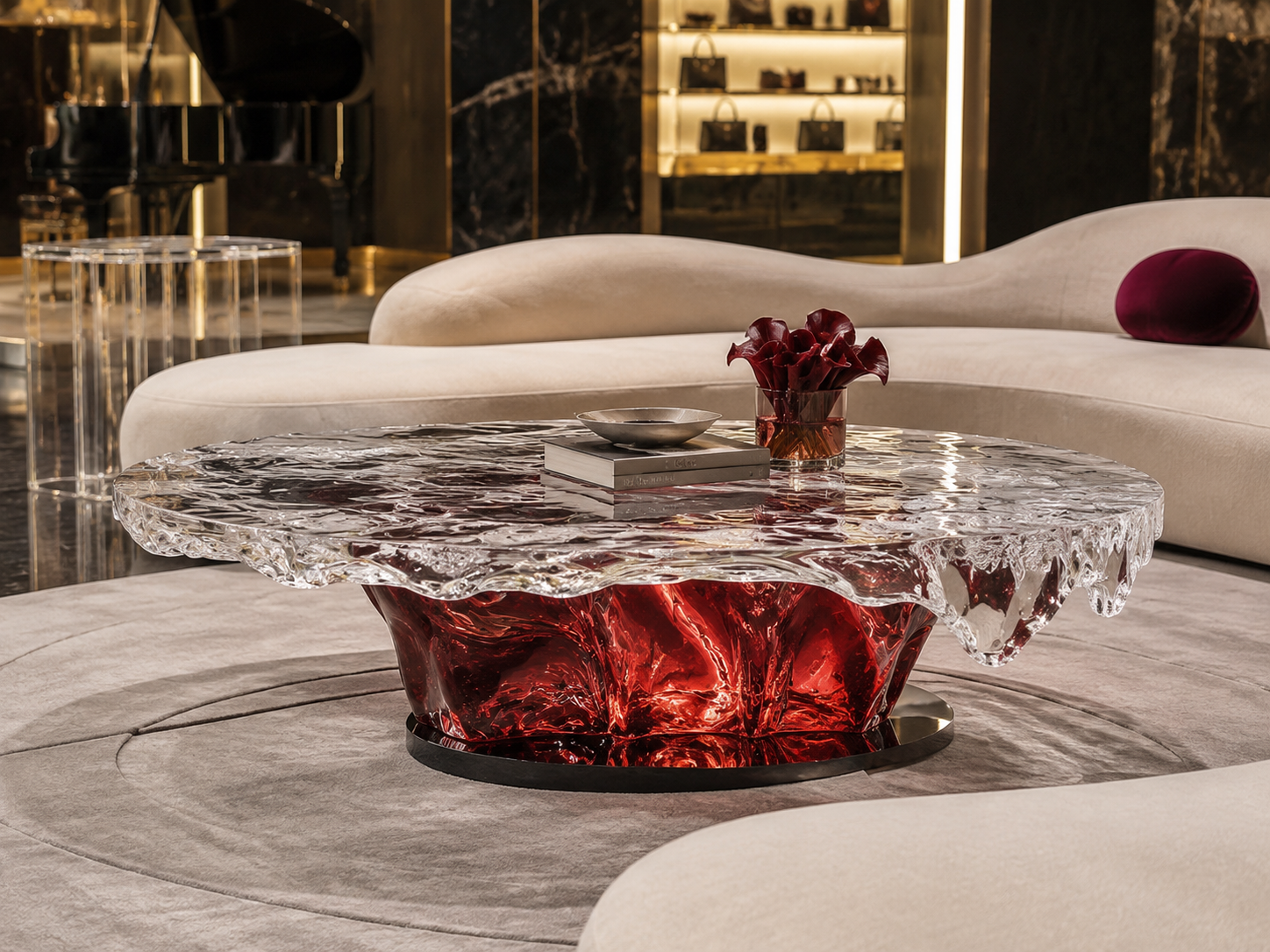
A transparent synthetic crystal console, for example, does not depend heavily on a particular upholstery color, timber finish, or seasonal decorative motif. A clear platinum acrylic coffee table can work with beige interiors today, darker stone tomorrow, or a more colorful redesign five years later. A carefully designed high-end resin table in a restrained amber, smoke, champagne, or neutral translucent tone can function as a signature object without immediately belonging to one particular design season.
In other words, fashionable furniture asks, “Does this look current?”
Long-term furniture asks, “How many future interiors could this still belong to?”
For commercial owners, that second question is often more valuable.
2. In High-Traffic Spaces, Surface Performance Becomes Part of the Luxury Experience
A piece of furniture does not remain premium simply because its design is expensive. Its surfaces have to survive reality.
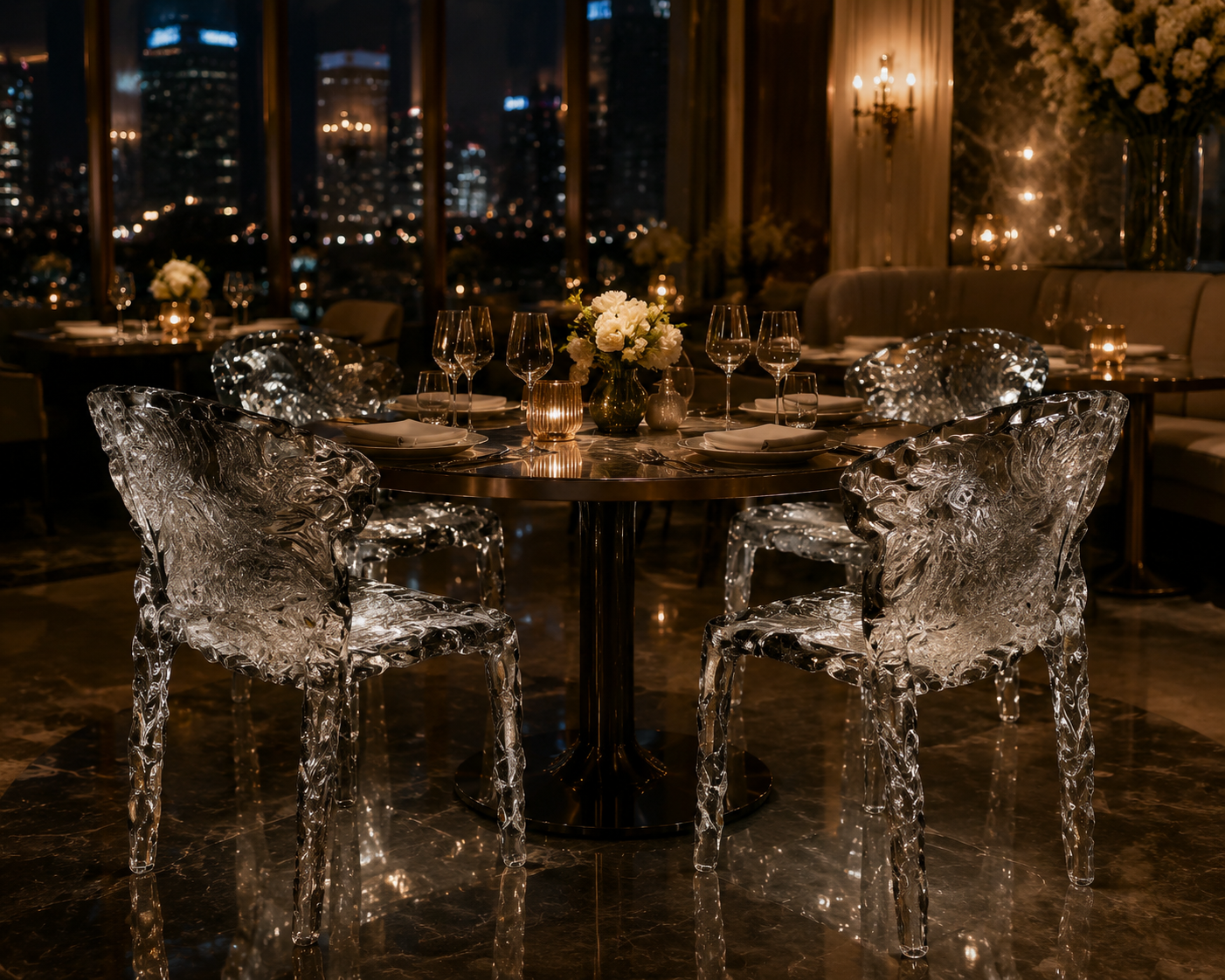
Consider the difference between a table in a private guest bedroom and a console in a hotel lobby. The lobby piece may be touched by hundreds of people, exposed to luggage, wiped repeatedly by housekeeping staff, and cleaned with products selected for operational efficiency rather than delicate furniture care. A restaurant table may go through several cleaning cycles in a single day. Retail display furniture may be handled continuously while remaining under intense lighting.
These conditions make surface durability a design issue.
In February 2026, BIFMA published its updated G8.1-2026 Furniture Surfaces guideline, expanding guidance for evaluating how furniture surfaces perform when exposed to cleaning, sanitizing, and disinfecting products in both healthcare and commercial environments.
The existence of such a guideline says something important: for professional furniture, cleanability and resistance to everyday maintenance procedures are not secondary concerns.
This matters especially with transparent materials because deterioration is easy to see. Micro-scratches, haze, inconsistent polishing, damaged edges, or chemical attack can quickly reduce the perceived quality of a clear surface.
When specifying synthetic crystal, high-end resin, or platinum-grade acrylic furniture, therefore, the buyer should look beyond photographs. A manufacturer should understand how its material responds to commonly used cleaning agents, how superficial scratches are treated, whether a surface can be professionally repolished, and how edges and joints perform under repeated contact.
The term “platinum acrylic,” for example, should not by itself be treated as a universal international technical grade. What matters is the actual acrylic chemistry, optical specification, manufacturing quality, surface finish, and supporting test data provided for the product.
The same principle applies to synthetic crystal and casting resin. Their premium value must be demonstrated through performance, not terminology.
In a commercial space, luxury is something people touch every day. If the material cannot tolerate that interaction, the visual concept will eventually lose credibility.
3. Transparent Furniture Makes Material Quality More Important, Not Less
There is a misconception that transparent furniture is visually simple because there is “less” to see.
In reality, transparency exposes quality.
Wood can hide minor marks within its grain. Stone naturally contains variation. Upholstery has texture. A highly polished transparent table has nowhere to hide a cloudy section, internal inclusion, poorly finished joint, or inconsistent edge.
That makes optical quality central to the long-term premium appearance of synthetic crystal, clear resin, and acrylic furniture.
ASTM International’s D1003 standard measures haze and luminous transmittance in transparent plastics. ASTM specifically notes that light scattering can create a hazy or smoky appearance and that haze and light-transmission data are useful for quality control and material specification.
This is why two transparent tables that look similar in online photographs may feel completely different in person.
Material purity, formulation, thickness, casting quality, internal stress, polishing, and fabrication all influence how light passes through the finished piece. A poorly processed transparent material may look acceptable at thin sections but become visually dull or distorted in a thick table leg or pedestal. A high-quality piece can use that thickness to create optical depth instead.
Established PMMA products illustrate what carefully engineered acrylic can achieve. PLEXIGLAS states that certain colorless products provide light transmission of up to 92% when new. Its published guarantee also states that, depending on product type and design, specified transparent products experience only limited reduction in light transmission over a 30-year period. These are manufacturer-specific performance figures and should not be generalized to every acrylic product, but they demonstrate why the grade and formulation of the material matter.
For a luxury hotel, jewelry boutique, premium beauty store, or high-end residence, that optical performance can become part of the atmosphere.
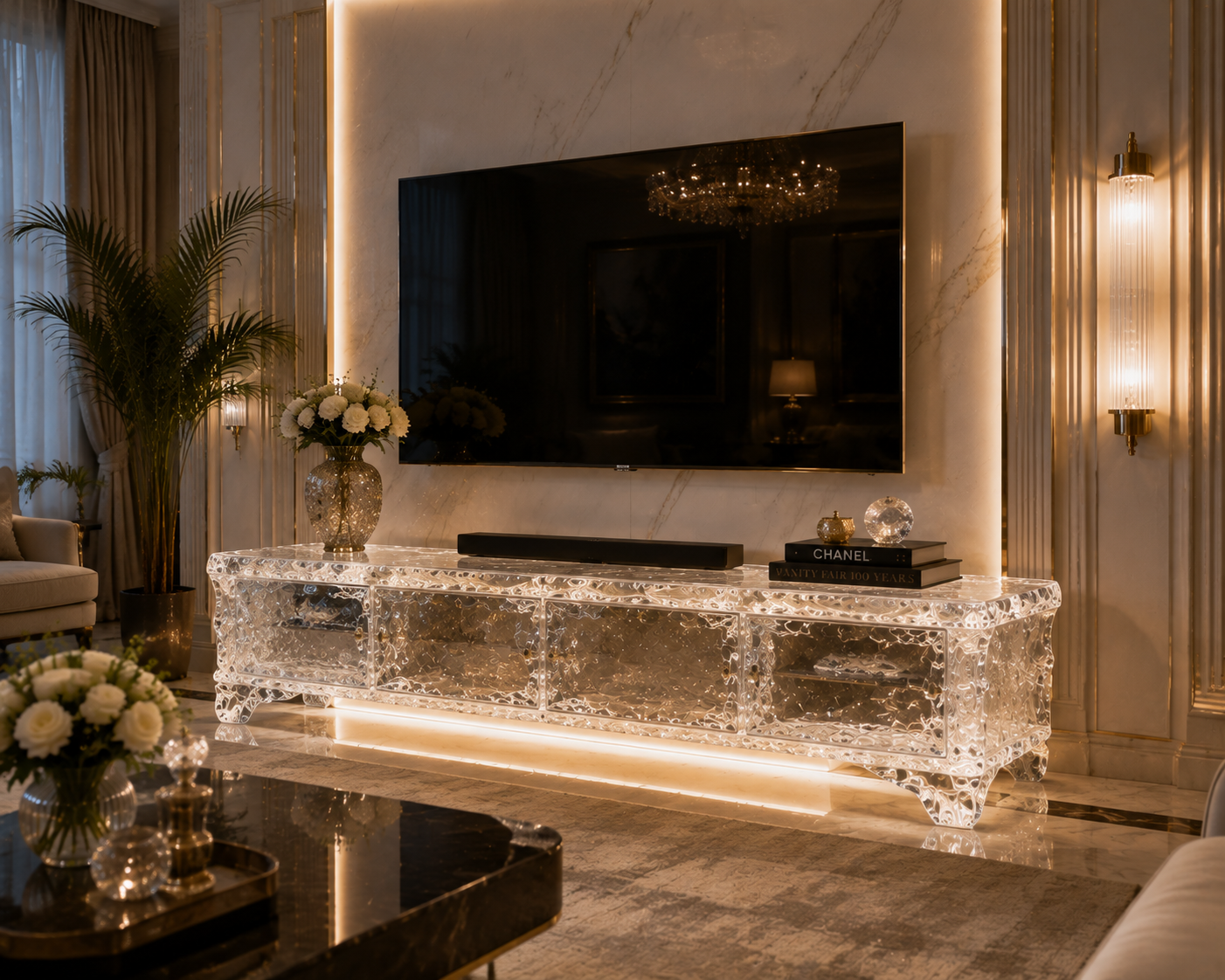
A synthetic crystal table base can capture architectural lighting. A polished platinum acrylic console can visually disappear while its edges glow. A high-end resin pedestal can use controlled translucency to create depth rather than simply presenting a colored surface.
The furniture is no longer just being illuminated.
The material is actively designing the light.
4. Material Longevity Protects the Space From Premature Visual Aging
Furniture does not need to break before it becomes commercially obsolete.
Sometimes it simply starts to look tired.
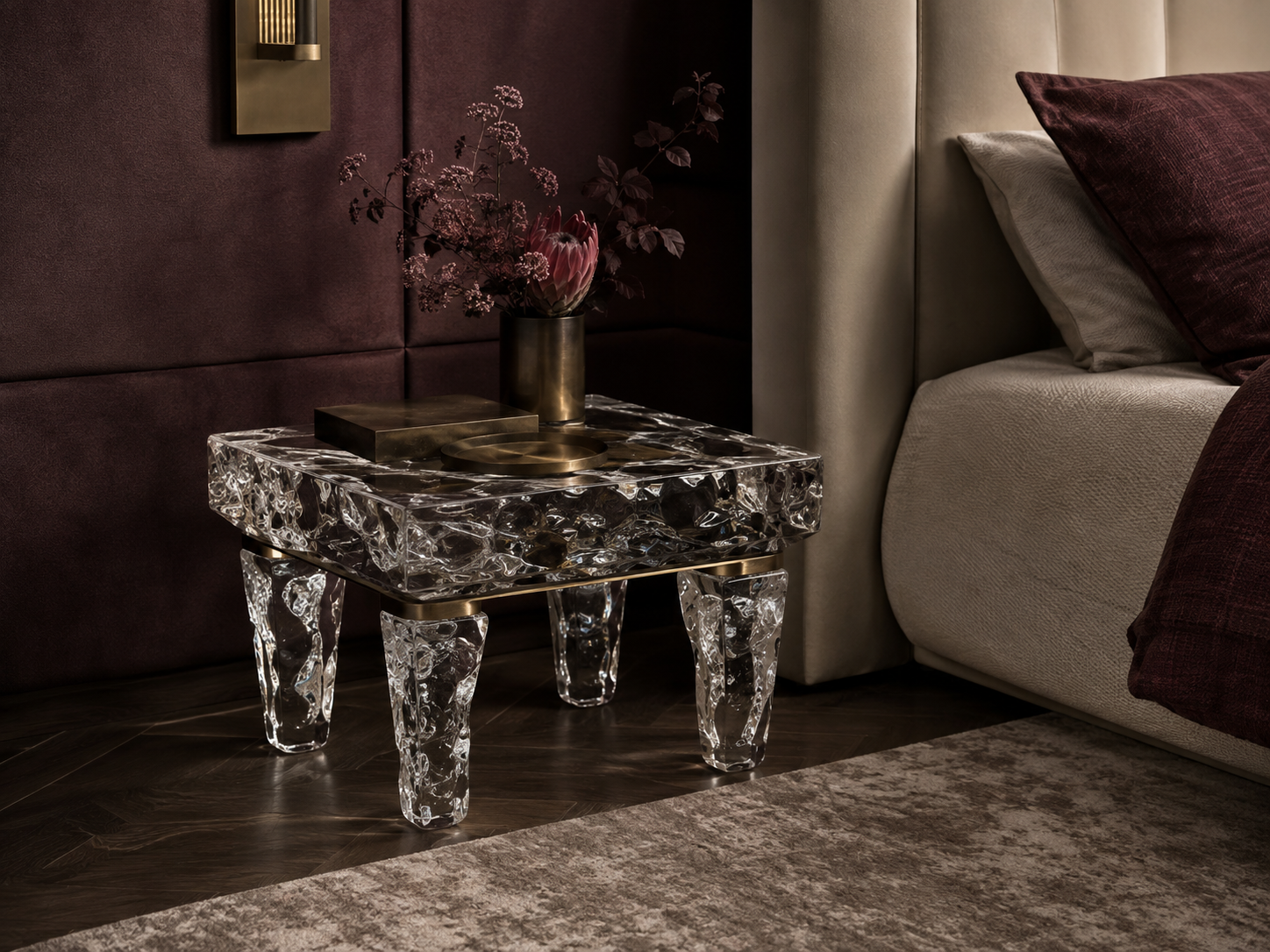
A surface becomes cloudy. A white material yellows. A glossy finish develops thousands of fine scratches. A colored resin gradually loses its original visual balance. Structurally, the furniture may still work perfectly, but the space no longer communicates the level of quality the brand intended.
This distinction is particularly important in transparent and translucent furniture.
The Canadian Conservation Institute explains that light and ultraviolet exposure can affect polymers as well as colorants, coatings, and stabilizing additives. Depending on the plastic, visible effects may include discoloration and yellowing, while other forms of deterioration can include embrittlement, cracking, and loss of mechanical properties. It also identifies PMMA among plastics with relatively low sensitivity to sunlight and UV in its conservation guidance.
The lesson is not that every resin will yellow or that acrylic will remain unchanged indefinitely. The lesson is that “plastic,” “resin,” and “transparent material” are far too broad to function as meaningful quality specifications.
A premium commercial project should ask what resin system is being used, whether UV stabilizers are appropriate to the application, how pigments perform under light exposure, and whether accelerated aging or relevant weathering data are available.
This becomes especially important for furniture near curtain walls, atriums, display windows, or other areas with strong daylight.
A custom synthetic crystal reception table designed for a windowless private club has a different exposure profile from a transparent resin display pedestal positioned directly inside a luxury storefront. The material should be selected accordingly.
True luxury comes from matching the material to the environment rather than simply choosing the most visually impressive sample.
5. Durable Materials Can Reduce the Real Cost of Continually “Refreshing” a Commercial Interior
Businesses often evaluate furniture through purchase price. Commercial operators should be thinking about replacement cost.
Those are not the same thing.
Replacing a feature console or coffee table involves more than purchasing a new object. There may be design approval, sampling, production, shipping, installation, disposal of the original piece, operational disruption, and—in international hospitality or retail projects—coordination across multiple locations.
Whole Building Design Guide defines life-cycle cost analysis as a method of evaluating the total cost of acquiring, owning, operating, and ultimately disposing of an asset or building system. Its guidance emphasizes that alternatives with different initial and operating costs should be compared based on long-term economic value, rather than acquisition price alone.
Furniture deserves similar thinking.
The environmental numbers reinforce the argument. The U.S. Environmental Protection Agency estimates that 12.1 million tons of furniture and furnishings entered the U.S. municipal solid-waste stream in 2018. Approximately 80.1% was landfilled.
The U.S. Green Building Council has also highlighted the impact of repeated interior renovation. Its report notes that, assuming typical service lives of approximately 12 to 15 years for interior elements, cumulative embodied carbon from repeated interior replacement over a building's life could equal or exceed the initial carbon footprint of the structure and enclosure. The report specifically identifies furniture as an area where reuse and reduced replacement deserve greater attention.
This gives long-lasting furniture both a commercial and environmental argument.
A synthetic crystal console that remains visually relevant through two interior refurbishments may ultimately create more value than a lower-priced fashion piece replaced every few years. The same can be true of a well-engineered resin dining table, platinum acrylic display fixture, sculptural pedestal, or custom reception piece.
The most expensive furniture is not necessarily the furniture with the highest purchase price.
Sometimes it is the furniture that has to be purchased twice.
6. The Best Long-Term Commercial Furniture Creates Brand Identity Without Becoming a Trend
For premium commercial environments, longevity alone is not enough. Furniture still has to be memorable.
The goal is therefore not to create an interior so neutral that it never feels outdated. The goal is to create character through material, proportion, craftsmanship, and light rather than depending entirely on fashionable shapes and decorative motifs.
This is where synthetic crystal, high-end resin, and platinum acrylic can be particularly effective.
A conventional trend-driven table may be recognizable because of a specific curved silhouette currently appearing across restaurants, social media, and furniture fairs. When that silhouette becomes overused, the piece immediately reveals when the interior was designed.
A monolithic synthetic crystal table can create identity differently. Its defining characteristic may be the way a thick transparent volume refracts light. A cast-resin console may be memorable because of a controlled gradient running through the material. A platinum acrylic dining base may create the illusion of a floating stone tabletop. A custom resin pedestal may contain layers, textures, pigments, or embedded elements developed specifically for a brand.
These are material experiences rather than styling tricks.
That difference can extend aesthetic relevance.
BIFMA’s commercial furniture standards emphasize safety, durability, and structural performance as fundamental expectations for business and institutional environments, and its conformity program requires applicable testing to be conducted by qualified laboratories under defined conditions. The broader message for high-end buyers is useful: professional furniture should ultimately be evaluated by measurable performance as well as appearance.
This is particularly important when commissioning custom transparent furniture. “Synthetic crystal” is not, by itself, a standardized global material specification. Neither is a marketing description such as “premium resin” enough to establish quality. Professional buyers should know the underlying material system, applicable test methods, fabrication process, intended environment, maintenance requirements, and limitations.
That level of transparency from the manufacturer strengthens rather than weakens the luxury proposition.
Because the commercial spaces that remain premium for the longest are rarely the ones that contained the largest number of fashionable pieces when they opened.
They are the spaces where important furniture was chosen carefully enough to survive both physical use and aesthetic change.
A trend can make a space look new.
Material quality can help it continue looking valuable.
For hotels, restaurants, luxury retail, corporate showrooms, clubs, galleries, and other high-end commercial environments, that is why furniture materials deserve to be considered before the latest furniture fashion.
READ MORE:
- Beyond Decoration: How Statement Furniture Pieces Shape Brand Identity for Hotels, Retail Spaces, and Luxury Homes
- Why Some Transparent Furniture Looks Expensive While Others Feel Ordinary: A Buyer's Guide to Quality Differences
- How Luxury Interior Designers Use Transparent Materials to Create More Sophisticated Spaces
- What Makes Synthetic Crystal Furniture Valuable? Understanding the Details Behind Premium Transparent Designs
- Why High-End Buyers Are Rethinking Acrylic Furniture: From "Plastic Alternative" to Modern Luxury Material
- How Can One Piece of Furniture Change the Feel of an Entire Space? Understanding the Details of Luxury Through Synthetic Crystal
- Reducing Visual Aging: How Synthetic Crystal Furniture Keeps Spaces Light, Transparent, and Modern
- Why Are More High-End Spaces Turning to Synthetic Crystal Furniture? It Is About Much More Than Transparency
- How Long Does Luxury Last? Why Furniture Materials Determine a Space's "Visual Shelf Life"


