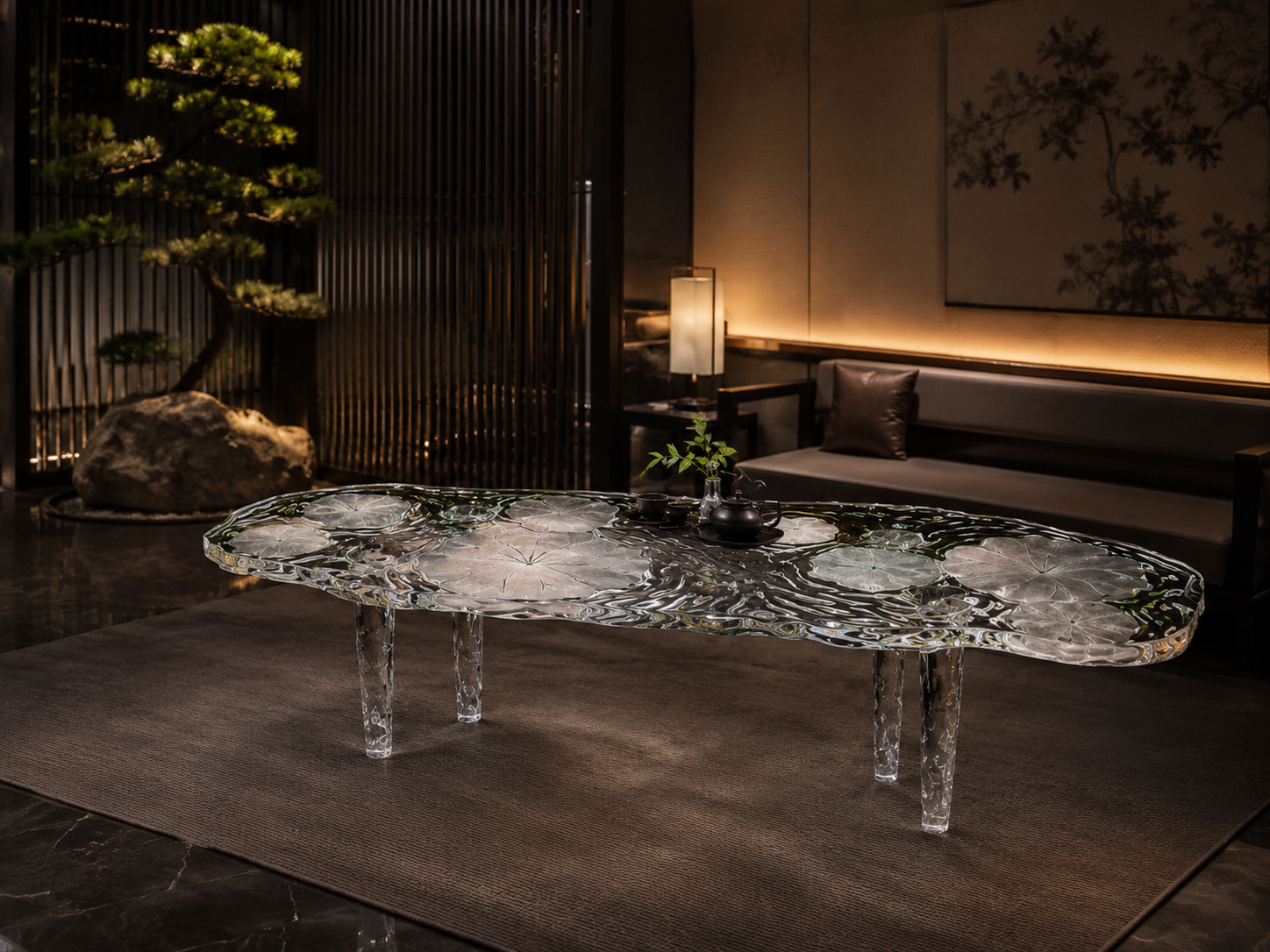
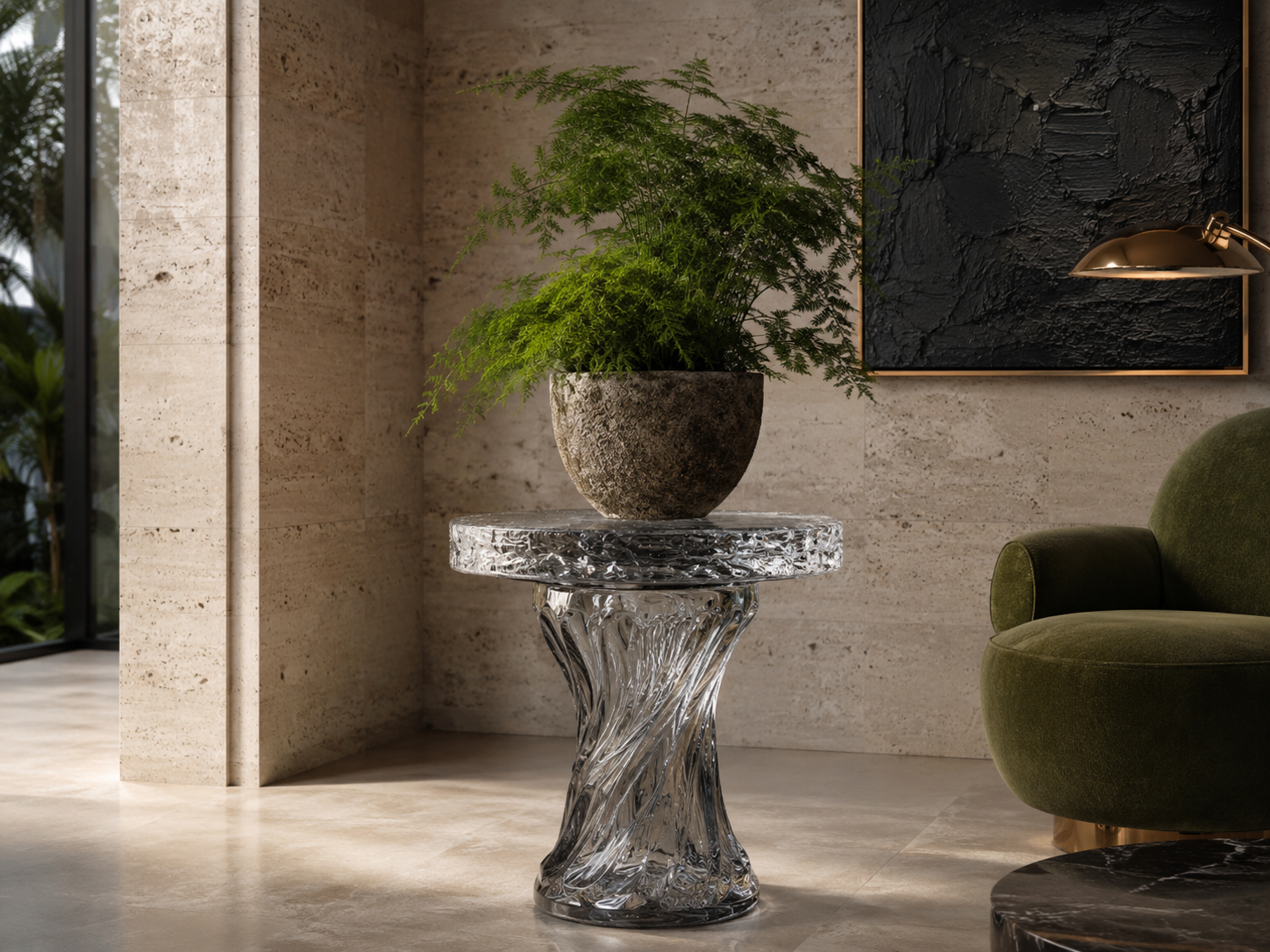
A commercial or residential interior rarely becomes outdated overnight. Visual aging happens gradually. A room begins to feel heavier, surfaces lose their original clarity, furniture accumulates visual noise, and pieces that once looked contemporary start competing with new finishes, lighting, artwork, or brand updates.
This is particularly noticeable in luxury hotels, flagship stores, restaurants, clubs, showrooms, and premium residences. These spaces may undergo soft renovations every few years, yet major furniture pieces are expected to remain in use much longer. The challenge is therefore not simply to select furniture that looks modern when installed. It is to choose materials and forms capable of maintaining visual relevance as the surrounding interior evolves.
Synthetic crystal furniture, high-end casting resin, and premium or platinum-grade acrylic have become increasingly interesting in this context. Their transparency can certainly make an interior look lighter, but their role goes far beyond being “clear furniture.” They can preserve sightlines, interact with architectural light, introduce substantial sculptural forms without adding visual bulk, and adapt to changing color palettes.
When properly engineered and maintained, transparent furniture can become a strategy for reducing visual aging—helping a space continue to feel open, refined, and contemporary years after the original installation.
1. Visual Aging Often Begins With Too Much Visual Weight, Not With Old Furniture
When designers talk about an interior looking “dated,” the furniture is not always physically old. The problem is often accumulated visual weight.
Consider a hotel lobby that originally contained dark timber tables, upholstered lounge furniture, decorative screens, floor lamps, accessories, and large planters. Over time, new artwork is added, technology appears at reception, seasonal displays are introduced, and branding elements change. None of these additions may be problematic individually, but collectively they can make the environment feel increasingly dense.
Research published in the Journal of Retailing found that higher environmental visual complexity can change the way consumers perceive objects by diverting attention and reducing processing fluency. Across five studies, the researchers found that visually complex environments affected perception partly because viewers had more information to process.
For commercial interior designers, the practical implication is important: modernity is often associated not with adding more design, but with controlling how much information the eye must process.
Transparent furniture can help.
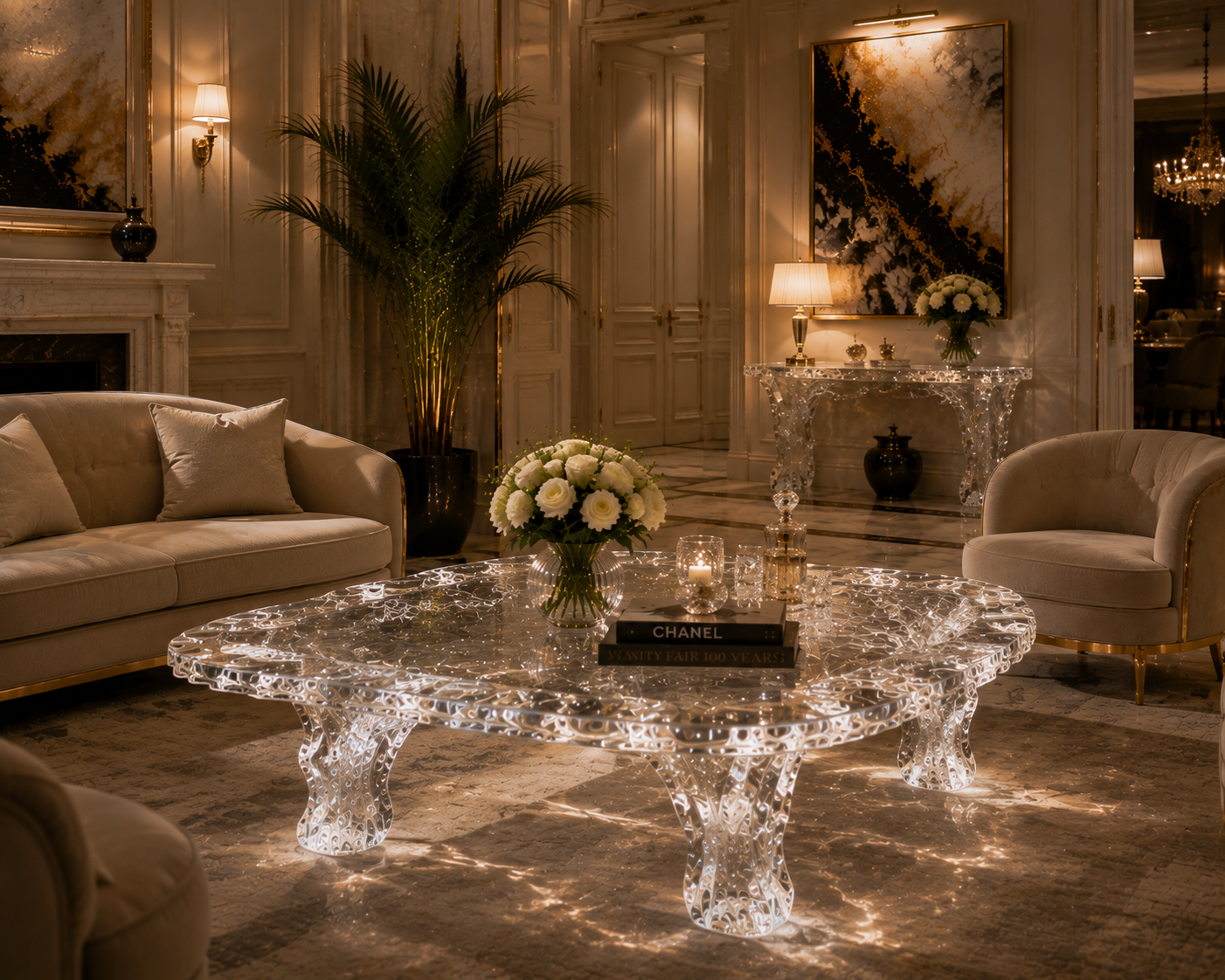
A solid stone console and a synthetic crystal console may occupy almost identical physical dimensions, yet their visual effect can be dramatically different. With a transparent piece, flooring remains visible beneath it, wall finishes continue through it, and surrounding objects are not completely blocked.
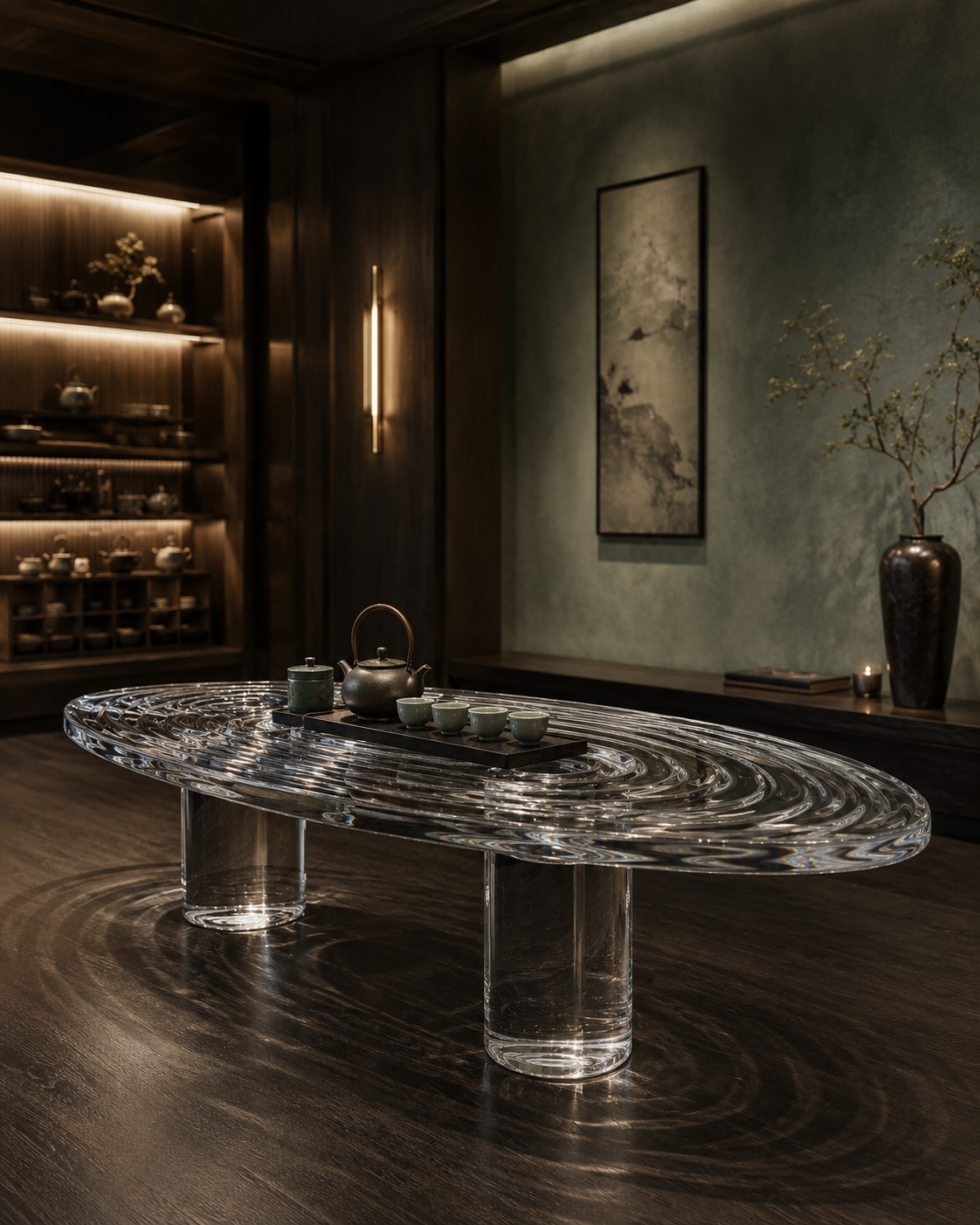
The same principle applies to a platinum acrylic coffee table in a hotel suite or a crystal-like resin pedestal in a luxury retail store. These pieces provide real functional surfaces without dividing the visual field as strongly as opaque furniture.
This becomes particularly valuable when a space already contains expensive architectural materials. If a hotel has book-matched marble flooring, a luxury boutique has intricate stonework, or a residence has panoramic glazing, furniture should not automatically conceal those investments.
Synthetic crystal furniture can create presence without creating obstruction.
This is why transparency should not be confused with minimal substance. A thick synthetic crystal dining-table base can have considerable physical volume and still feel visually lighter than a conventional solid base.
The result is a space that can accommodate substantial furniture while appearing less crowded—and that reduced visual density can help the interior age more gracefully.
2. Transparency Preserves Light and Sightlines, Two Qualities Closely Associated With Contemporary Interiors
One reason interiors start feeling visually older is that their original sense of openness gradually disappears.
New furniture is introduced. Displays become larger. Storage requirements increase. Decorative layers accumulate. What began as a clean architectural composition becomes divided into smaller visual zones.
Transparent furniture behaves differently because it allows the eye to continue reading through the object.
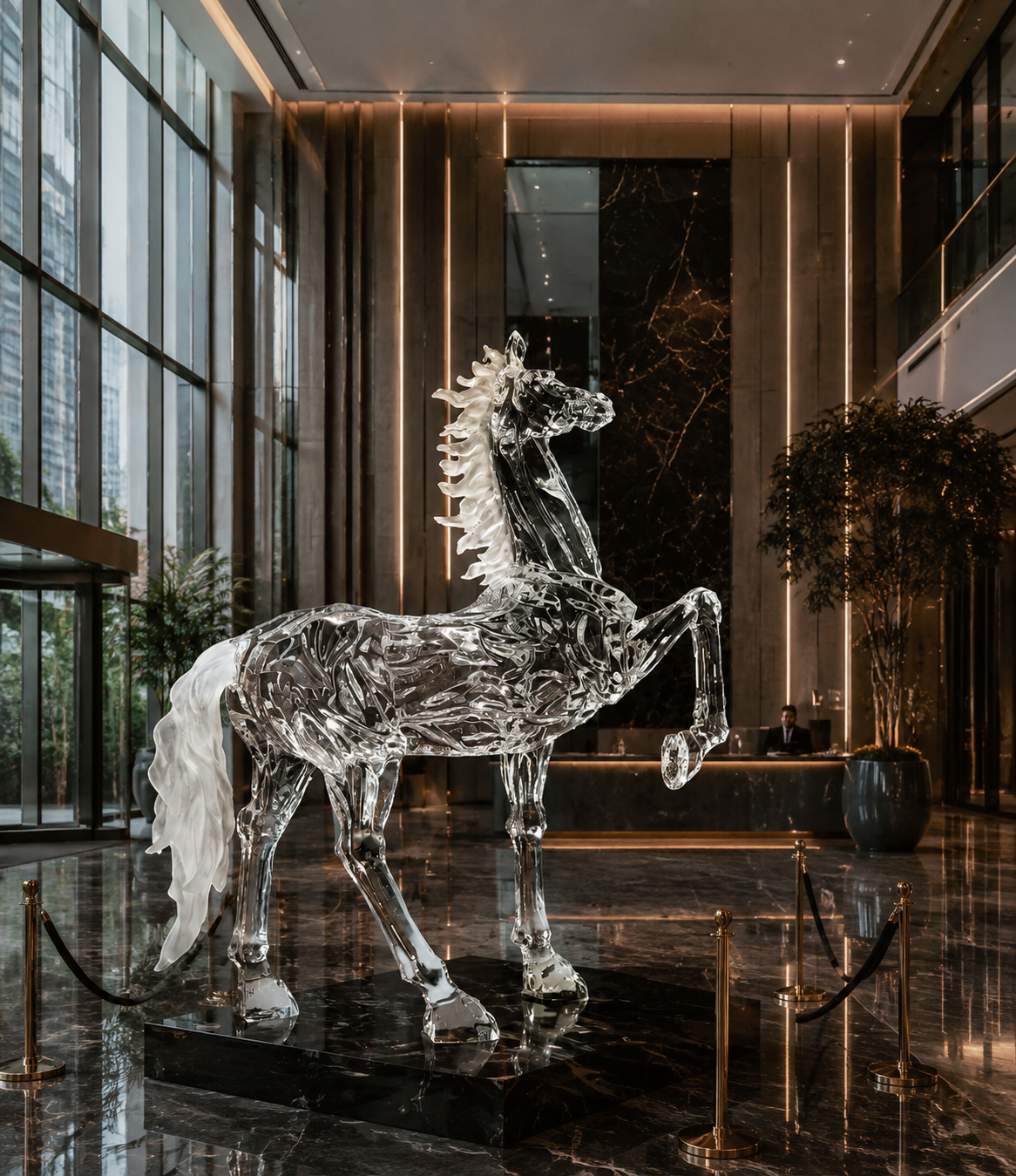
In a luxury boutique, for example, a solid display pedestal interrupts the view from the entrance to the merchandise behind it. A synthetic crystal or platinum acrylic pedestal can support the same product while preserving more of the original sightline.
In a restaurant beside floor-to-ceiling windows, transparent or lightly tinted resin tables can reduce visual competition with the exterior view. In a hotel lobby, a clear console can provide a practical surface while keeping a dramatic stone wall visible.
The optical quality of the material, however, determines whether this effect feels genuinely premium.
ASTM International's D1003 standard is specifically designed to evaluate haze and luminous transmittance in transparent plastics. ASTM explains that scattered light can create a hazy or smoky appearance and notes that haze and light-transmission measurements are valuable for quality control and material specification.
This matters because “transparent” is not a complete performance specification.
Two clear materials may behave very differently when thickness increases. Internal haze, inclusions, surface quality, color neutrality, polishing, and fabrication can all influence the way a finished table or pedestal interacts with light.
High-performance PMMA provides a useful benchmark. PLEXIGLAS reports that one of its optical PMMA film products achieves 92% light transmission with very low haze. The figure belongs to that specific product and should not be generalized to all acrylic furniture, but it demonstrates how significantly optical properties can be engineered and measured.
For premium or platinum-grade acrylic furniture, this is the level of thinking designers and buyers should apply. The important question is not simply whether the material is clear. It is whether the finished furniture maintains the optical effect required by the space.
When light can continue through furniture rather than stopping at every object, interiors tend to retain the openness associated with modern architecture.
3. Synthetic Crystal Creates Sculptural Impact Without Making the Space Feel Heavier
One of the biggest misunderstandings about transparent furniture is that it must be visually quiet.
It can be exactly the opposite.
Synthetic crystal and high-end casting resin allow designers to create large, sculptural furniture forms while controlling how much visual weight those forms introduce into the room.
Imagine a reception area containing a 1.5-meter sculptural side table. If made from dark stone, the piece may feel monumental and permanent. If cast in transparent champagne resin or synthetic crystal, the same volume can appear to capture and transmit light, creating a statement without becoming a visual barrier.
This relationship between transparency and sculpture has a significant history in modern furniture design.
The Museum of Modern Art holds Shiro Kuramata's celebrated Miss Blanche Chair from 1988, produced using acrylic resin, aluminum, and artificial roses. MoMA describes the roses as appearing to float within the chair's acrylic body and identifies the work as an icon of postmodern design.
The significance of that example is not that contemporary manufacturers should reproduce Kuramata's design. It demonstrates something more fundamental: transparent resin can make the internal volume of furniture part of the design itself.
With traditional furniture, visual interest often exists primarily on the surface—grain, upholstery, veneer, carving, or coating. With synthetic crystal and high-end resin, design can exist throughout the material.
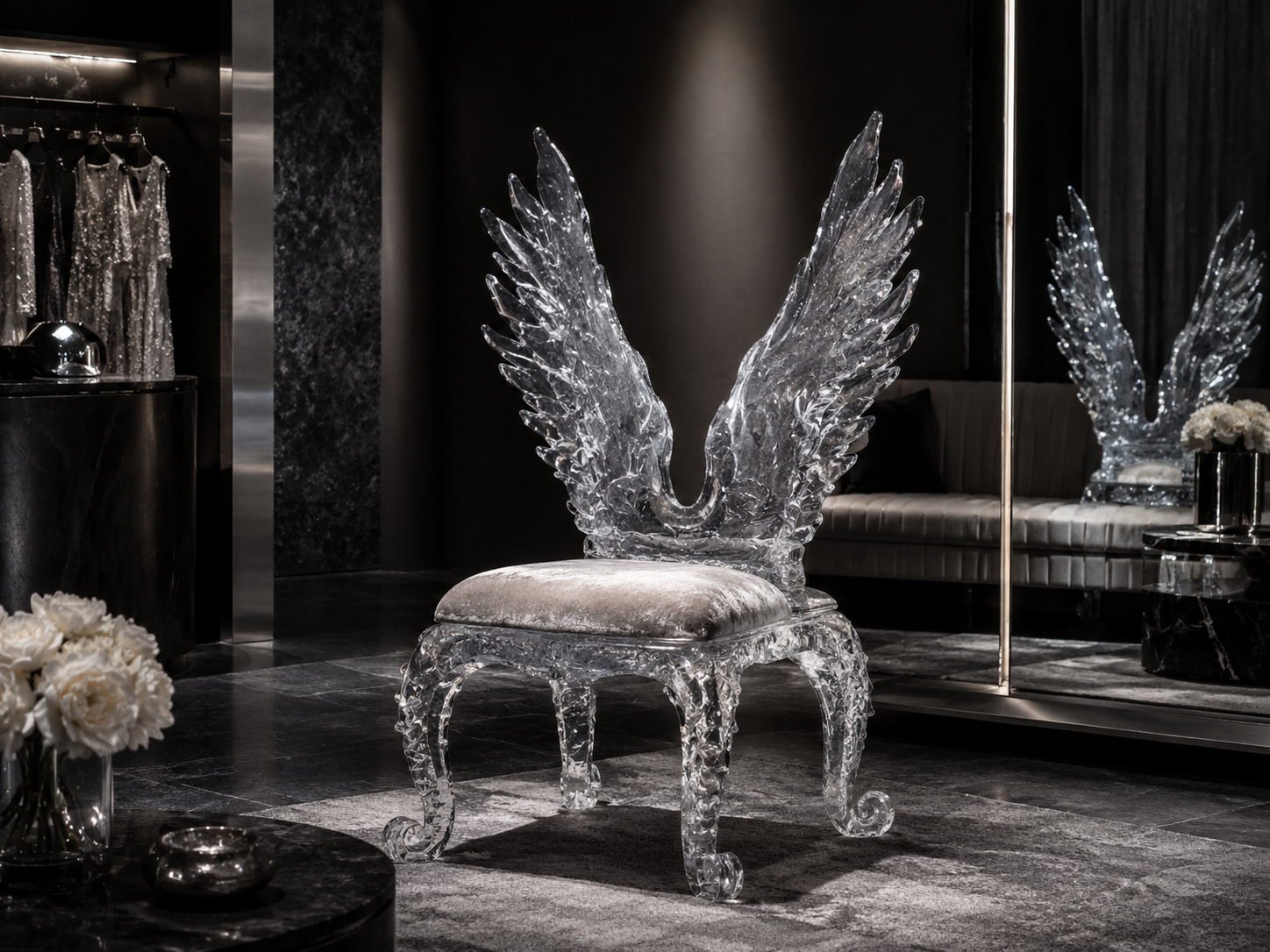
A custom table base can contain controlled bubbles, color gradients, embedded metallic details, suspended elements, textures, or layers of translucency. A resin side table can transition gradually from clear to amber. A synthetic crystal pedestal can resemble carved ice or gemstone geometry. A platinum acrylic console can use highly polished edges so that light concentrates along the perimeter.
These effects allow designers to create recognizable signature pieces without relying entirely on fashionable silhouettes.
That matters when trying to reduce visual aging.
A shape that is strongly associated with one season may eventually look dated. Material-driven furniture is often remembered instead for an experience: the way it catches light, appears to float, changes color throughout the day, or allows another material to remain visible behind it.
Modernity then comes from the relationship between object and space rather than from following a temporary furniture trend.
4. Long-Term Clarity Is What Separates Lasting Transparency From Premature Visual Aging
Transparent furniture can reduce visual aging only if the material itself ages well.
Once a clear surface becomes noticeably yellow, cloudy, scratched, or chemically damaged, transparency can actually make deterioration more obvious because there is very little texture or pattern available to conceal it.
Light exposure is one of the factors designers need to consider.
The Canadian Conservation Institute explains that light and ultraviolet radiation can affect both polymers and their colorants, coatings, and stabilizing additives. Potential effects include discoloration, particularly yellowing in uncolored plastics, as well as loss of mechanical properties, embrittlement, and cracking. Importantly, the institute's guidance lists PMMA as having relatively low sensitivity to sunlight and UV compared with many other plastics.
This does not mean every acrylic product will perform equally well or that every resin system will yellow. It means that the exact polymer formulation matters.
For synthetic crystal furniture and high-end resin furniture, responsible specification should therefore go beyond the commercial name of the material. Designers and procurement teams should understand the resin system, additives, pigments, expected UV exposure, curing process, and any relevant aging or weathering information supplied by the manufacturer.
The same applies to premium acrylic.
PLEXIGLAS states that virtually all of its specified colorless transparent solid sheets, blocks, tubes, and related products covered by its program carry a 30-year guarantee against yellowing and loss of high transparency. This is a product-specific manufacturer guarantee, not evidence that all acrylic products have identical durability, but it demonstrates the performance difference that controlled formulation can make.
In practice, a transparent console placed deep inside a private club experiences different conditions from a resin display table directly behind a sunlit retail façade. Material selection should reflect those differences.
A premium furniture supplier should therefore be able to discuss not only appearance, but also application conditions.
The furniture that remains visually modern is often the furniture whose material was selected for where it would actually live.
5. Maintenance Determines Whether Transparent Furniture Looks Refined or Tired
Visual aging does not come only from sunlight or material chemistry. It also comes from thousands of ordinary interactions.
Fingerprints are cleaned. Tables are wiped. Displays are rearranged. Bags are placed on surfaces. Housekeeping teams use commercial cleaning products. Staff move furniture during events.
In a high-end commercial project, those small actions happen repeatedly.
This is why maintainability must be treated as part of furniture design.
BIFMA, the Business and Institutional Furniture Manufacturers Association, updated its Furniture Surfaces guideline in February 2026. BIFMA G8.1-2026 specifically addresses how furniture surfaces perform when exposed to commonly used cleaning, sanitizing, and disinfecting products, and its scope includes commercial as well as healthcare environments.
That is especially relevant to clear and highly polished furniture.
A dark or heavily textured surface can sometimes disguise fine wear. A high-gloss synthetic crystal table or platinum acrylic console reveals changes much more readily. Cleaning compatibility, scratch behavior, polishing methods, edge treatment, and repairability therefore influence how long the furniture continues looking premium.
For example, a luxury hotel should not select a clear resin coffee table based only on a showroom sample. The operations team should know which cleaners are appropriate. A luxury retail store should understand whether frequent wiping affects the finish of display plinths. A restaurant should evaluate whether its service environment is suitable for a highly polished transparent table or whether a textured or satin surface would age more gracefully.
This is also where high-end manufacturing makes a difference.
Proper casting, curing, machining, sanding, and multi-stage polishing can produce a deeper and more controlled finish. If superficial marks can later be professionally corrected, the useful aesthetic life of the furniture can be extended.
The objective should not be to pretend that furniture will never show use.
The objective is to choose a material whose appearance can be managed over time.
In luxury interiors, maintenance should preserve the design rather than slowly destroy it.
6. Furniture That Adapts to Future Interiors Can Slow Both Visual and Physical Replacement
Perhaps the most valuable characteristic of transparent furniture is its ability to survive a change in context.
Commercial spaces are rarely static for decades. A hotel may replace upholstery after several years. A retailer may change its brand colors. Restaurants repaint walls and modify lighting. Luxury residences evolve as owners change artwork, rugs, and decorative objects.
Furniture that depends heavily on a particular palette can quickly become difficult to reuse.
Clear synthetic crystal, premium acrylic, and carefully selected translucent resin can be more flexible because surrounding colors and materials remain visible through them.
A clear platinum acrylic console can work beside cream limestone today and dark timber five years later. A smoke-colored synthetic crystal side table may fit both warm and cool interiors. A transparent dining base can remain while the stone tabletop, chairs, lighting, or flooring around it changes.
That adaptability has financial and environmental consequences.
The U.S. Environmental Protection Agency reports that approximately 12.1 million tons of furniture and furnishings entered the U.S. municipal solid-waste stream in 2018, with 80.1% of that category going to landfill.
The U.S. Green Building Council has also highlighted the cumulative impact of interior renovation. Its research notes that, assuming typical service cycles of approximately 12 to 15 years for interior elements, repeated replacement over a building's life could create embodied-carbon impacts equal to or greater than the initial structure and enclosure. The report specifically identifies furniture as one of the areas where reuse and reduced replacement deserve more attention.
For owners and designers, this reinforces a different definition of modernity.
A truly modern space is not necessarily one that constantly replaces furniture with the newest shapes. It may be one designed around a smaller number of high-quality pieces capable of remaining visually relevant through several interior updates.
Synthetic crystal furniture, high-end resin tables, transparent consoles, sculptural pedestals, and platinum acrylic bases can support that strategy because they allow physical mass without excessive visual weight, color without complete opacity, and strong identity without blocking the surrounding architecture.
Of course, transparency alone does not guarantee longevity. Material formulation, optical quality, structural design, polishing, UV performance, cleaning compatibility, and manufacturing consistency still determine whether a product deserves to be called high-end.
But when those factors are controlled, transparent furniture offers something particularly useful to contemporary interiors: it can be present without making the room feel full.
That is ultimately how synthetic crystal furniture can reduce visual aging.
It keeps architecture visible. It allows light to travel. It gives designers sculptural freedom without unnecessary visual heaviness. And when the surrounding interior changes, it can often change with it rather than immediately becoming obsolete.
A space does not stay modern simply because it was designed well on opening day.
It stays modern when its materials continue giving the space room to evolve.
READ MORE:
- Beyond Decoration: How Statement Furniture Pieces Shape Brand Identity for Hotels, Retail Spaces, and Luxury Homes
- Why Some Transparent Furniture Looks Expensive While Others Feel Ordinary: A Buyer's Guide to Quality Differences
- How Luxury Interior Designers Use Transparent Materials to Create More Sophisticated Spaces
- What Makes Synthetic Crystal Furniture Valuable? Understanding the Details Behind Premium Transparent Designs
- Why High-End Buyers Are Rethinking Acrylic Furniture: From "Plastic Alternative" to Modern Luxury Material
- How Can One Piece of Furniture Change the Feel of an Entire Space? Understanding the Details of Luxury Through Synthetic Crystal
- If You Want a Commercial Space to Look Premium for Years, Furniture Materials Matter More Than Fashionable Styles
- Why Are More High-End Spaces Turning to Synthetic Crystal Furniture? It Is About Much More Than Transparency
- How Long Does Luxury Last? Why Furniture Materials Determine a Space's "Visual Shelf Life"


