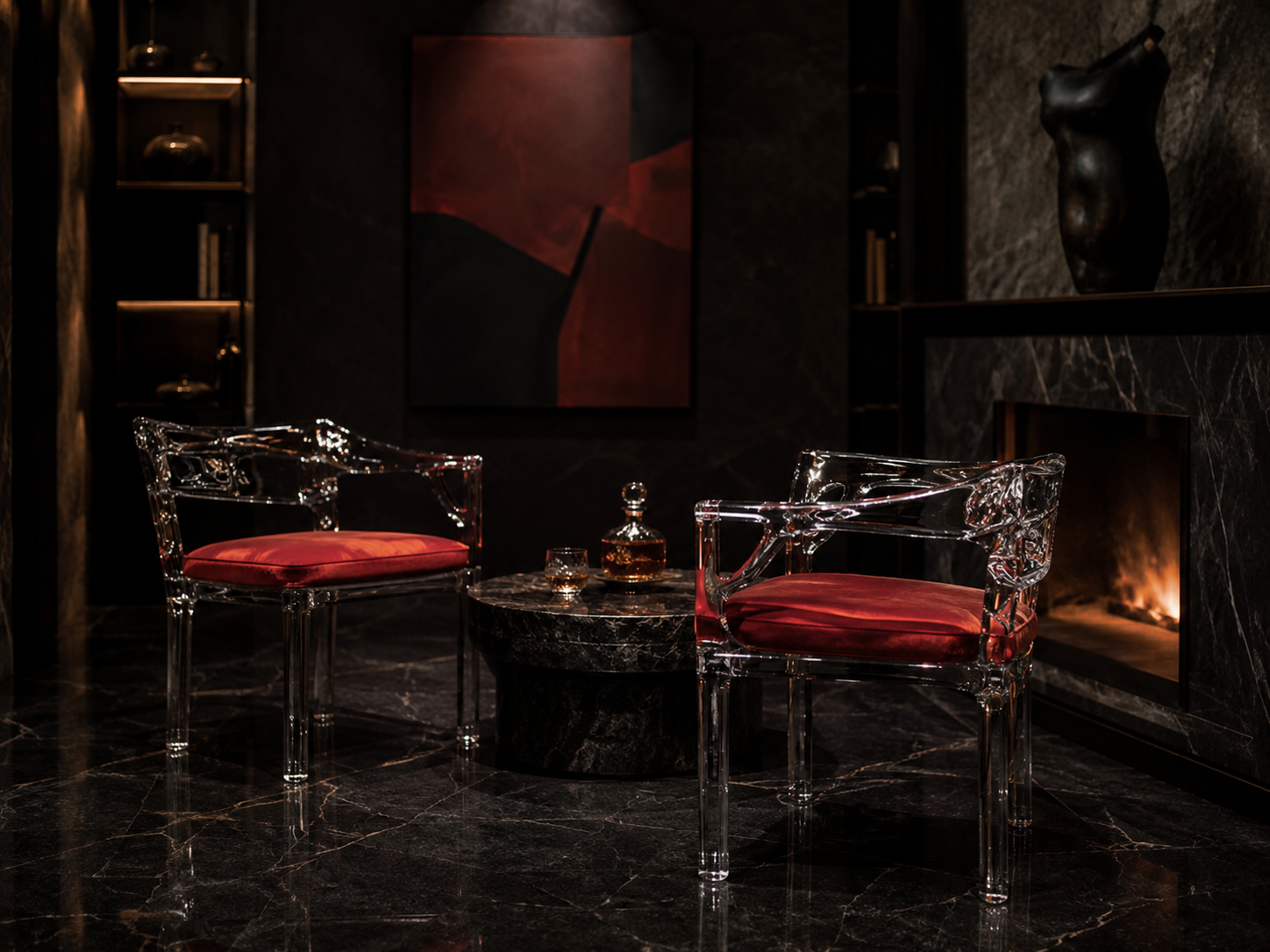
A transparent table can look exceptional in one interior and strangely disconnected in another.
The furniture itself has not changed. The material is the same. The dimensions are the same. The finish is the same. Yet the visual result can be dramatically different.
This is one of the most important lessons designers encounter when working with clear furniture.
High-end synthetic crystal furniture is not visually neutral simply because it is transparent. In fact, transparent furniture is often more dependent on its surroundings than opaque furniture because the environment remains visible through it. Flooring, wall color, lighting, scale, architecture, nearby materials, circulation, furniture density, and even the distance between objects all influence whether a synthetic crystal table feels refined or misplaced.
For interior designers, architects, hospitality specialists, and commercial project teams, this means specifying the right table is only part of the task. The larger challenge is understanding how that table participates in the total composition of the room.
When the relationship is right, synthetic crystal can make a space feel lighter, sharper, more luxurious, and more intentional.
When it is wrong, even a beautifully made piece can feel as though it arrived from a different project.
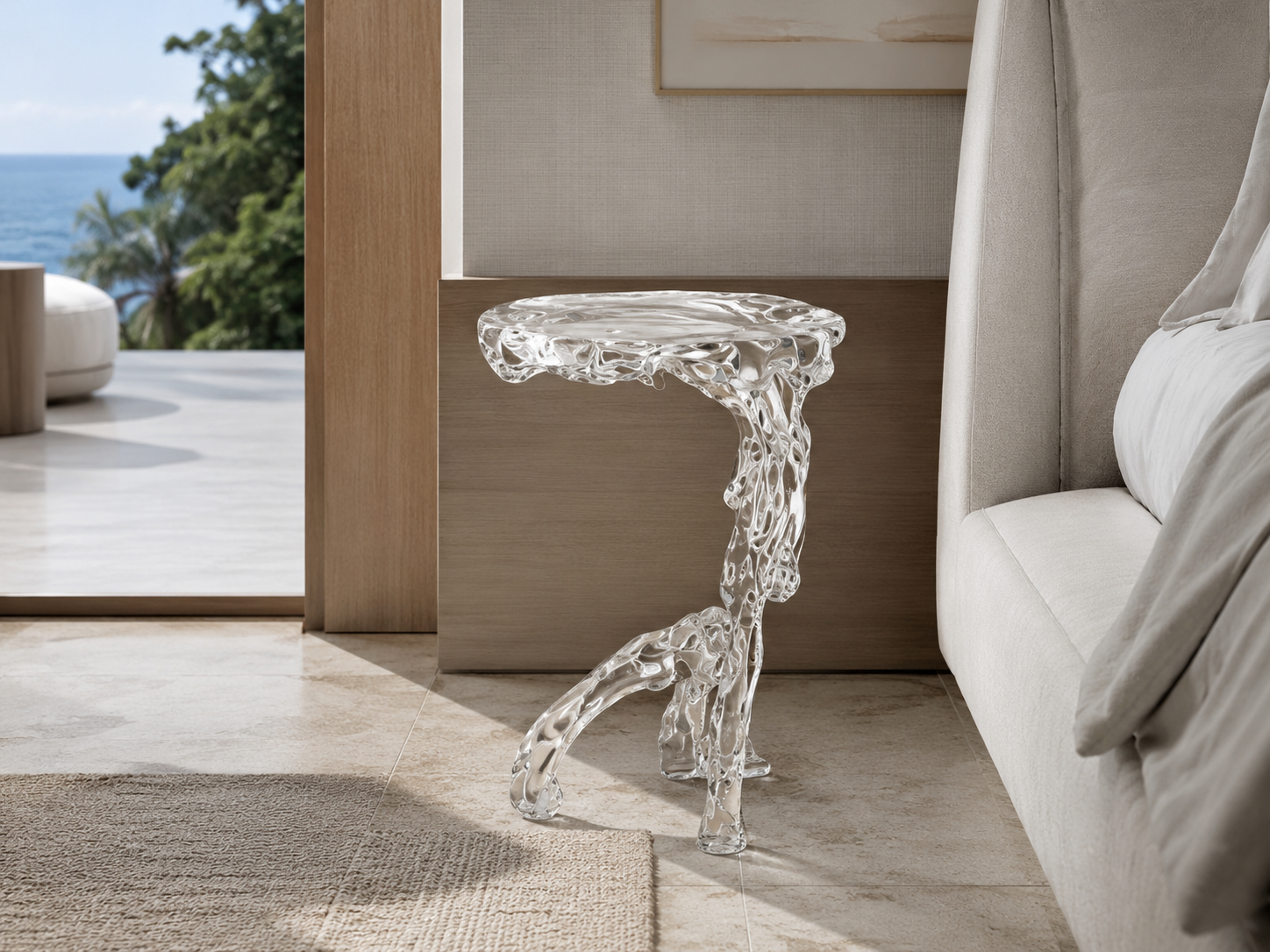
Transparent Furniture Does Not Disappear
One of the most persistent misconceptions about clear furniture is that it “goes with everything.”
It does not.
Transparency reduces visual mass, but it does not eliminate visual identity.
A synthetic crystal table still has proportion, thickness, geometry, edge detail, reflection, scale, and surface presence. It still interacts with light. It still occupies physical space. It still creates relationships with the objects around it.
The difference is that those relationships are more exposed.
An opaque wood table can establish its own visual territory. A transparent table allows flooring, rugs, walls, lighting, and adjacent furniture to remain visible through and around it.
This makes the surrounding composition much more important.
The table is not simply placed inside the room.
The room becomes part of the table's appearance.
Context Determines Whether Transparency Feels Luxurious
Luxury is often contextual.
The same material can feel elevated in one environment and ordinary in another depending on how it is used.
A thick synthetic crystal coffee table positioned in a restrained living room with natural stone, textured upholstery, and carefully controlled lighting may feel sculptural and sophisticated.
Place the same table in a visually crowded space with too many competing finishes, and its impact can weaken dramatically.
This is because transparent furniture depends on contrast.
It needs something to respond to.
Texture.
Color.
Shadow.
Architectural scale.
Material weight.
Negative space.
Without these relationships, transparency can become visually flat.
For designers, the key is not asking whether a clear table is beautiful in isolation.
The better question is whether the room gives that table the conditions it needs to look beautiful.
Scale Is Often the First Reason a Table Feels Wrong
Acrylic and synthetic crystal furniture can be deceptive because transparency reduces perceived visual weight.
A table may appear substantial in a showroom or product image but seem undersized when placed in a large room.
This is especially common in luxury residences, hotel lobbies, large lounges, and open-plan commercial environments.
The physical dimensions may be technically correct, yet the furniture lacks enough presence to anchor the space.
Designers often need to compensate for this by considering larger proportions, greater thickness, stronger geometry, or a more sculptural base.
The opposite can also happen.
In a compact room, an oversized transparent table may preserve sightlines but still dominate circulation and create physical awkwardness.
Transparency does not cancel scale.
A table can look visually light while still being physically too large.
Sophisticated interiors balance both.
Proportion Matters More Than People Expect
Two synthetic crystal tables with similar footprints can create completely different impressions depending on proportion.
The relationship between tabletop thickness, leg width, base geometry, height, and negative space influences whether a piece feels elegant or clumsy.
In a minimalist interior, this becomes especially important because there are fewer decorative elements to distract from the furniture's structure.
A table with very thin supports may look refined in a small room but visually weak in a large hospitality setting.
A heavily proportioned table may feel architectural in a spacious villa but too dominant in a compact apartment.
This is why custom furniture can be so valuable in high-end projects.
The table can be proportioned specifically for the architecture rather than forcing the architecture to accommodate a standardized object.
Flooring Changes Everything
Because synthetic crystal is transparent, the floor beneath it becomes part of the composition.
This is one of the biggest reasons the same table can look different from one interior to another.
On pale stone flooring, a transparent table may appear almost weightless.
On dark timber, its polished edges and structure can become much more visible.
On patterned stone or a decorative rug, the table allows those details to remain visually continuous.
On highly reflective flooring, the furniture may create additional layers of reflection and depth.
Each of these conditions changes the visual character of the piece.
A table that feels understated on light limestone may feel dramatically more graphic on black stone.
A piece that looks crisp on polished concrete may feel warmer when placed over timber.
For designers, the floor is not simply beneath the furniture.
With transparent furniture, it is visually inside the furniture.
Rugs Can Either Anchor or Confuse a Clear Table
Rugs are particularly important beneath synthetic crystal coffee and dining tables.
A well-chosen rug can give transparent furniture enough visual contrast to define its shape.
It can create a clear zone within the room and help the table feel intentionally positioned.
But the wrong rug can create visual confusion.
Highly detailed patterns may become distorted through overlapping transparent surfaces and reflections.
A rug that is too small can make the table appear disconnected from the seating arrangement.
A rug with insufficient contrast may cause parts of the furniture to disappear visually.
This does not mean designers should avoid pattern.
It means the pattern, scale, table geometry, and lighting should be considered together.
When these elements are coordinated, transparency can actually reveal more of the rug and create a layered effect that opaque furniture would hide.
Wall Color Influences the Perceived Clarity of the Table
Background color has a major impact on clear furniture.
Against a light wall, a synthetic crystal table or console may appear subtle and almost invisible.
Against a dark wall, the edges can become much more pronounced.
Against textured plaster, stone, or decorative panels, the table may create depth by allowing the wall to remain visible through the furniture.
The right background can make a simple transparent piece feel architectural.
The wrong background can make it disappear too much or compete with unnecessary visual information.
This is particularly relevant for consoles and side tables positioned close to walls.
A transparent console in front of a strong feature surface can feel sophisticated because the material reveals rather than conceals the architecture.
That relationship is one of the strongest advantages of synthetic crystal in premium interiors.
Lighting Can Make the Same Table Feel Warm, Cold, Dramatic, or Quiet
Lighting is another major factor.
Under soft warm lighting, synthetic crystal can reflect amber tones and feel elegant, residential, and inviting.
Under cooler directional lighting, the same table may appear sharper and more architectural.
Under flat general lighting, the optical qualities of the material may be less visible.
Under carefully positioned spotlights or natural side light, polished edges can become pronounced and give the table much more presence.
This is why a table seen in a showroom can look very different after installation.
The lighting environment has changed.
For designers, this reinforces an important point: furniture and lighting should be considered together.
A clear table that depends on edge reflection may need a different lighting strategy from a table intended to remain visually quiet.
The material is responsive.
The design should be too.
Synthetic Crystal Works Best When It Has Material Contrast
Transparent furniture often becomes more sophisticated when positioned beside materials with strong visual character.
Natural stone provides weight.
Timber provides warmth.
Metal introduces precision.
Leather and textiles provide softness.
Synthetic crystal introduces clarity and visual lightness.
These contrasts help each material feel more intentional.
A clear table beside a pale boucle sofa creates a different experience from the same table beside black leather.
A synthetic crystal base beneath a stone top can make the stone appear to float.
A transparent console with metal accents can feel sharper and more architectural.
Without contrast, clear furniture can sometimes feel visually unresolved.
With the right contrast, it becomes a balancing element within the room.
Too Much Transparency Can Weaken the Effect
One transparent statement piece can feel distinctive.
An entire room filled with clear furniture can feel very different.
When too many transparent objects are used together, the interior may lose hierarchy.
Instead of creating visual lightness, the room can become optically complicated because multiple edges, reflections, and overlapping forms compete simultaneously.
Luxury interiors usually benefit from editing.
Synthetic crystal is particularly effective when used selectively.
A strong table can anchor the composition.
A pair of side tables can introduce continuity.
A console can create a quiet architectural gesture.
But when every object is transparent, the material may lose its specialness.
Premium design often comes from restraint.
Furniture Density Changes How Clear Pieces Are Perceived
A synthetic crystal table needs enough visual breathing room.
In crowded interiors, transparent furniture may technically preserve sightlines, but it can still feel lost among too many objects.
This is particularly important in residential living rooms, hotel lounges, and retail environments where furniture density can become high.
Clear furniture performs best when the surrounding arrangement gives it space to read.
This does not mean the interior must be minimal.
It means there should be a clear hierarchy.
If the table is intended as a statement piece, nearby furniture should support rather than compete with it.
If the table is intended to disappear visually, then stronger elements can take the lead.
Design intention should determine density.
Architecture Sets the Tone
A room's architecture strongly influences whether synthetic crystal feels natural or forced.
In contemporary architecture with clean lines, large openings, and strong material transitions, transparent furniture often integrates easily.
In highly ornate or historically detailed spaces, the same table can either create an exciting contrast or feel disconnected depending on how the rest of the room is handled.
There is no universal rule that synthetic crystal belongs only in modern interiors.
The more useful principle is coherence.
A clear table can work in classical surroundings if it creates a deliberate material contrast and the proportions are appropriate.
It can fail in a modern room if the scale, finish, or surrounding furniture feels unresolved.
Style labels are less important than relationships.
Clear Furniture Needs a Reason to Be There
One of the most common mistakes is selecting transparent furniture simply because it looks unusual.
In strong interior projects, every material has a role.
Synthetic crystal might be used to preserve a view.
It might reduce visual weight.
It might reveal a rug or stone floor.
It might create contrast with heavy upholstery.
It might reflect architectural lighting.
It might support products in a retail setting without competing with them.
When the reason is clear, the furniture feels integrated.
When there is no strong reason, the piece can feel decorative rather than architectural.
Designers often recognize this instinctively.
The best transparent furniture rarely feels added.
It feels necessary.
Nearby Furniture Determines Whether the Table Feels Balanced
A coffee table is never seen alone.
It is seen in relation to sofas, lounge chairs, side tables, rugs, lamps, and architectural boundaries.
A clear table beside oversized soft seating can create a compelling contrast between mass and transparency.
The same table surrounded by visually delicate furniture may lack enough distinction.
Likewise, highly sculptural seating paired with an equally complex transparent table may create competition.
The strongest combinations often involve balance.
One element leads.
The others support.
Synthetic crystal works especially well as a visual counterweight because it can introduce structure without adding excessive visual mass.
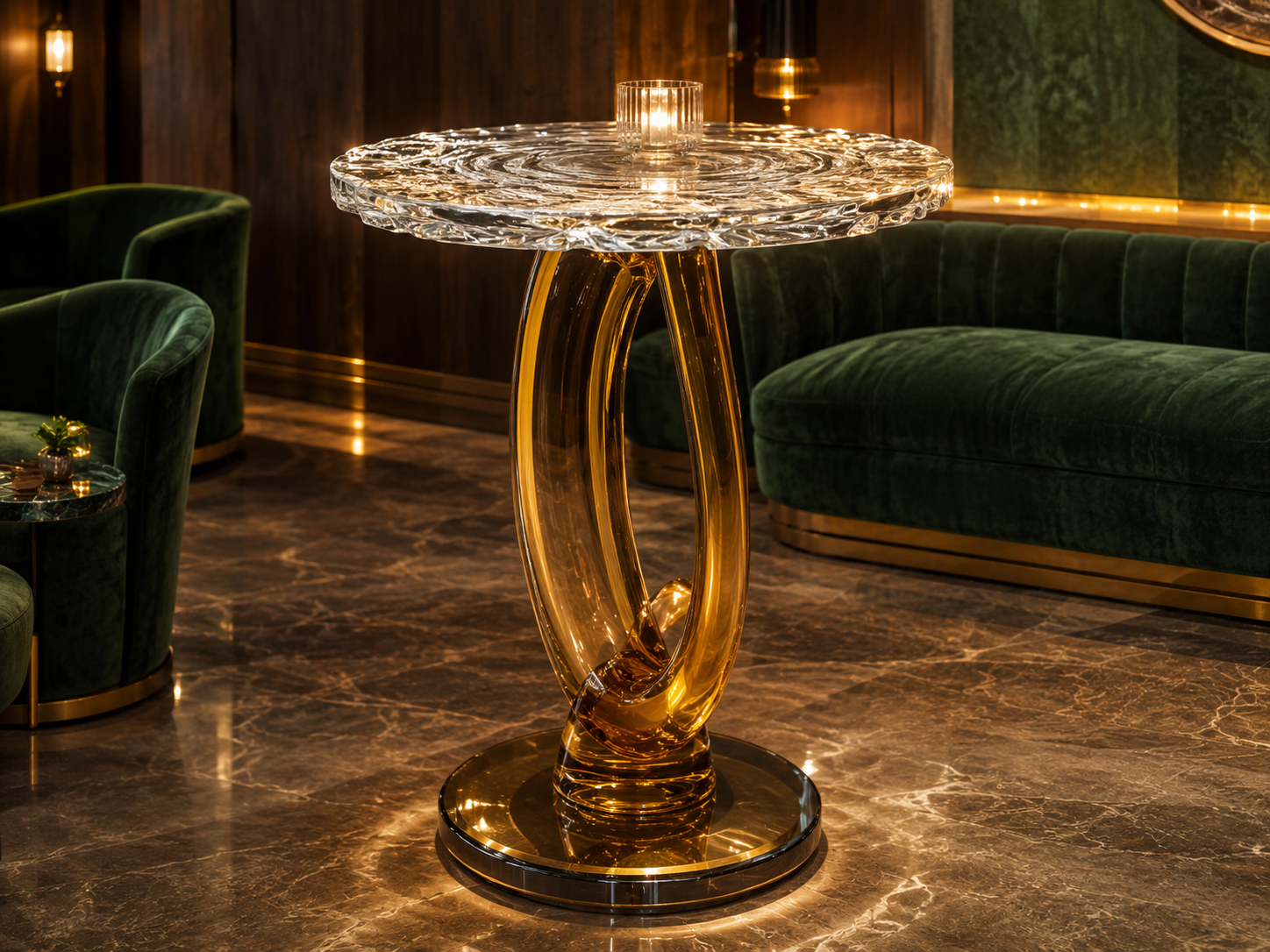
Color Palettes Affect the Mood of Transparent Furniture
Although synthetic crystal is clear, color still matters.
The furniture reflects and refracts surrounding colors.
Warm interiors can give the piece a softer character.
Cool interiors can make it feel more precise.
Dark palettes can emphasize the edges.
Pale palettes can reduce visual contrast and make the table appear almost ethereal.
Strong accent colors may appear in reflected fragments across the surface.
This is why transparent furniture can feel surprisingly different in a beige residential interior compared with a monochrome retail space.
The furniture adapts visually to the palette.
Designers can use this intentionally.
Texture Is Essential in Minimal Interiors
Minimal interiors with transparent furniture need texture.
Without it, the room can feel too smooth and visually thin.
Textured plaster, stone, woven upholstery, timber grain, hand-finished metal, and soft textiles can create the richness that synthetic crystal needs in order to stand out.
The contrast between transparency and texture is particularly effective.
A polished synthetic crystal table beside a heavily textured sofa can feel more luxurious because each material strengthens the other.
This is an important lesson for designers working with restrained palettes.
Luxury does not always require more color.
Sometimes it requires more material depth.
Ceiling Height Can Affect Furniture Presence
Ceiling height is often overlooked when specifying tables.
In rooms with very high ceilings, furniture can appear smaller than expected.
A thin transparent table may struggle to establish enough presence in a double-height lobby or expansive villa.
In these situations, thicker material, larger dimensions, or stronger geometry may be more appropriate.
In lower-ceilinged rooms, the opposite may be true.
A highly substantial table can feel disproportionately heavy even if it is transparent.
The vertical scale of the room affects how horizontal furniture is perceived.
This is particularly relevant in hospitality and luxury residential projects where ceiling heights can vary dramatically.
Circulation Matters as Much as Appearance
A table can look perfect in a rendering and still feel wrong once people begin moving around it.
Transparent furniture must be evaluated physically as well as visually.
Because clear edges can visually recede, circulation should be especially carefully considered.
The piece needs enough space around it.
It should not interrupt natural movement.
It should feel stable and intentional within the plan.
A table that is visually elegant but constantly avoided by guests because it sits awkwardly in a circulation path will never feel fully resolved.
Good design aligns appearance with use.
Viewpoints Change the Experience
A synthetic crystal table can look dramatically different from different angles.
From one direction, the main surfaces may almost disappear.
From another, polished edges can align and become visually stronger.
Reflections may appear or disappear depending on the viewer's position.
This means designers should not evaluate transparent furniture from only one “hero” viewpoint.
The piece should be considered from entrances, seating positions, circulation paths, and adjacent rooms.
This is particularly important in open-plan interiors and hospitality spaces where people experience furniture dynamically.
Luxury furniture should remain convincing as the viewer moves.
Photography Can Expose a Weak Composition
Transparent furniture can look excellent in person but difficult in photographs if the surrounding composition is not well controlled.
This matters increasingly for designers.
Completed interiors are photographed for portfolios, hospitality marketing, developer presentations, social media, and publications.
On camera, reflections may become stronger.
Background objects may appear through the furniture in unexpected ways.
A table that seems subtle in person may nearly disappear from certain angles.
This makes placement and lighting important not only for the physical experience but also for the way the project is communicated.
For design studios sharing work on LinkedIn, this is particularly relevant.
A thoughtfully positioned synthetic crystal piece can make an interior image feel more layered, distinctive, and editorial.
Why This Matters for Designers Sharing Projects on LinkedIn
Professional design communities do not respond only to attractive images.
They respond to ideas.
A transparent table becomes much more interesting when it demonstrates a clear design strategy.
Perhaps it was chosen to preserve a stone floor pattern.
Perhaps its thickness was adjusted to suit a large lobby.
Perhaps its transparency allows a sculptural staircase to remain visible.
Perhaps lighting was positioned specifically to emphasize the polished edges.
These decisions give designers something to discuss beyond aesthetics.
When sharing projects with peers, clients, and collaborators, the strongest stories explain why a material was used and what problem it solved.
Synthetic crystal becomes more compelling when it is presented as part of spatial thinking rather than as a decorative novelty.
Commercial Spaces Require a Different Approach From Residential Interiors
A table that works beautifully in a private living room may not translate directly to a hotel lobby or retail environment.
Commercial interiors often involve larger scale, higher traffic, stronger lighting, and more complex viewing angles.
Furniture may need greater physical presence.
Structural performance becomes more important.
The material may be seen under bright spotlights and from close range.
In these spaces, proportion and craftsmanship become even more critical.
Synthetic crystal can work extremely well, but the design should respond specifically to commercial conditions.
This is one reason custom manufacturing is valuable.
The furniture can be adapted to the project rather than simply transferred from another context.
Luxury Residential Spaces Need Emotional Balance
Residential interiors introduce another consideration: comfort.
A transparent table can make a room feel elegant and open, but if every surrounding material is hard, polished, and reflective, the space may feel emotionally cold.
Soft furnishings, textiles, warm wood, rugs, and controlled lighting can balance the clarity of synthetic crystal.
This creates a more livable form of luxury.
The furniture remains visually distinctive without making the room feel like a showroom.
For residential designers, this balance is essential.
A successful luxury home should feel considered, not staged.
Hospitality Spaces Need Memorable but Durable Solutions
Hotels, restaurants, and lounges often want furniture that creates a strong impression while supporting daily use.
Synthetic crystal can provide this visual distinction, but the project must consider thickness, construction, maintenance, and installation.
The most successful hospitality applications combine beauty with operational realism.
A dramatic table is only effective if it remains stable, practical, and visually refined over time.
This is why manufacturer collaboration should begin early.
Technical decisions can affect appearance just as strongly as conceptual ones.
High-End Retail Uses Context to Control Attention
In luxury retail, the same synthetic crystal table may be used less as a statement object and more as a supporting device.
The objective is often to keep merchandise visually dominant.
This changes the design strategy.
The furniture may need to be quieter.
Lighting may focus on the displayed product rather than the table.
Transparency may be used to reduce visual competition.
The surrounding background may be intentionally restrained.
Here, sophistication comes from control.
The table is successful precisely because it does not demand too much attention.
This shows how context changes the role of the material.
Customization Helps Solve Context Problems
One of the strongest advantages of synthetic crystal furniture is that it can be customized.
If a standard table feels too small, too thin, too heavy, too tall, or too visually weak for a particular room, the design can be adjusted.
Dimensions can respond to the architecture.
Thickness can be modified.
Geometry can be simplified or strengthened.
Clear or subtly tinted material can be considered depending on the project.
Details can be coordinated with metal, stone, or other finishes.
This allows the furniture to belong to the room rather than merely fit inside it.
For designers, that distinction is significant.
Manufacturer Quality Affects Context More Than It Seems
Even the best interior composition can be weakened by poor furniture execution.
Transparent materials reveal imperfections clearly.
Inconsistent polishing, visible bonding, inaccurate alignment, surface distortion, or weak edge finishing can become particularly noticeable when the surrounding interior is highly refined.
Luxury environments raise the visual standard.
The better the architecture and lighting, the more obvious mediocre furniture becomes.
This is why designers should evaluate synthetic crystal manufacturers not only by whether they can produce the form, but whether they can preserve the quality expected by the project.
Material clarity, machining accuracy, polishing, structural understanding, and communication all matter.
The Most Successful Rooms Create a Dialogue Between Furniture and Space
Good interiors are not collections of individually attractive objects.
They are systems of relationships.
Furniture responds to architecture.
Lighting responds to material.
Texture responds to transparency.
Scale responds to volume.
Color responds to reflection.
When these relationships are strong, even a simple synthetic crystal table can feel exceptional.
When they are weak, even an expensive piece can feel misplaced.
This is why transparent furniture is such an interesting test of design skill.
It exposes the quality of the surrounding composition.
Conclusion: The Table Is Only Half the Design
The same acrylic table can look sophisticated in one room and completely out of place in another because transparent furniture does not exist independently from its environment.
Its success depends on scale, proportion, flooring, lighting, wall color, texture, architecture, surrounding furniture, circulation, and the role the designer wants the piece to play.
High-end synthetic crystal furniture is especially responsive to these conditions. Its clarity allows surrounding materials to remain visible. Its polished edges react to light. Its physical scale can feel lighter than opaque furniture. Its presence shifts as people move through the room.
For designers, this is not a limitation.
It is an opportunity.
The most successful projects do not ask whether a transparent table is beautiful on its own. They ask whether its dimensions, material, lighting, and surroundings create the right relationship for that specific space.
Because in truly sophisticated interiors, furniture is never simply placed into a room; it becomes part of the architecture's visual logic.
And the next time the same clear table looks extraordinary in one project and strangely wrong in another, the most useful question may be this: was the furniture really the problem, or did the room never learn how to work with it?
READ MORE:
- Why Product Photography Can Misrepresent the True Quality of Clear Acrylic Furniture
- When Should Acrylic Furniture Be the Focal Point—and When Should It Stay Visually Quiet?
- What Buyers Often Overlook When Ordering Large Acrylic Furniture for International Projects
- How Lighting Changes the Color, Depth, and Presence of Clear Acrylic Furniture
- Le 4 domande che i designer di hotel fanno più spesso quando scelgono mobili in cristallo sintetico
- I 3 problemi dei materiali che preoccupano di più negli upgrade alberghieri: quali può risolvere l’arredo in cristallo sintetico?
- Da una lobby ordinaria a uno spazio premium: come tavolini da caffè e side table in cristallo sintetico diventano il punto focale del design alberghiero
- Creating a Memorable Hotel Space Without an Expensive Renovation: A Light-Touch Upgrade Strategy with Synthetic Crystal Furniture
- Budget limitato: come aumentare il valore percepito della lobby di un hotel con arredi in cristallo sintetico


