Luxury clients do not necessarily pay more because a piece of furniture uses more material, weighs more, or carries a higher price tag. They pay when an object creates a convincing sense of quality—something that can be seen from across a room, examined at close range, and still appreciated years later.
This distinction has become increasingly important in the luxury market. BCG and Altagamma’s True-Luxury Global Consumer Insight found that 89% of very important luxury clients value luxury products for their craftsmanship and quality. More recent Altagamma and BCG research published in 2025 found that top-tier consumers represent only about 0.1% of customers but generate approximately 37% of luxury market value.
These customers can afford alternatives. What makes them pay a premium is therefore rarely functionality alone. A table still needs to hold objects; a console still needs to provide a surface; a display pedestal still needs to support merchandise. The premium begins when those basic functions are transformed through material clarity, proportion, finishing, optical depth, detailing, customization, and longevity.
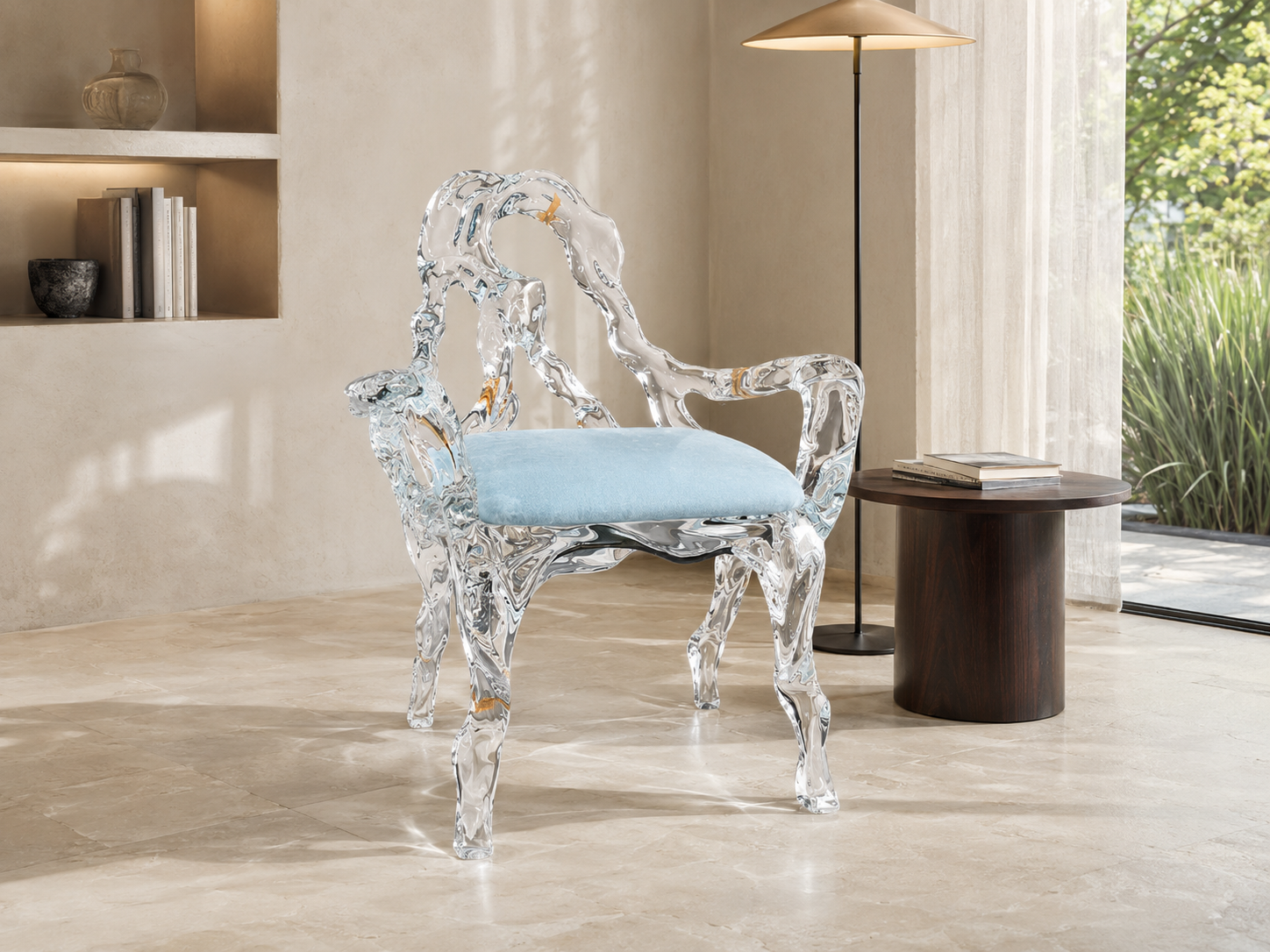
This is particularly relevant to synthetic crystal furniture, high-end resin furniture, and platinum acrylic furniture. Because these materials are transparent or translucent, they expose rather than conceal manufacturing quality. Edge polishing, bonding, casting, color consistency, internal clarity, thickness, geometry, and interaction with light all become part of the customer's perception of value.
Understanding those details helps explain why sophisticated buyers are willing to pay for what designers often call materiality—and what clients simply recognize as “quality.”
1. High-End Customers Pay for Quality They Can Perceive, Not Simply for Expensive Materials
Luxury consumption is becoming more selective.
McKinsey's 2026 analysis of luxury consumers in the United States and China concluded that craftsmanship and quality have effectively become the “price of entry” for luxury brands. In other words, high price alone is not enough to convince sophisticated clients. Quality is expected before exclusivity, storytelling, or branding can add further value.
McKinsey's State of Fashion 2026 reaches a similar conclusion. Among high-net-worth shoppers, stronger product quality and craftsmanship are among the leading factors that could encourage greater luxury spending. This comes after years in which some luxury companies raised prices faster than they improved product quality or creativity, creating greater scrutiny from consumers.
Furniture buyers behave in much the same way.
Consider two clear console tables photographed from several meters away. At first glance, both might appear similar. Move closer, however, and the difference becomes obvious. One may have cloudy edges, obvious seams, inconsistent polishing, tiny bubbles, distorted surfaces, rough machining marks, or a slight undesirable color cast. The other may have controlled transparency, precisely finished edges, clean bonding, consistent thickness, and carefully resolved junctions.
The raw material might account for only part of the price difference. The rest lies in processing accuracy and quality control.
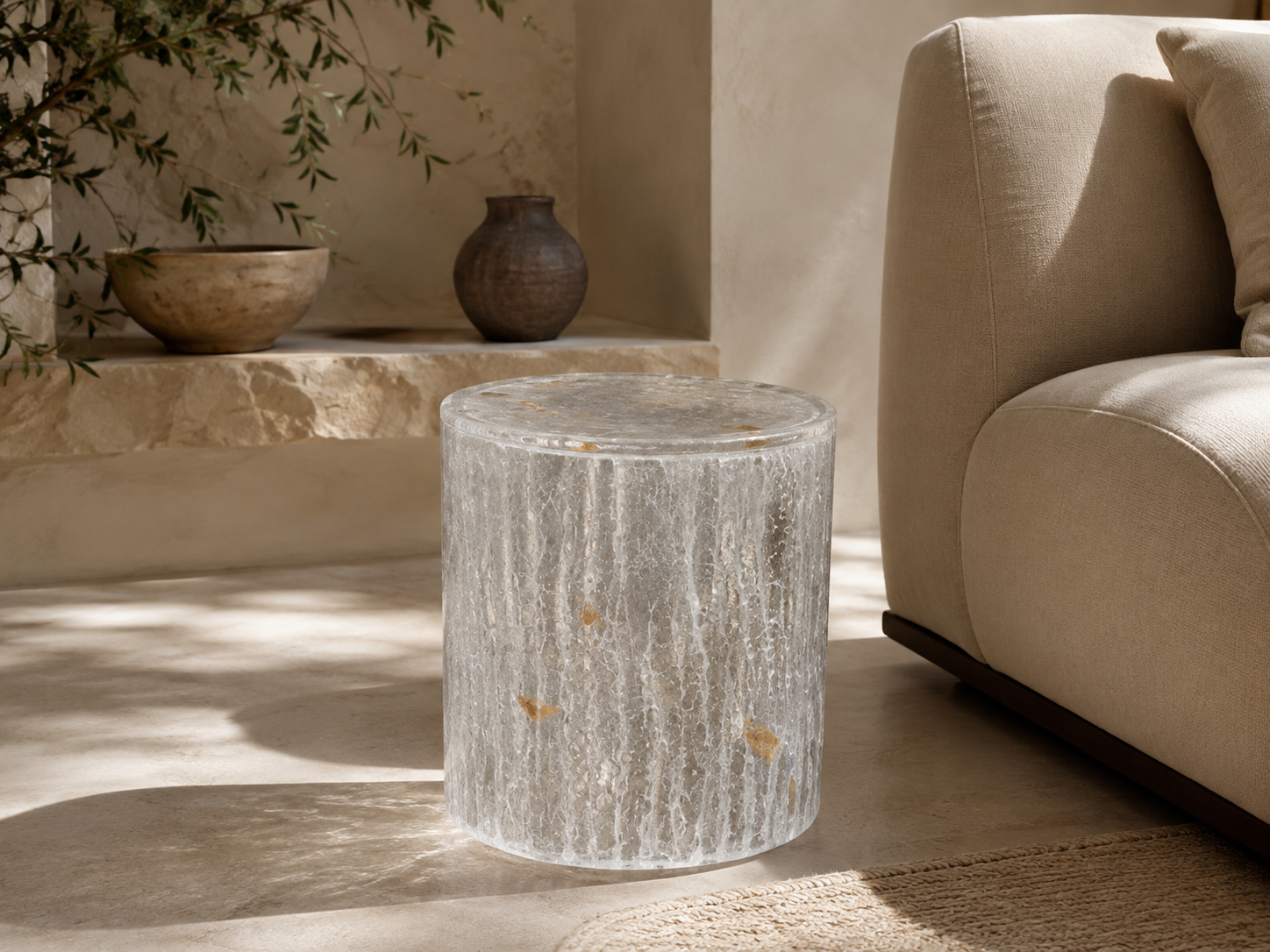
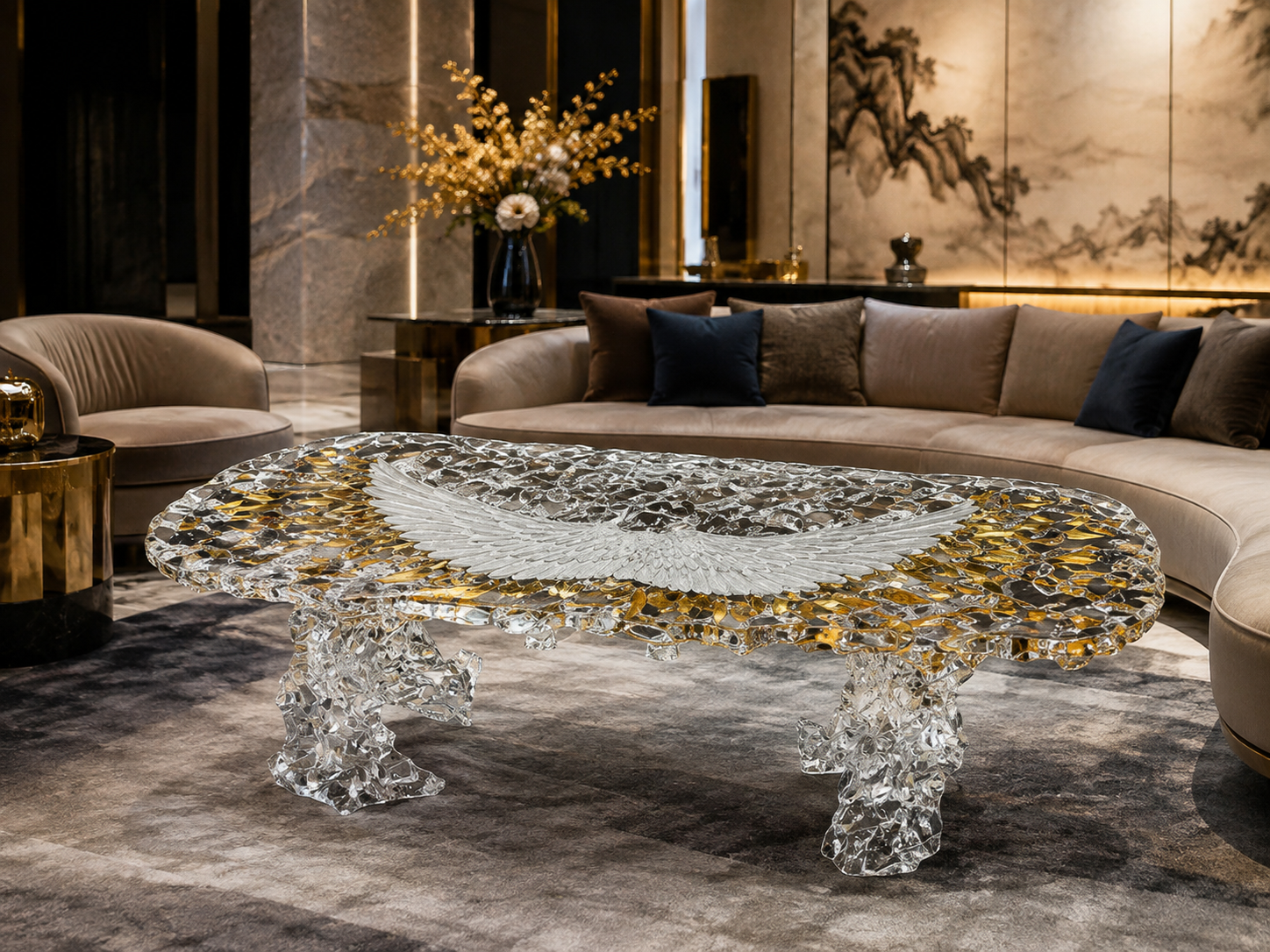
Synthetic crystal furniture makes this particularly visible because transparent materials cannot easily hide production shortcuts beneath paint, veneer, upholstery, or decorative coatings. A thick synthetic crystal coffee table, clear dining-table base, or transparent console effectively displays its manufacturing quality from every angle.
For high-end customers, this visibility matters. They are often purchasing furniture for luxury residences, penthouses, villas, hotels, private clubs, flagship stores, galleries, and executive spaces where objects are not merely used; they are inspected as part of the entire environment.
The client is therefore paying not simply for “a transparent table,” but for confidence that the object will continue to look intentional under scrutiny.
2. The Human Eye Reads Material Quality Before the Hand Ever Touches the Furniture
Why can people often sense that one transparent object looks expensive and another looks ordinary even before they understand the technical differences?
Vision science offers an explanation.
A major review in the Annual Review of Vision Science explains that humans can rapidly infer material characteristics simply by looking. We routinely judge whether a surface appears smooth or rough, hard or soft, glossy or matte without physically touching it. These impressions emerge from complex relationships between lighting, geometry, reflectance, texture, and transparency.
Research published in Vision Research similarly describes perceived gloss as a multidimensional phenomenon. Gloss cannot be explained by a single measurement; illumination, surface texture, highlights, contrast, geometry, and viewing conditions interact to produce what the observer perceives.
That scientific principle has very practical consequences for furniture.
Take the edge of a thick synthetic crystal side table. If it is polished precisely, light can form clean highlights along the edge while the body of the material retains optical depth. If the polishing is inconsistent, the edge may appear hazy or dull. The difference can be only millimeters in physical terms, yet visually it can change the entire impression of the product.
The same applies to high-end resin. A resin console with carefully controlled translucency, color gradient, embedded detail, or mineral-like texture can appear almost sculptural. But uncontrolled bubbles, uneven coloration, poorly finished casting lines, or visible sanding marks immediately reduce perceived quality.
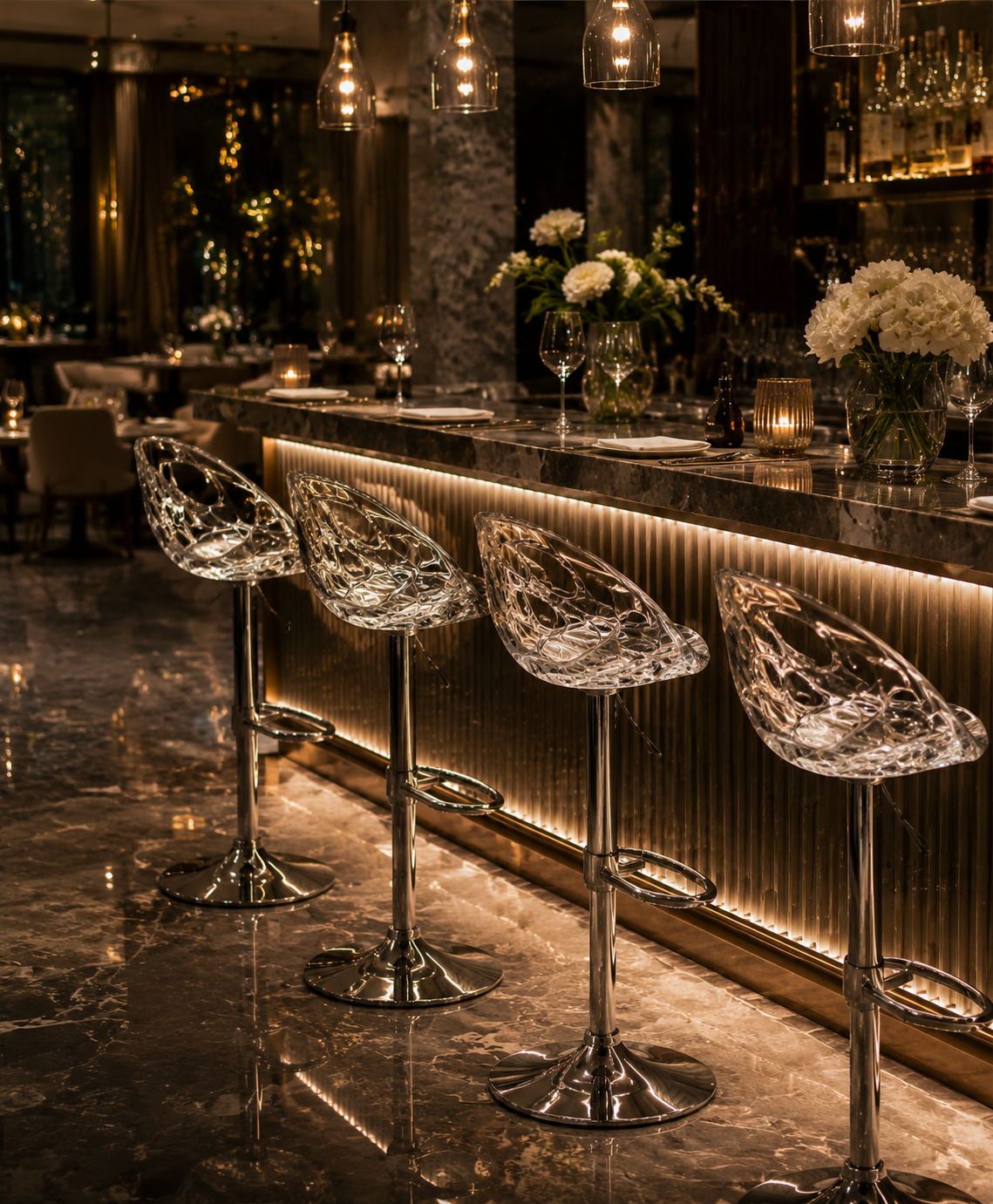
Platinum acrylic furniture requires the same attention. A thick clear acrylic table base may look simple in a drawing, yet producing a luxury result involves decisions about sheet or block quality, machining, bonding, corner treatment, surface polishing, and the relationship between transparency and thickness.
This is why luxury furniture often looks “simple” but is difficult to execute.
There may be fewer decorative elements to distract the eye. Every surface becomes part of the design language.
High-end clients are paying for this visual coherence. They may not use technical terms such as specular reflection or optical clarity, but they can perceive the result immediately.
3. Optical Clarity and Light Interaction Turn Transparent Furniture Into a Spatial Material
Transparency is not valuable simply because it allows someone to see through an object. Its real design value comes from what it does to the space around it.
The International WELL Building Institute notes that much of the light people experience indoors reaches the eye after reflecting from surrounding surfaces. WELL also recognizes brightness as an important contributor to both visual appeal and the perception of spaciousness.
Transparent and reflective furniture can therefore become part of the lighting composition of an interior.
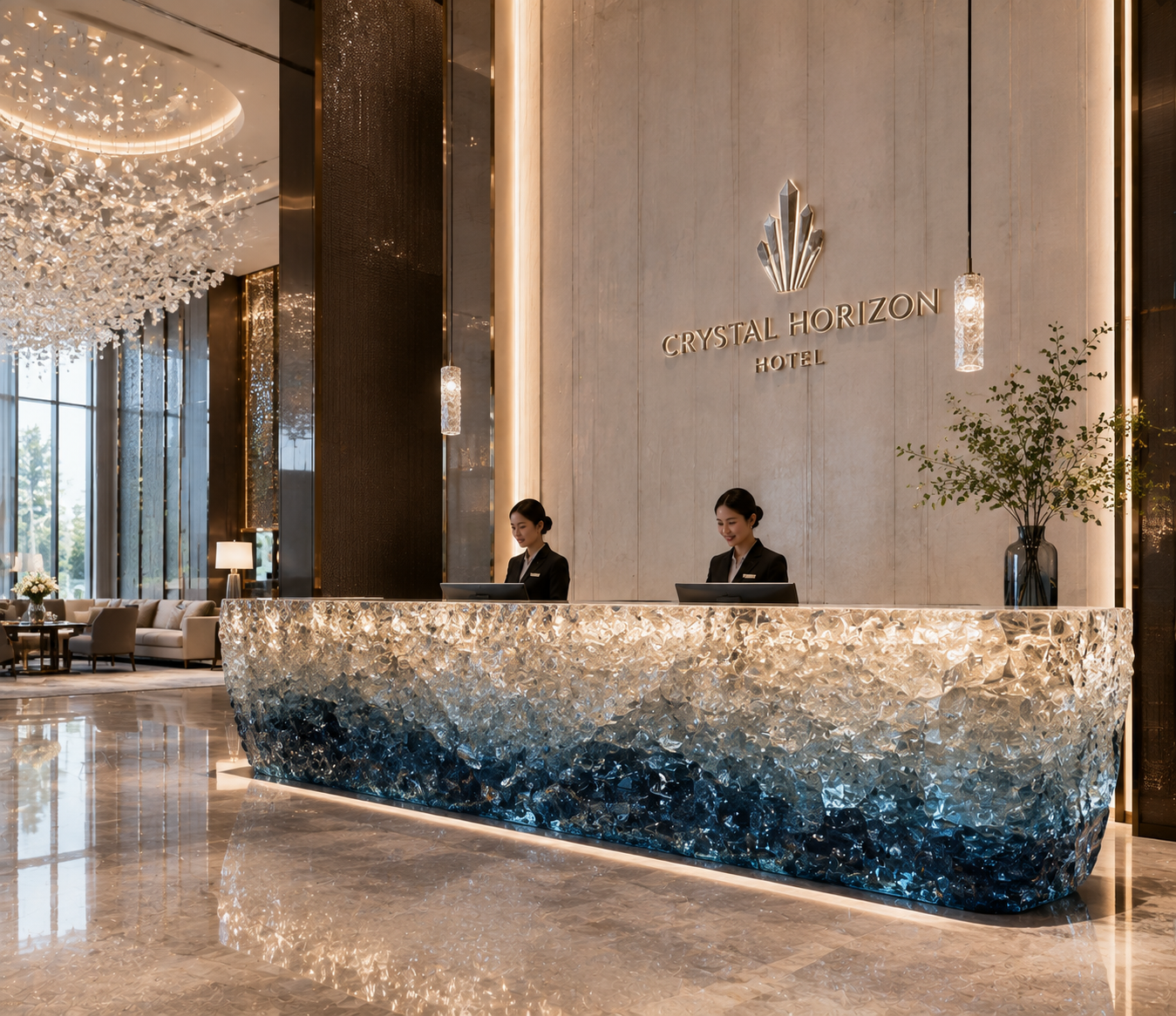
A clear synthetic crystal coffee table placed above a hand-knotted rug allows the rug pattern to remain visually uninterrupted. A platinum acrylic dining-table base can support a substantial stone top while appearing lighter than an opaque timber pedestal. A transparent console in a hotel lobby can define a functional zone without creating the visual barrier of a solid cabinet.
Material specifications help explain why high-quality acrylic can perform particularly well in these applications. Röhm reports visible-light transmission of up to 92% for clear-transparent PLEXIGLAS PMMA products. The company also notes that this transparency can remain high even at substantial material thicknesses.
This does not mean every acrylic grade automatically delivers identical performance, nor does it mean acrylic, resin, and synthetic crystal should be treated as interchangeable. Each formulation and manufacturing process has different characteristics. But it demonstrates why optical quality is a measurable material property rather than simply a marketing description.
Imagine a luxury living room with travertine floors, warm oak panels, bronze lighting, and sculptural upholstered seating. Adding another heavy opaque coffee table may make the center of the room feel crowded. A thick synthetic crystal table can provide physical presence while preserving visual continuity.
In luxury retail, the same principle is even more powerful. Transparent display plinths can support handbags, jewelry, watches, perfume, or art while minimizing competition with the merchandise itself.
The client is paying for more than a material object. The furniture is altering the visual weight, light distribution, and hierarchy of the entire room.
That spatial effect is part of its value.
4. Premium Resin and Synthetic Crystal Create Value Through Depth, Color, and Controlled Imperfection
Not every high-end transparent furniture piece needs to be perfectly colorless.
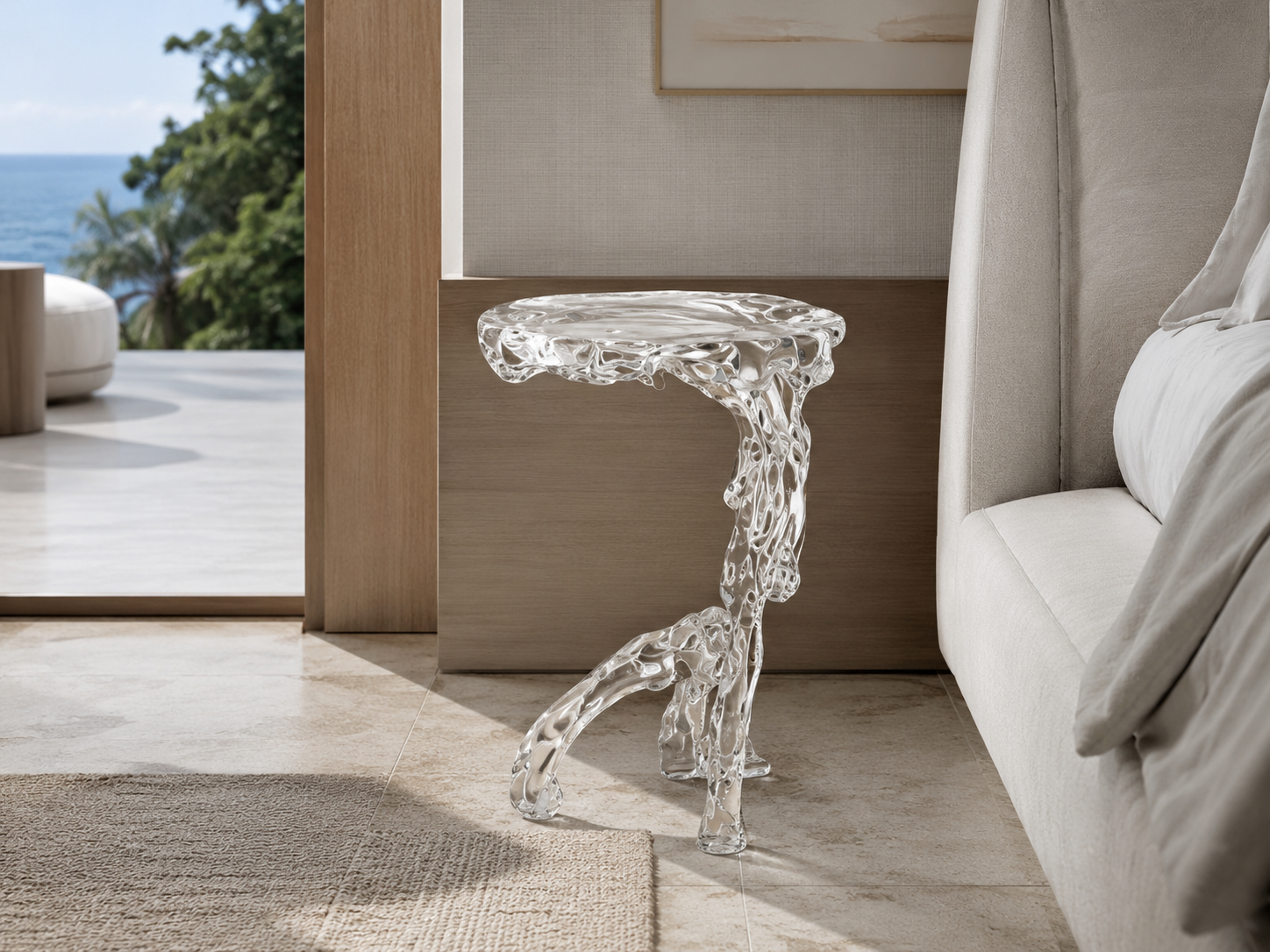
In fact, some of the most distinctive effects come from controlled color, translucency, internal texture, or embedded elements. High-end resin is particularly useful because casting allows designers to create visual characteristics that are difficult to reproduce with conventional glass, stone, timber, or sheet materials.
Sika, one of the world's major specialty chemical manufacturers, identifies transparent epoxy systems specifically for furniture, decorative objects, deep-pour castings, embeddings, and river tables. Its SikaBiresin TD150 system, for example, is described as a highly transparent casting resin suitable for pours of up to 45 mm at 20°C and is designed with good UV resistance and self-degassing behavior.
The significance for luxury furniture is not the specific product itself, but what modern casting technology makes possible.
A high-end resin dining table can incorporate a smoky gradient that changes density through its thickness. A console can contain metallic inclusions positioned deliberately inside the casting rather than simply applied to the surface. A side table can move from clear to amber or champagne tones, creating the impression of frozen liquid. Resin can also be combined with timber, stone, metal, or other decorative materials.
Synthetic crystal furniture can pursue a different visual character: cleaner, more architectural, and more jewel-like. Thick sections can create optical depth, while faceted or polished geometries produce changing highlights as people move through the room.
Platinum acrylic can offer yet another expression—high precision, sharp geometry, clean transparency, and contemporary minimalism.
The important word is “controlled.”
Luxury clients are not paying for random effects. They are paying for the appearance of intention. A bubble can either look like a manufacturing defect or, in a deliberately artistic casting concept, become part of a carefully controlled composition. A colored resin surface can look inexpensive if pigment distribution is inconsistent, but sophisticated when its gradient and transparency have been deliberately engineered.
High-end materiality is therefore not necessarily about perfect uniformity.
It is about whether the result looks designed rather than accidental.
5. Long-Term Appearance Is Part of the Luxury Price, Even When Customers Do Not Mention It at First
The moment of purchase is only the beginning of a luxury product's value.
A transparent table may look spectacular when newly installed, but customers will eventually judge it after months and years of daylight exposure, cleaning, touching, moving, and everyday use. For hotels, luxury retail stores, restaurants, and clubs, that wear cycle may be considerably more demanding than in a private residence.
This is why material specification matters as much as initial appearance.
UV stability is a good example. Transparent polymer materials vary significantly in their resistance to yellowing. Röhm states that specified clear PLEXIGLAS products carry a 30-year guarantee against visible yellowing and are designed to retain a high level of light transmission, illustrating how seriously premium acrylic manufacturers treat long-term optical stability. These figures should not automatically be applied to every acrylic product, but they provide a useful benchmark for understanding what high-grade material engineering can achieve.
Resins also vary. Sika's documentation emphasizes UV resistance as a relevant performance property in transparent casting systems, reinforcing the importance of selecting resin chemistry according to the intended application rather than buying material solely because it appears clear when first poured.
For synthetic crystal, high-end resin, and platinum acrylic furniture manufacturers, premium positioning therefore requires more than beautiful photography. It requires discussion of material grade, expected use, surface care, bonding quality, structural design, finishing methods, packaging, transportation, and installation.
A luxury hotel purchasing twenty custom resin side tables does not want furniture that photographs well on opening day but becomes visibly degraded after repeated maintenance cycles. An architect specifying a transparent console in a sunlit penthouse wants confidence that the selected material is appropriate for that environment.
The higher the price, the longer the customer's expectation horizon becomes.
Quality that lasts is one of the least dramatic aspects of luxury—and one of the most important.
6. Ultimately, High-End Clients Pay for Distinction: Material Details Turn Furniture Into Something Difficult to Replace
The strongest luxury products are not merely expensive versions of standard products. They are difficult to substitute.
Deloitte's Global Powers of Luxury 2026, based on input from 420 senior executives across ten countries, found that innovation in materials and production was identified by 22.6% of executives as one of the most transformative forces shaping luxury over the next five years. Customer experience and loyalty were also the most frequently cited growth opportunity, selected by 28.6% of executives.
The implication for high-end furniture is significant.
If a customer can find ten nearly identical clear coffee tables online, transparency alone cannot justify a premium. A higher-value proposition begins when the table has a distinctive thickness, proprietary color, sculptural geometry, technically difficult joint, unusually clean optical depth, customized dimensions, or a material combination designed for a specific interior.
A synthetic crystal console can be manufactured to align with the proportions of a hotel entrance. A platinum acrylic dining-table base can be engineered around a client's chosen marble slab. A high-end resin side table can be color-matched to an interior designer's palette. A transparent display pedestal can be developed around the lighting and merchandising concept of a luxury boutique.
This level of customization changes the buying conversation.
The customer is no longer comparing only price per table. They are evaluating whether the piece belongs to their particular project.
Altagamma and BCG's 2025 research found that top-tier luxury clients increasingly expect personalization, intimacy, excellence, and recognition from brands. These expectations translate naturally into interior design, where wealthy clients frequently want homes, hospitality spaces, and commercial environments that do not feel standardized.
This is where material detail becomes commercially powerful.
A precisely polished synthetic crystal edge, a controlled resin gradient, a virtually invisible acrylic joint, a substantial clear table leg, or a custom-colored translucent furniture component may appear to be a small technical detail. Yet those details create the difference between a product that can be easily replaced and one that feels specific to its environment.
High-end customers are therefore not simply paying for “better plastic,” “more resin,” or “a clearer table.”
They are paying for material confidence, visual precision, durability, customization, and the emotional satisfaction of owning something whose quality remains convincing from every angle.
That is the real commercial meaning of materiality in luxury furniture.
When synthetic crystal, high-end resin, and platinum acrylic are treated as sophisticated design materials rather than inexpensive substitutes for glass or stone, their value changes completely. They can manipulate light, reduce visual weight, introduce optical depth, create colors and forms that other materials cannot easily achieve, and connect furniture more closely to the architecture around it.
For the high-end client, those qualities are not decorative extras.
They are precisely what makes the piece worth paying for.
READ MORE:
- When Furniture Starts to Look the Same: How Material Details Create Differentiation — A Synthetic Crystal Approach
- How Synthetic Crystal Furniture Uses Transparency to Create an Airy, Understated Luxury Interior
- Customers Care About More Than Furniture Form: How Synthetic Crystal Material Details Influence Purchase Decisions
- The Luxury of a Space Often Hides in the Details: How Synthetic Crystal Furniture Elevates Overall Visual Quality
- Synthetic Crystal Acrylic Furniture: Building the Next Generation of High-End Living with Innovative Materials
- Why Crystal-Grade Acrylic Is Becoming an Important Direction for the Future of Furniture Design
- Synthetic Crystal Acrylic Furniture: Giving Brands a Distinctive Identity in the High-End Market
- From Material Breakthrough to Spatial Upgrade: The New Value Created by Synthetic Crystal Acrylic Furniture
- Synthetic Crystal Acrylic Furniture: Why High-End Homes Are Embracing “Transparent Luxury”


