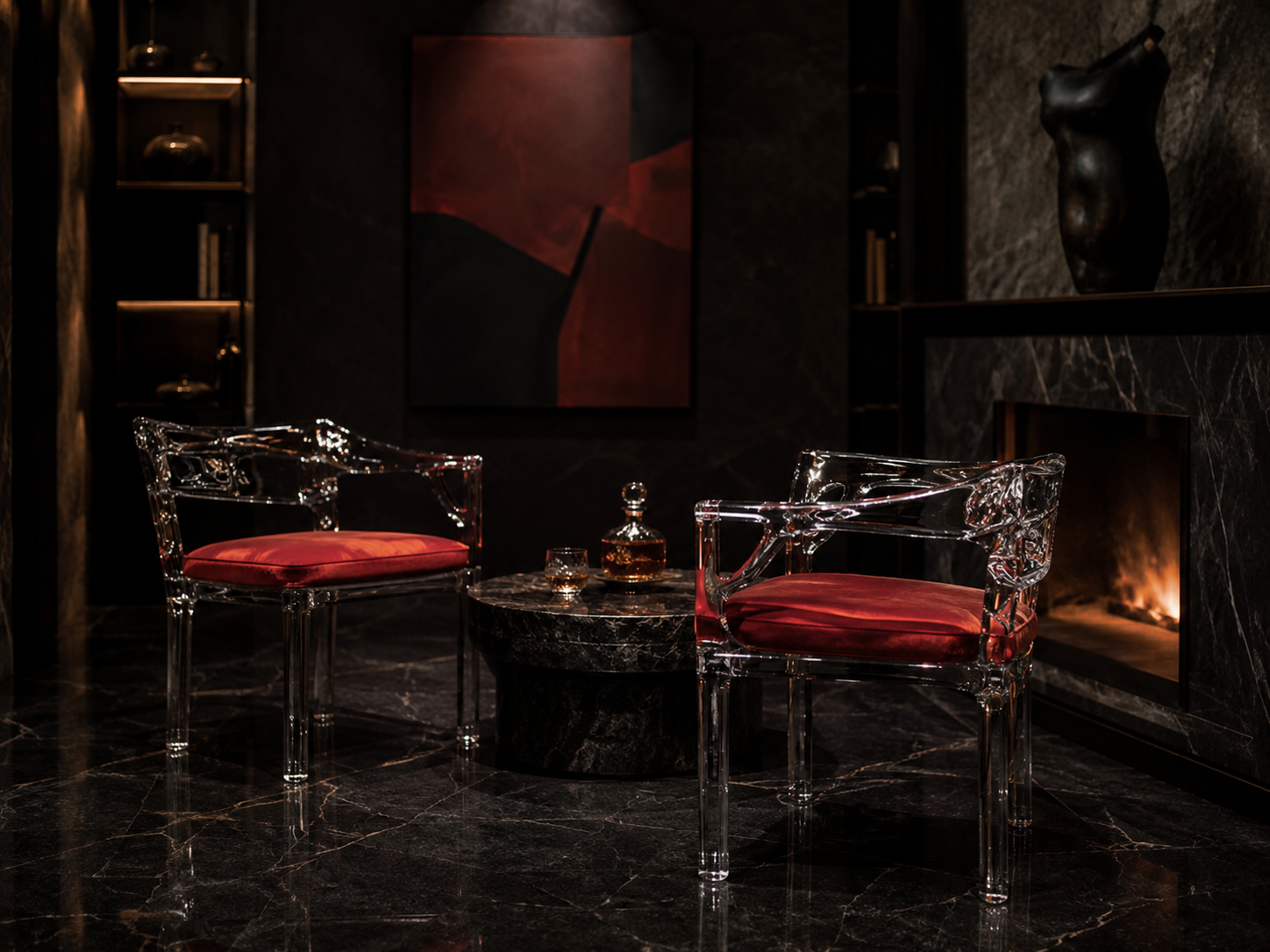
Luxury does not always need to feel heavy.
For decades, expensive interiors were often associated with dark timber, thick stone, ornate metalwork, oversized furniture, and highly decorative finishes. Contemporary luxury is moving in another direction. Many high-end homes, boutique hotels, private clubs, luxury retail stores, and designer apartments now pursue a more restrained visual language: fewer objects, cleaner proportions, better materials, and more deliberate use of light.
This is where transparency becomes valuable.
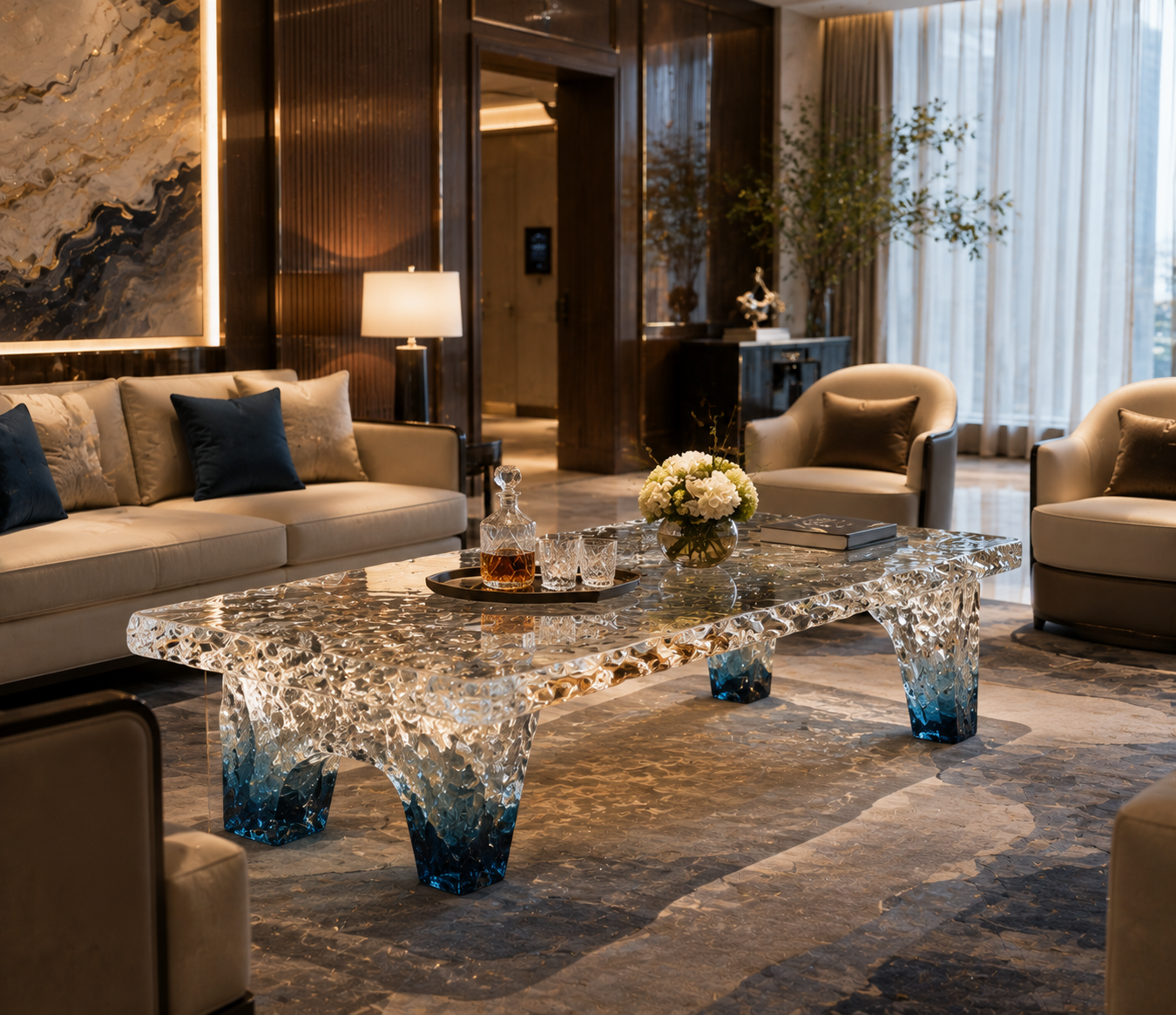
Synthetic crystal furniture, high-end resin furniture, and premium platinum acrylic furniture can occupy physical space without creating the same visual weight as conventional opaque furniture. A substantial coffee table may remain visually light. A console can define an entrance without blocking the architecture behind it. A transparent dining-table base can support stone while allowing the floor, chairs, and lighting to remain part of the composition.
The Victoria and Albert Museum provides an important historical reminder that transparent polymer furniture is not simply a recent decorative trend. Its collection includes David Colwell’s 1967–68 Contour Chair, created to take advantage of acrylic’s ability to form a clear, almost floating seat. The V&A describes the piece as part of a period when designers actively experimented with the new formal possibilities offered by plastics.
Today, improved casting, machining, polishing, coloring, bonding, and resin technology allow transparent furniture to be far more sophisticated. The real question is therefore not whether a piece is transparent, but how that transparency is controlled.
1. Transparency Creates Luxury by Reducing Visual Weight
One of the easiest ways to make an interior feel less refined is to fill it with too many visually heavy objects.
A room can be physically large and still feel congested if every chair, table, cabinet, and decorative object creates another solid visual block. Transparent furniture changes that relationship because the eye can continue beyond the furniture instead of stopping at its surface.
Architectural Digest has specifically discussed clear acrylic, Lucite, and glass furniture as useful tools for reducing visual clutter. Because the floor, walls, rugs, and other finishes remain visible through clear furniture, transparent pieces can appear to take up less visual space than opaque alternatives.
This principle works far beyond small apartments.
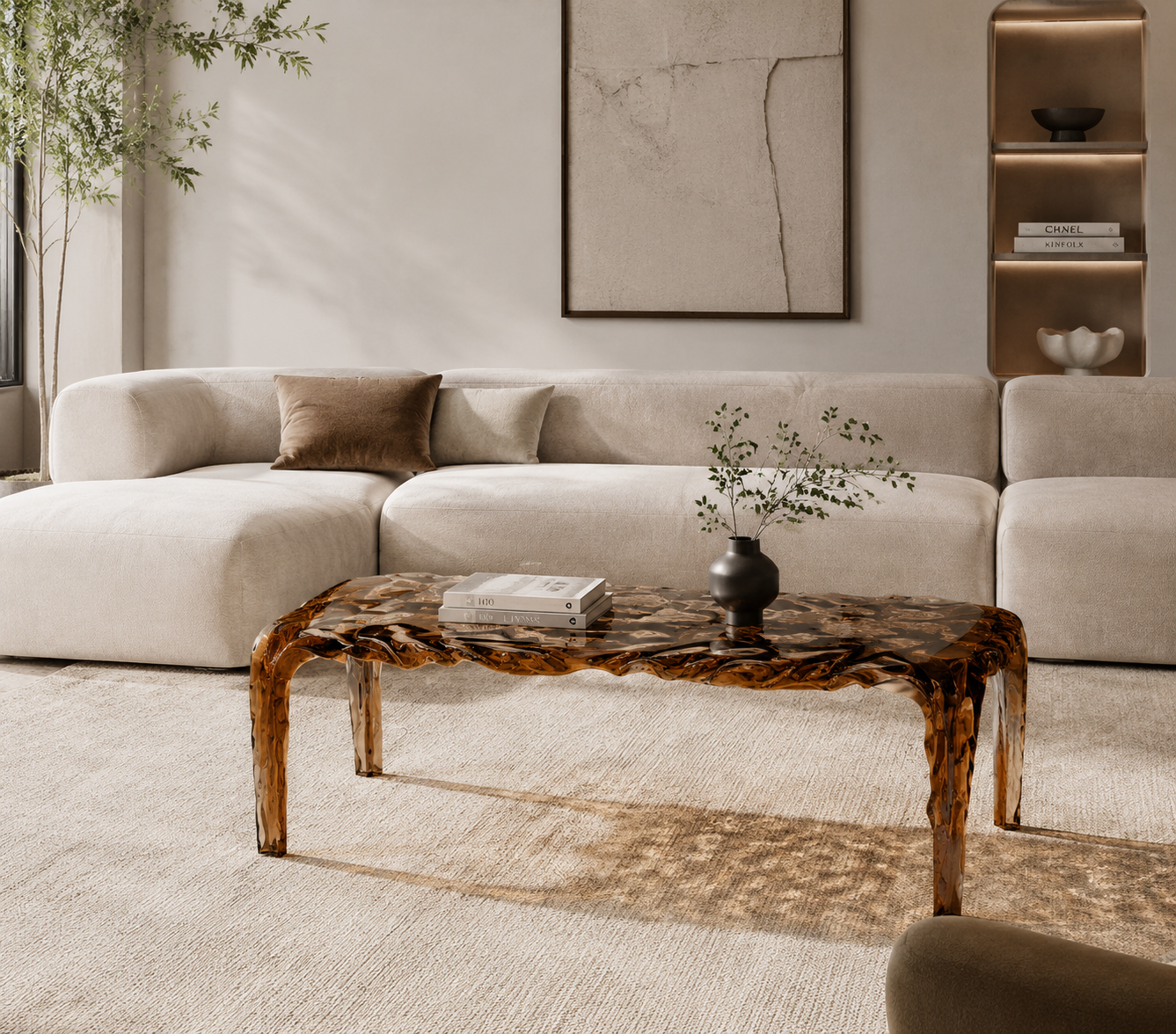
Imagine a luxury living room with a large silk rug, book-matched stone wall, sculptural sofa, and carefully selected artwork. A dark solid coffee table in the center introduces another dominant mass. Replace it with a thick synthetic crystal coffee table, and the rug becomes visible through the table while the seating arrangement feels more open.
The table has not physically become smaller. Its perceived weight has changed.
The same approach can be used in high-end hospitality. In a hotel suite, a platinum acrylic console can provide a functional surface without visually narrowing the entrance. In a private club, transparent side tables can sit beside substantial lounge chairs while allowing the upholstery to remain the visual focus. In a luxury boutique, synthetic crystal display plinths can support products without competing with them.
This is an important characteristic of understated luxury: expensive design does not need every object to demand attention.
Transparent furniture can have impressive dimensions, substantial thickness, and sculptural form while still allowing the room to breathe. The sophistication comes from presence without excessive visual occupation.
2. The Interaction Between Transparency and Light Makes a Space Feel Brighter and More Open
Transparency becomes even more valuable when it is considered as part of the lighting design.
The International WELL Building Institute explains that much of the light people experience inside buildings reaches the eye indirectly after being reflected from interior surfaces. WELL therefore treats surface properties as an important component of overall room brightness. Its visual lighting guidance also notes that brightness contributes to both the visual appeal of an interior and the perception of spaciousness.
Furniture cannot be separated from that lighting environment.
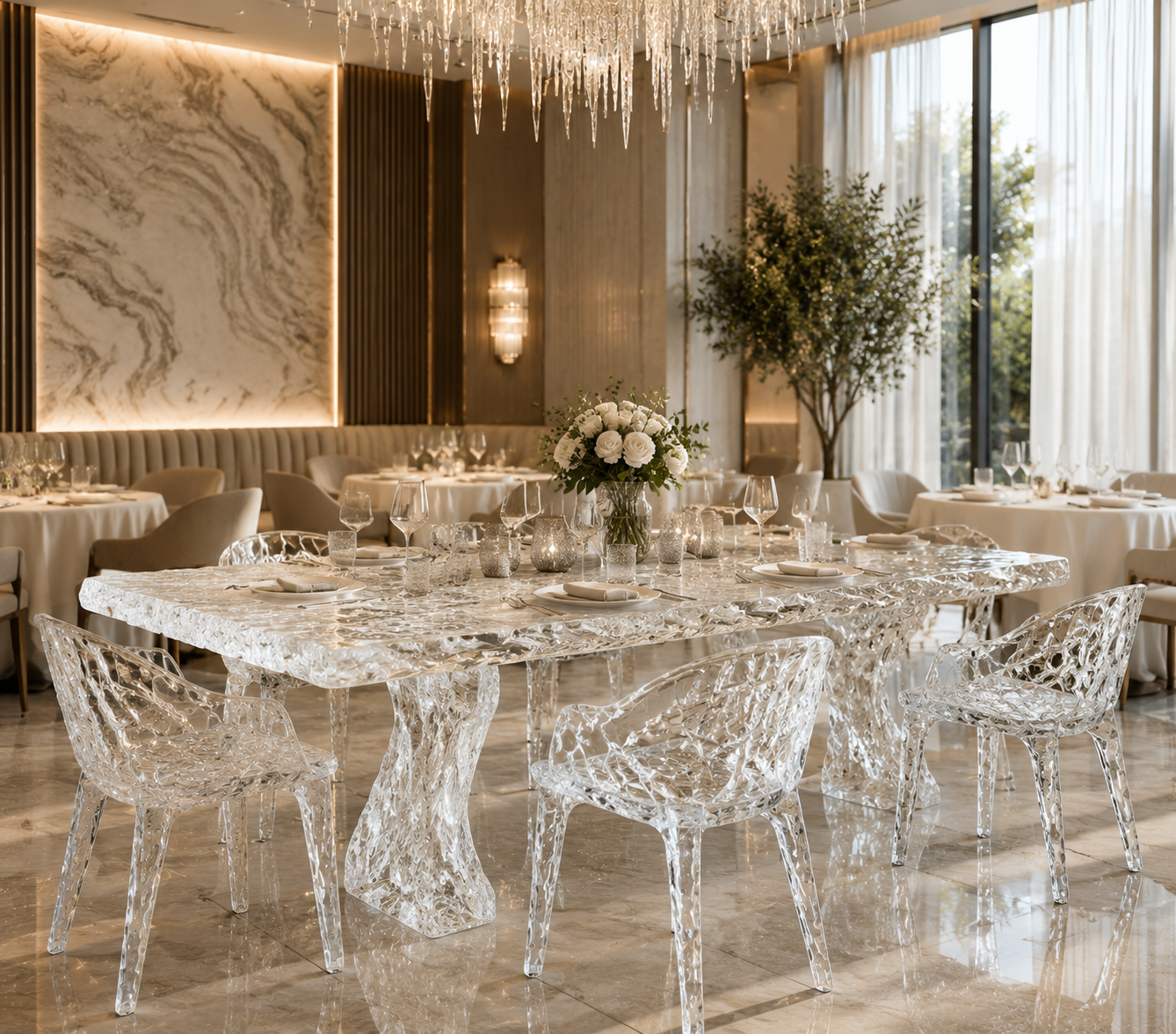
An opaque table interrupts light and creates a defined visual mass. A transparent synthetic crystal table allows light, color, and surrounding finishes to remain perceptually active through the object. Polished edges may capture brighter highlights, while thicker sections create optical depth as light travels through and reflects within the material.
High-quality PMMA demonstrates how significant this optical performance can be. Röhm reports visible-light transmission of up to 92% for clear PLEXIGLAS products. The company notes that the material itself absorbs very little visible light and that much of the reduction from 100% results from reflection at the entry and exit surfaces.
Röhm's 2026 PMMA materials documentation also reports more than 92% light transmission for optical clarity and describes PMMA as approximately 50% lighter than glass.
These figures should not automatically be applied to every synthetic crystal or acrylic furniture product, because performance depends on the actual material grade and manufacturing process. They do, however, demonstrate why premium acrylic materials are widely valued where optical clarity matters.
In practice, this means a platinum acrylic dining-table base positioned beside floor-to-ceiling windows can interact with daylight rather than blocking it. A synthetic crystal console under warm decorative lighting can catch controlled highlights along its edges. A translucent high-end resin side table can diffuse light rather than simply transmitting it.
When used correctly, the furniture becomes part of the room's light behavior.
That is one reason transparent furniture can create an atmosphere that feels airy, polished, and expensive without relying on excessive decoration.
3. High-End Transparency Depends on Edge Quality, Surface Finish, and Optical Depth
Clear material does not automatically look luxurious.
In fact, transparency makes manufacturing defects more visible.
A wooden table can hide internal joints. A painted cabinet can conceal variations in the substrate. Upholstery covers the structure beneath it. Synthetic crystal furniture has fewer places to hide poor workmanship. Cloudy edges, visible bonding lines, bubbles, inconsistent polishing, machining marks, unwanted scratches, inaccurate joints, and color variation become part of the visible product.
This explains why two apparently similar transparent tables can produce completely different impressions.
Research in the Annual Review of Vision Science shows that people rapidly infer material qualities from visual information alone. Without touching a surface, observers can make judgments about whether it appears smooth, rough, glossy, hard, soft, or otherwise materially distinctive. These judgments result from complex interactions between lighting, shape, surface properties, reflectance, and transparency.
Research published in Nature Human Behaviour goes further. Experiments found that the structure of specular reflections can affect not only how glossy an object appears but even what category of material people believe they are seeing.
For furniture design, the implication is straightforward: finishing quality changes perceived material value.
A thick synthetic crystal table leg with precisely polished surfaces can create jewel-like depth as highlights travel along its edges. Poor polishing makes the same geometry appear cloudy or inexpensive. A platinum acrylic console with clean, carefully executed joints can appear architectural and almost monolithic; obvious adhesive lines immediately interrupt that illusion.
Thickness also matters. A thin transparent panel communicates something very different from a substantial clear block. The latter can create refraction, layered reflections, and greater optical depth, giving the furniture physical presence without relying on opacity.
This is where “airy luxury” differs from inexpensive transparency.
The objective is not to make the furniture disappear completely. It is to make mass feel visually lighter while preserving enough optical depth and precision for the material itself to remain desirable.
4. High-End Resin Adds Color and Translucency Without Destroying the Sense of Lightness
Transparency does not have to mean perfectly colorless furniture.
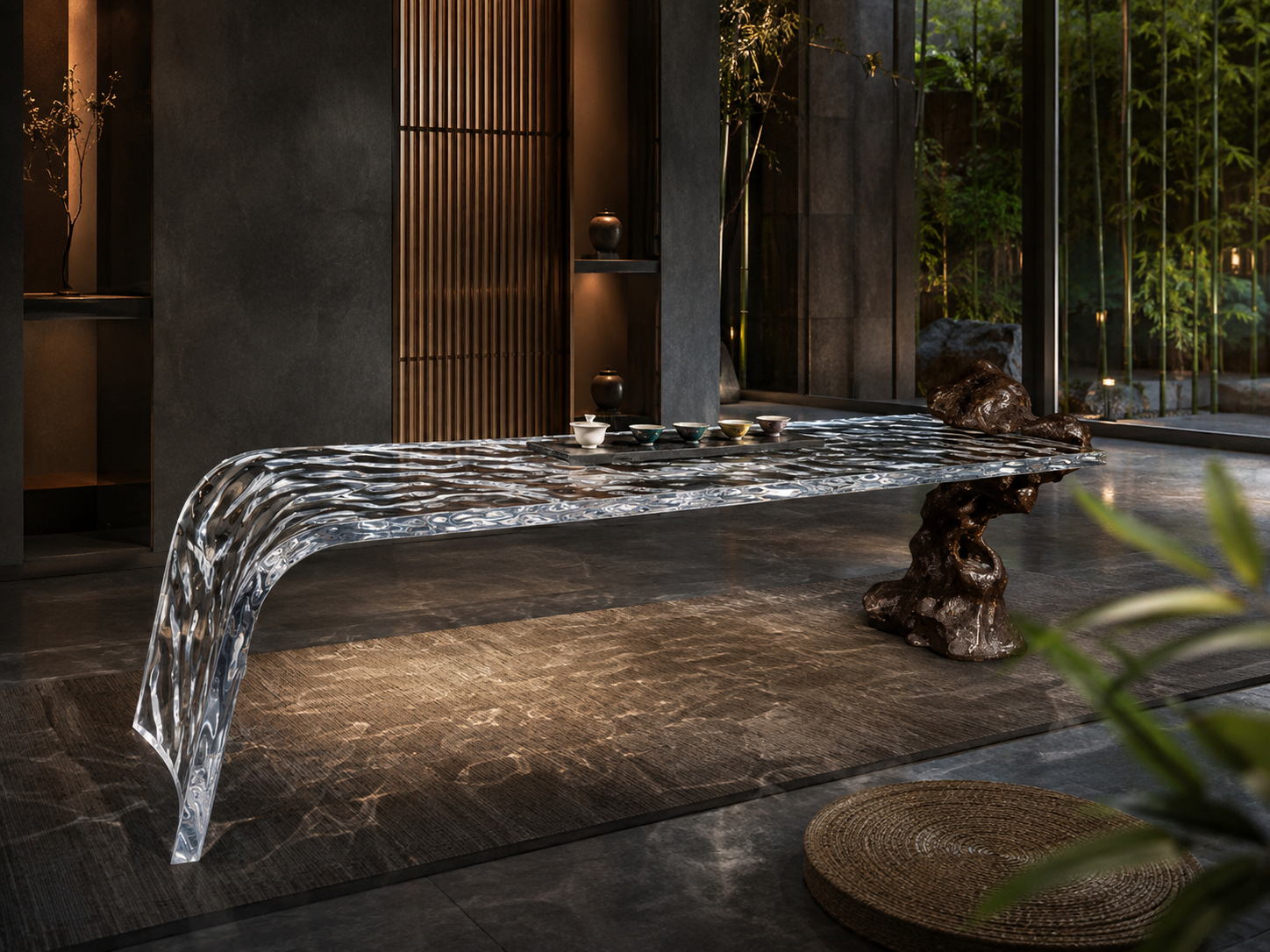
High-end resin expands the vocabulary considerably because it can introduce controlled translucency, smoke effects, gradients, pigments, inclusions, and depth while retaining the feeling that light can enter the object.
Sika, one of the world's major specialty chemical manufacturers, produces transparent epoxy casting systems for furniture, decorative objects, deep-pour applications, embedded objects, and similar uses. Its SikaBiresin TD150, for example, is designed for highly transparent deep casting and allows single pours of up to 45 mm at 20°C while offering self-degassing behavior and good UV resistance.
Sika also notes that transparent casting resin systems can be compatible with different color pigments and materials such as wood, stone, ceramics, and many metals.
These capabilities explain why premium resin furniture can create a different type of refined atmosphere from perfectly clear acrylic.
Consider a champagne-tinted resin side table beside a cream boucle sofa. It remains visually light, but the warm tint connects it to brass lighting and beige stone. A smoky gray resin console placed against pale travertine creates contrast while still allowing the wall's texture to remain partially visible. A translucent amber coffee table can create the visual impression of solidified light rather than a conventional furniture mass.
Designers can also create controlled embedded effects. Metallic particles, mineral-like layers, decorative fragments, natural materials, or intentionally suspended elements can turn a resin table into an object somewhere between furniture and sculpture.
The key is restraint.
Too much pigment makes transparency disappear. Too many inclusions create visual noise. Random bubbles or uncontrolled color variation may read as manufacturing defects rather than craftsmanship.
For a light-luxury environment, the most successful high-end resin pieces generally allow color, transparency, and depth to coexist. They provide character without making the room feel visually crowded.
5. Transparent Furniture Looks Most Luxurious When Combined With Contrasting Materials
A room made entirely from transparent glossy furniture would not necessarily look more expensive.
Luxury depends on hierarchy and contrast.
The characteristics of synthetic crystal, high-end resin, and platinum acrylic become more noticeable when they are placed beside materials with completely different visual and tactile qualities.
A clear synthetic crystal coffee table looks sharper on a textured wool rug. Platinum acrylic legs become more refined beneath a richly veined marble top. A smoked resin side table gains depth beside matte oak. A transparent console positioned against limestone allows the roughness of the stone to become more visible.
This contrast works because the eye interprets materials comparatively.
The Annual Review of Vision Science notes that material perception involves multiple visual properties, including texture, reflectance, transparency, shape, and the surrounding illumination. We do not perceive each property in isolation; materials are understood in relation to the wider visual scene.
Real luxury interiors frequently take advantage of this principle.
In a modern villa, synthetic crystal dining-table legs can support a natural stone slab, creating a deliberate contrast between visual weight and apparent weightlessness. In a hotel lobby, high-end resin tables can introduce translucent color against soft fabrics and natural timber. In luxury retail, transparent acrylic display elements can be combined with stainless steel, leather, stone, or brushed brass so that each material makes the others appear more distinctive.
This is also why transparent furniture should not be treated as a substitute for glass simply because both materials can be clear.
Premium acrylic can be machined, polished, colored, and shaped in ways that support different design goals. High-end resin offers casting freedom, embedded effects, and controlled translucency. Synthetic crystal furniture can emphasize substantial blocks, polished edges, sculptural geometries, and jewel-like optical effects.
Each should be specified according to the experience the designer wants to create.
An understated luxury interior succeeds when no single finish overwhelms the space. Transparent materials provide visual pauses between richer surfaces, helping marble appear richer, textiles appear softer, and metals appear sharper.
Transparency therefore does not remove material character. Used correctly, it amplifies it.
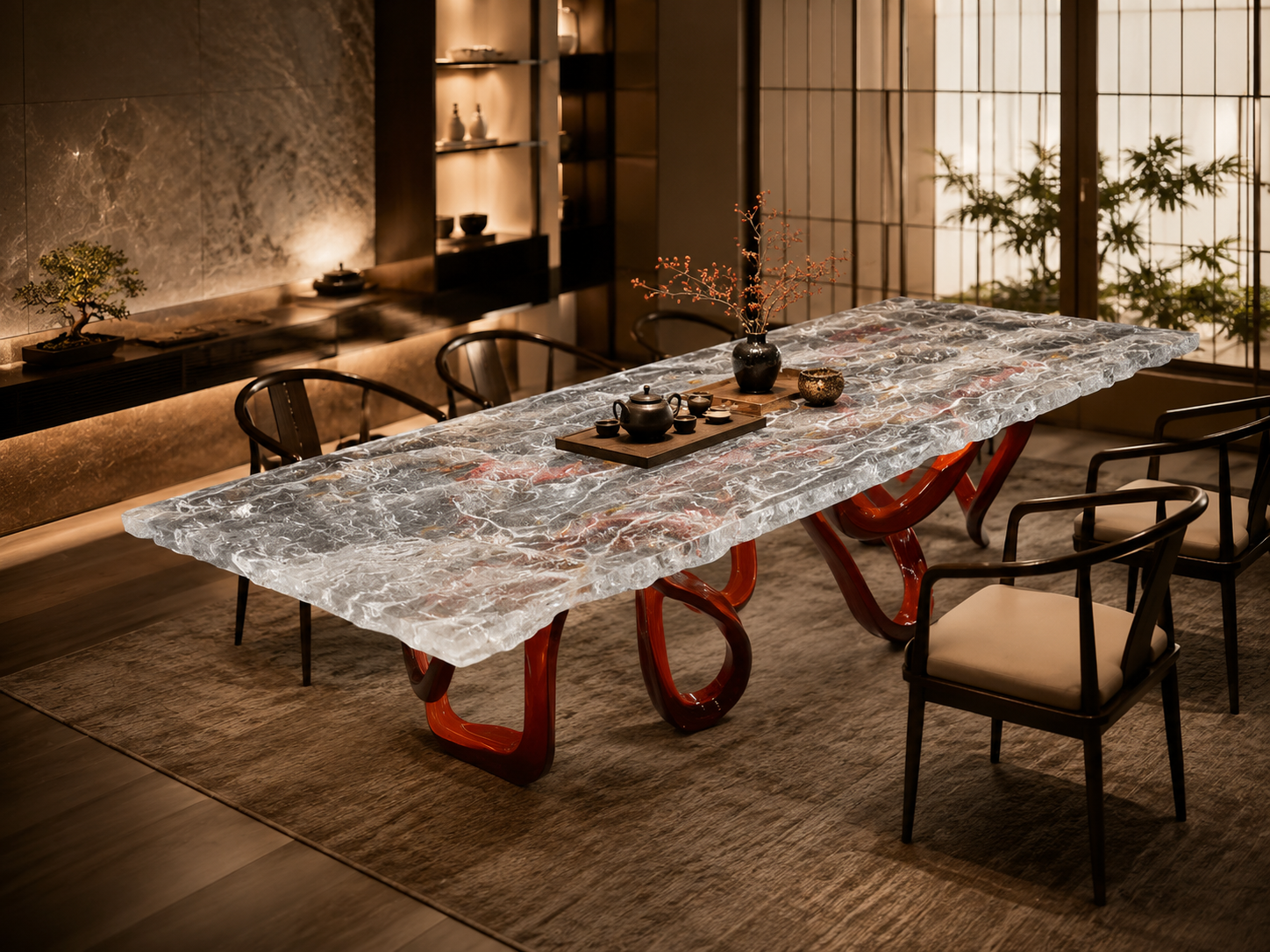
6. The Best Transparent Furniture Turns “Airiness” Into a Complete Spatial Experience
The ultimate value of synthetic crystal furniture is not the furniture piece in isolation. It is what that piece does to the experience of the room.
Gensler's 2025 research on sensory design in hospitality argues that successful hospitality environments are shaped through a coordinated relationship between light, texture, color, sound, materiality, and other sensory signals. The study draws on expertise from 12 international practitioners across fields including lighting, architecture, behavioral science, texture, and color, and emphasizes the importance of creating atmospheres that feel coherent rather than assembling disconnected decorative elements.
That idea is particularly relevant to transparent furniture.
In a luxury hotel lobby, a synthetic crystal reception table can echo the geometry of a chandelier while reflecting surrounding light. In a penthouse, a platinum acrylic dining-table base can preserve the uninterrupted view across a stone floor toward panoramic windows. In a fashion flagship, clear display blocks can almost disappear beneath products during the day and become illuminated sculptural elements at night.
In a private club or premium residential project, high-end resin furniture can be custom-colored to connect fabrics, stone, lighting, and metal finishes across the space.
This is where customization becomes especially valuable.
A standard clear table is a product. A synthetic crystal table developed to the dimensions, lighting conditions, material palette, and visual proportions of a specific project becomes part of the architecture.
The same applies to consoles, benches, dining-table bases, coffee tables, side tables, display pedestals, shelving, decorative panels, and sculptural furniture components. Thickness, color, transparency, edge geometry, surface polish, resin effects, and interaction with surrounding materials can all be adjusted to create a particular visual result.
Airiness, therefore, should not be confused with emptiness.
The goal is not to make furniture invisible. The goal is to remove unnecessary visual heaviness while retaining craftsmanship, substance, and identity.
That is why synthetic crystal, high-end resin, and platinum acrylic are particularly well suited to contemporary understated luxury. They allow designers to create furniture that is physically substantial yet visually light, modern yet decorative, minimal yet materially rich.
When the transparency is controlled, the edges are precise, the optical depth is clean, and the furniture is integrated with lighting and surrounding finishes, the result feels effortless.
And in sophisticated interiors, that sense of effortlessness is often one of the clearest expressions of luxury.
READ MORE:
- When Furniture Starts to Look the Same: How Material Details Create Differentiation — A Synthetic Crystal Approach
- Customers Care About More Than Furniture Form: How Synthetic Crystal Material Details Influence Purchase Decisions
- Why High-End Clients Pay for Material Quality: What Synthetic Crystal Furniture Reveals About Luxury
- The Luxury of a Space Often Hides in the Details: How Synthetic Crystal Furniture Elevates Overall Visual Quality
- Synthetic Crystal Acrylic Furniture: Building the Next Generation of High-End Living with Innovative Materials
- Why Crystal-Grade Acrylic Is Becoming an Important Direction for the Future of Furniture Design
- Synthetic Crystal Acrylic Furniture: Giving Brands a Distinctive Identity in the High-End Market
- From Material Breakthrough to Spatial Upgrade: The New Value Created by Synthetic Crystal Acrylic Furniture
- Synthetic Crystal Acrylic Furniture: Why High-End Homes Are Embracing “Transparent Luxury”


