
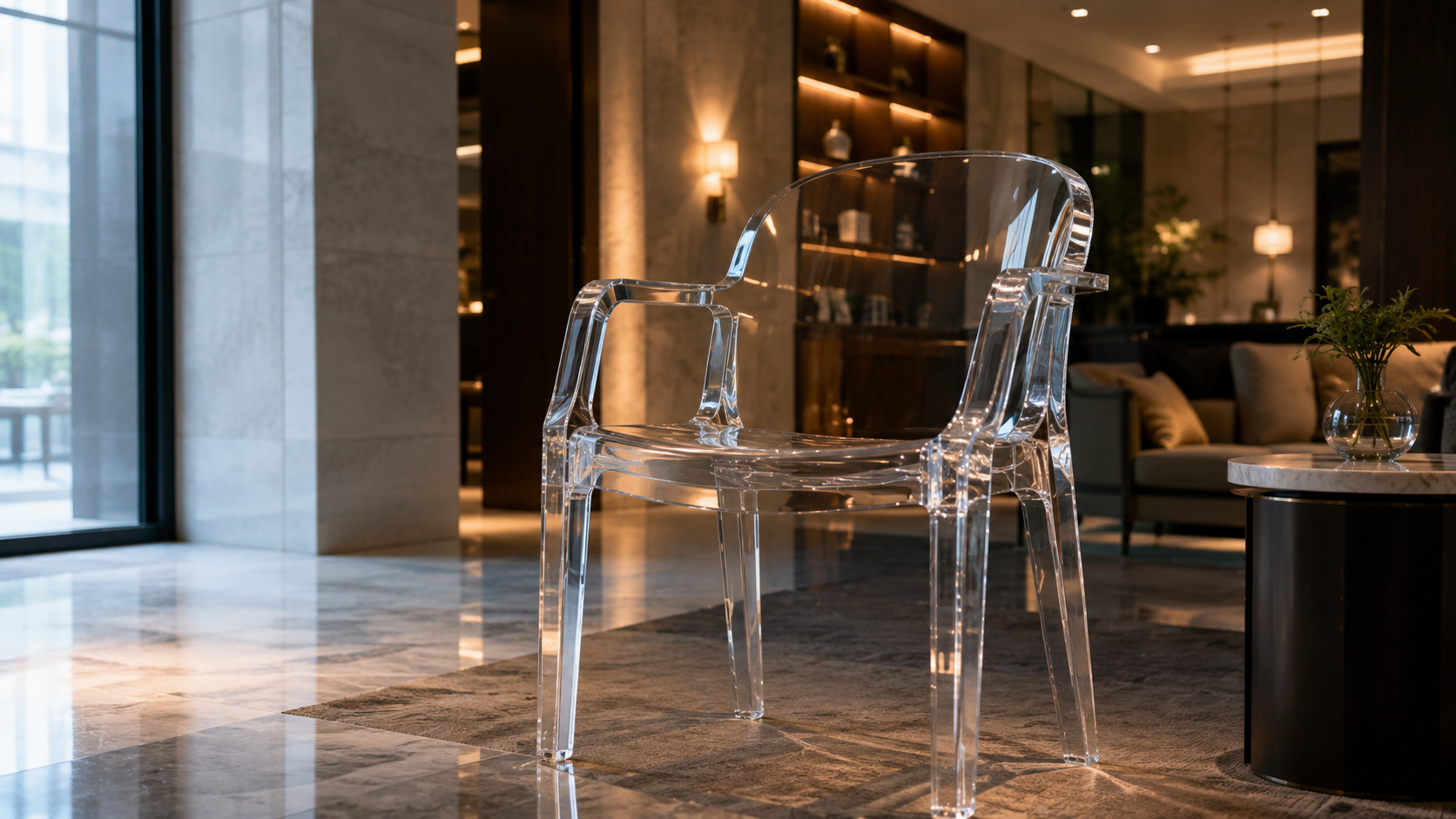
Making furniture look more expensive does not necessarily mean rebuilding it with the most expensive materials available. In many cases, the difference between an ordinary product and a premium-looking one comes from a small number of highly visible and highly tactile decisions: how a drawer closes, how a surface reflects light, how different materials meet, and whether decorative elements feel intentional rather than added as an afterthought.
This distinction is becoming increasingly relevant as consumers and designers move away from luxury defined simply by excess. The American Society of Interior Designers' 2025 Trends Outlook describes a renewed interest in timeless craftsmanship, individuality, handcrafted details and interiors that tell a personal story. In other words, “premium” is increasingly connected to refinement and authenticity rather than simply using more decoration.
For furniture manufacturers, designers and brands, this opens an interesting opportunity. A relatively conventional cabinet, console, coffee table or bedside table can move into a higher perceived category through three major upgrade directions: better hardware, more sophisticated material choices, and carefully controlled crystal or transparent elements.
The important question is not how many premium elements can be added. It is where they should be added to create the greatest visual and functional impact.
1. Premium Furniture Is Defined by Perceived Precision, Not by Decoration Alone
Before changing hardware or materials, it is important to understand why some furniture looks expensive before a customer even knows its price.
Premium perception usually starts with coherence.
The gaps around cabinet doors are even. Edges feel deliberate. Hardware aligns precisely. Surfaces do not compete with one another. Metal finishes match. Transparent elements have clean edges and controlled clarity. Drawers move smoothly. Nothing appears accidental.
This explains why simply adding gold-colored handles or a glossy stone top rarely transforms an ordinary product into luxury furniture. If the proportions, joints, tolerances and material transitions remain visibly inexpensive, an additional decorative feature may actually make those weaknesses more noticeable.
Current interior-design research points in a similar direction. ASID's 2025 Trends Outlook reports increasing interest in timeless craftsmanship, vintage references, handcrafted details and long-lasting design. The significance for furniture makers is that consumers are not simply looking for objects that appear fashionable; they are increasingly responsive to pieces that communicate care, individuality and permanence.
That principle can be applied even to comparatively simple furniture.
Imagine two identical sideboards with painted wood or engineered-board bodies. The first uses standard exposed hinges, lightweight handles, visible screw heads and inconsistent door gaps. The second uses concealed soft-close hinges, heavier handles with a refined finish, carefully aligned doors and a small translucent resin or synthetic-crystal detail.
The raw-material cost difference may represent only a fraction of the total product cost, but the customer's perception of the two products can be dramatically different.
The upgrade therefore begins with a change in thinking. Instead of asking, “What luxury material can we add?” manufacturers should ask, “Which details tell the customer that this product has been engineered and finished with greater care?”
Once that foundation is correct, hardware, materials and crystal elements become much more powerful.
2. Upgrade Direction One: Better Hardware Changes How Furniture Feels Before It Changes How It Looks
Hardware is one of the most underestimated elements in furniture positioning because much of it is relatively small. Yet hardware is often the part of a cabinet, dresser or console that customers touch most frequently.
A drawer may be opened thousands of times. A wardrobe hinge controls the movement of a large door. A handle is touched every day. These interactions create an immediate impression of quality.
A useful indication of how seriously established hardware manufacturers approach this issue comes from Austrian fittings company Blum. The company states that its hinge tests include approximately 200,000 opening and closing cycles. Blum also notes that its CLIP top BLUMOTION hinge contains 59 individual components that must work together precisely.
Those numbers illustrate an important point: premium hardware is not merely a visible accessory. It is a piece of engineering.
Soft-close hinges, concealed runners, controlled opening systems and well-made handles improve furniture in ways customers can immediately experience. A heavy drawer that glides smoothly and closes quietly communicates a completely different level of refinement from one that rattles or requires force.
Hardware is also becoming increasingly important as a visible design element. Houzz's 2026 U.S. Kitchen Trends Study, based on nearly 1,800 respondents, found that 95% of renovating homeowners selected cabinets with handles. Bar pulls were chosen by 74%, while brushed nickel, black and brushed gold were among the leading finishes. Although the research concerns kitchens rather than all furniture categories, it demonstrates how strongly small hardware decisions continue to influence the visual identity of cabinetry.
For furniture manufacturers, this creates one of the most cost-efficient upgrade opportunities.
A relatively simple wooden or lacquered bedside cabinet can be transformed with a well-proportioned brushed-metal pull. A contemporary sideboard can gain sophistication from concealed hinges and a handle-free opening mechanism. A dressing table can use metal combined with a synthetic-crystal or clear acrylic handle to create a jewelry-like touch point.
The key is restraint. Cheap-looking furniture often uses decorative hardware to attract attention. Premium furniture uses hardware to reinforce the design.
A crystal-style handle with poor metal plating will not look luxurious. But a precisely machined metal fitting combined with a polished synthetic-crystal insert can create a highly memorable detail.
In this sense, hardware is similar to a watch clasp or an automotive door handle: small relative to the whole product, but disproportionately important to the user's perception of quality.
3. Upgrade Direction Two: Material Quality Is Read Through Surface, Edge and Depth
The second route to a more premium product is material upgrading, but this is frequently misunderstood.
A higher-end material does not automatically produce a higher-end appearance. The way the material is processed is equally important.
Wood provides a useful example. Houzz's 2026 U.S. Kitchen Trends Study found that wood became the most popular cabinet color/material appearance among renovating homeowners, selected by 29%, moving slightly ahead of white at 28%. That does not mean wood is universally superior, but it demonstrates continuing interest in visual warmth and material character.
For furniture, the same principle applies across walnut veneer, oak, metal, marble, resin and acrylic.
A carefully selected veneer with continuous grain can look significantly more premium than a random pattern. A stone tabletop with a well-designed edge profile communicates more refinement than the same stone with an ordinary straight edge. A lacquer surface becomes more convincing when its color, gloss level and corner treatment are controlled consistently.
Premium resin adds another design possibility because its appearance is not limited to a printed surface. Color can exist within the material. Designers can create translucent gradients, cloudy structures, embedded decorative elements or visual depth that changes according to viewing angle.
High-clarity acrylic offers a different aesthetic. Instead of imitating stone or glass, it can create visually light structures, polished edges and highly precise geometry. For manufacturers using what is commercially described as platinum-grade or premium high-clarity acrylic, the strongest selling point should therefore not simply be “acrylic.” It should be optical consistency, edge quality, thickness, precision and fabrication.
The difference becomes especially obvious when transparent material is used in substantial sections such as console legs, table bases or thick panels. Imperfections that may be invisible in opaque furniture—scratches, bubbles, poor bonding, haze or uneven polishing—become immediately visible.
This is why an ordinary wooden console with beautifully finished high-clarity acrylic legs may feel more premium than a console covered entirely in decorative surfaces. The contrast itself creates value.
The same can be done with premium resin. A simple table structure can be paired with a cast-resin top containing subtle layers of color. A cabinet can use a resin door panel as one focal surface instead of applying an expensive finish everywhere.
Material upgrading works best when premium materials are placed where the customer can actually see, touch and understand their difference.
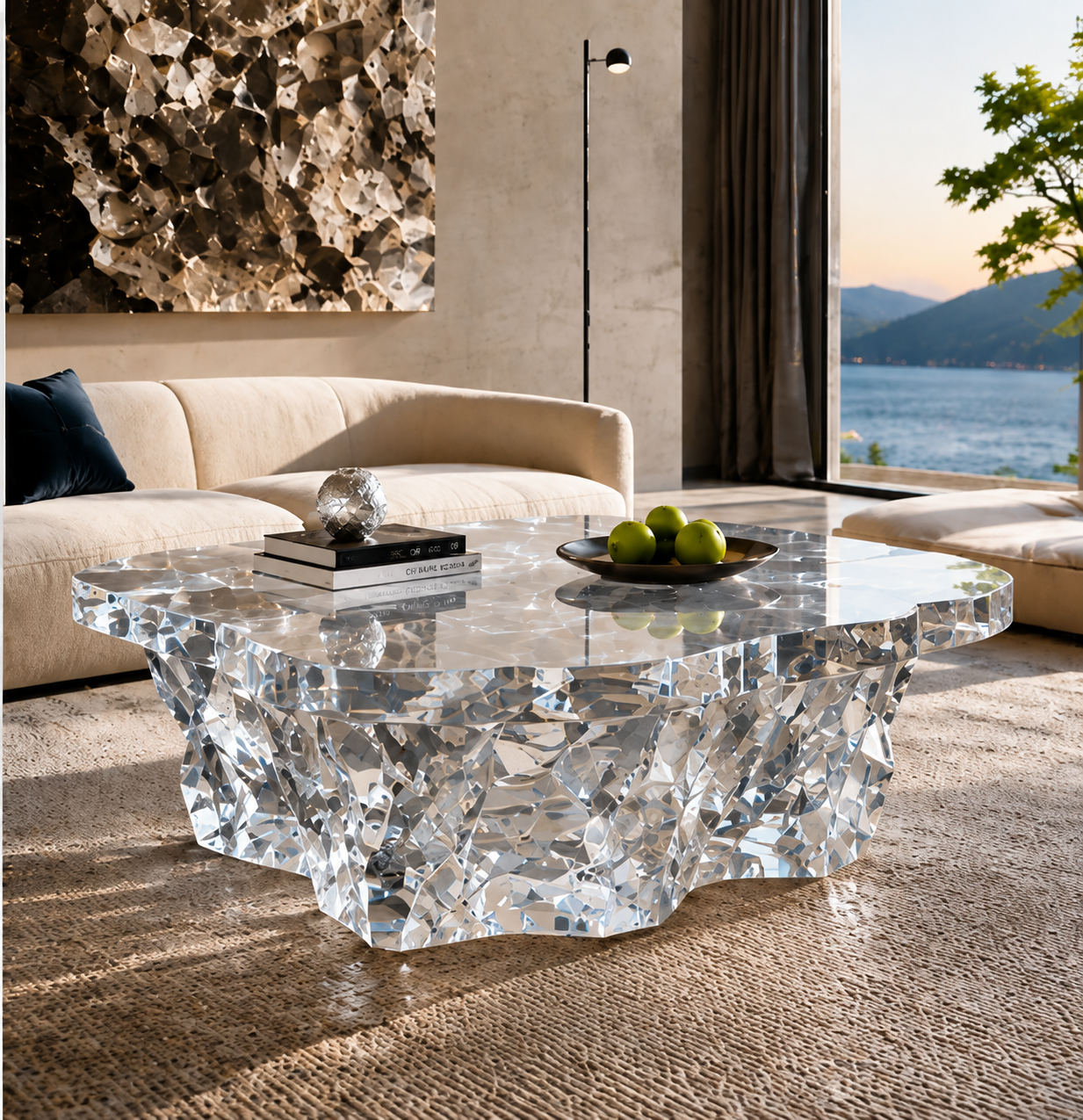
4. Upgrade Direction Three: Crystal and Transparent Elements Introduce Light as a Luxury Material
Crystal-like elements provide a particularly interesting third direction because they add something conventional wood, metal and stone cannot provide in the same way: interaction with light.
Transparent and translucent materials can transmit, refract, reflect and concentrate light. This creates depth without requiring a complicated decorative pattern.
Technical material data helps explain why optical quality matters. Röhm reports that clear PLEXIGLAS acrylic products can reach visible-light transmission of up to approximately 92%. The company also states that certain clear-transparent grades are designed to maintain very high transmission over long periods because of their inherent UV stability. These figures should not be assumed for every acrylic product, but they demonstrate the optical performance achievable with high-quality PMMA.
For furniture, that optical behavior can be used strategically.
A synthetic-crystal table leg can capture light along polished edges. A translucent resin cabinet handle can produce a softer visual effect than metal. A high-clarity acrylic console base can make a heavy stone top appear visually lighter. A resin coffee table with controlled pigment can change character under daylight and artificial lighting.
The design industry has repeatedly demonstrated that transparent materials do not have to look inexpensive.
Kartell's Louis Ghost chair, designed by Philippe Starck, became one of the best-known examples of transparent furniture. Kartell states that more than 1.5 million pieces had been sold by the time the company celebrated 15 years of its transparency program. The product transformed the visual language of a traditional Louis XV-style chair through transparent molded polycarbonate.
At the collectible end of the market, Shiro Kuramata demonstrated an even more artistic approach. His 1988 Miss Blanche chair, now represented in the Museum of Modern Art's collection, uses acrylic resin containing artificial roses, creating the illusion that the flowers are suspended inside the structure. MoMA describes the chair as an icon of postmodern design and notes the painstaking process required to position the roses while the resin hardened.
One example of Miss Blanche later sold through Phillips for $516,600 against an estimate of $250,000–$350,000. The result obviously reflects the designer's historical significance, rarity and provenance—not merely the value of acrylic resin. But that is precisely the lesson: transparent synthetic materials can carry extraordinary design value when material, concept and craftsmanship reinforce one another.
For commercial furniture, the objective does not need to be museum-level experimentation. Even a small crystal or resin detail can provide a visual signature that distinguishes a product from hundreds of similar wooden or metal alternatives.
5. The Most Expensive Look Often Comes from Material Contrast Rather Than Using More Expensive Material
One of the easiest ways to make an upgrade look unsuccessful is to use too many premium-looking materials at the same time.
Gold metal, marble, mirror, crystal, glossy lacquer and decorative resin can all be valuable individually. Combined without hierarchy, they can make the product visually noisy rather than luxurious.
Premium design usually depends on contrast and editing.
Consider a dark walnut console with two thick high-clarity acrylic supports. The wood supplies warmth and visual weight while the transparent base introduces lightness. Neither material needs additional decoration.
A travertine or marble coffee table can use a restrained synthetic-crystal detail at the joint rather than replacing the entire base with crystal. A matte lacquer sideboard can use translucent resin handles, allowing one small component to become the visual signature. A dining table can combine brushed metal, a stone top and platinum-grade high-clarity acrylic legs, provided that the junctions are engineered precisely.
This approach reflects the direction visible in contemporary interior design more broadly. Houzz's 2025 coverage of kitchen and bath products highlighted growing customization of finishes, textures and hardware, including systems that allow designers to mix materials and finishes for a more personalized result.
The important word is “personalized,” not “more.”
For manufacturers, this means a crystal element should have a reason to exist. It might emphasize a handle, lighten a table base, create a transition between metal and wood, or become a recognizable brand detail repeated across a collection.
High-end resin works similarly. Rather than casting an entire piece simply because it is technically possible, resin can be concentrated in the part of the product where depth, color or transparency creates the greatest effect.
This is particularly useful for upgrading existing furniture collections. Manufacturers do not necessarily need to redesign every structure. They can retain a proven furniture body and introduce premium variants through new handles, transparent bases, colored-resin panels or synthetic-crystal accents.
The product remains commercially recognizable, but the perceived category changes.
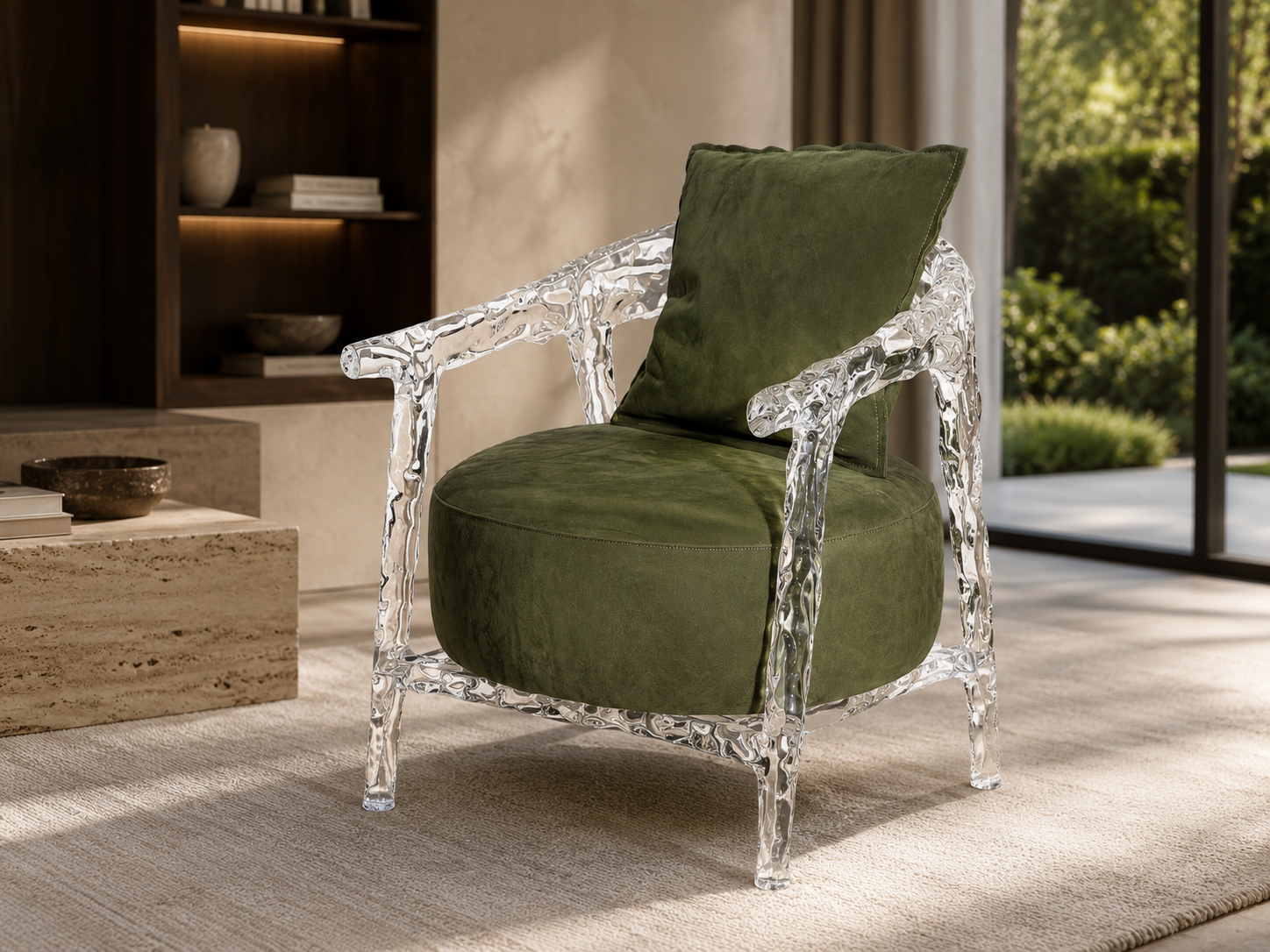
6. The Best Upgrade Strategy Creates a Visible Reason for the Customer to Pay More
Ultimately, premium furniture must justify its price in a way customers can understand.
A higher price that is explained only by “better material” is difficult to defend, especially when buyers can compare hundreds of visually similar products online.
A stronger product creates several layers of value simultaneously.
Hardware produces tactile value. Better surface materials create visual and sensory value. Crystal, resin and high-clarity acrylic create optical differentiation. Custom color, thickness and detailing create exclusivity. Precision finishing communicates craftsmanship.
This combination is particularly relevant in today's design market. Christie's June 2026 New York Design sale achieved approximately $20.16 million with an 89% sell-through rate by lot. An auction market is very different from mainstream furniture retail, but the results demonstrate that furniture and design objects can acquire considerable value when buyers recognize authorship, craftsmanship, material innovation and distinctiveness.
Manufacturers do not need to turn every table into collectible art. They do need to give customers a clear reason why one version belongs above another in the product hierarchy.
For example, an entry-level bedside cabinet may use standard hardware and a conventional painted finish. A premium version could retain the same basic form but introduce higher-performance concealed hinges, a better surface treatment and custom metal hardware. A signature version might add a cast-resin drawer front or polished synthetic-crystal handle. A flagship version could incorporate a substantial high-clarity acrylic or resin structure designed specifically around light and transparency.
This creates a rational ladder of value rather than an arbitrary price increase.
The same principle can be applied to coffee tables, consoles, dining tables, stools, display pedestals and luxury retail furniture. Synthetic crystal does not need to replace every conventional material. Premium resin does not need to dominate an entire product. Platinum-grade high-clarity acrylic does not need to be used simply because transparency is fashionable.
Their strongest role is often to turn a familiar furniture form into something customers remember.
That is the real answer to the question of how ordinary furniture becomes more premium.
Upgrade what the customer touches. Upgrade what the customer sees from several meters away. Then add one distinctive material element that creates identity.
When hardware improves movement, materials improve depth and crystal or transparent elements improve the interaction with light, a simple piece of furniture can move into a completely different perceived category without becoming unnecessarily complicated.
Premium furniture is therefore not defined by how many expensive materials are used.
It is defined by how intelligently each material earns its place.
READ MORE:
- From Acrylic to Synthetic Crystal: How Can Transparent Furniture Create More Depth and Stronger Product Differentiation?
- How Can Furniture Feel Lighter in Small Spaces? Design Strategies Using Transparent Materials and Synthetic Crystal Elements
- Where Does Synthetic Crystal Furniture Work Best? Applications for Living Rooms, Hotels, Weddings and Commercial Spaces
- Why More Designers Are Paying Attention to Transparent Furniture: From Spatial Perception to Product Premium
- Synthetic Crystal Acrylic Furniture: An Innovative Direction Worth Watching in the Future High-End Furniture Market
- Why Are More High-End Design Projects Choosing Crystal-Grade Acrylic as a Core Material?
- Synthetic Crystal Acrylic Furniture: Creating Brand Differentiation Through a Distinctive Visual Language
- From Transparent Material to Premium Experience: How Synthetic Crystal Acrylic Furniture Enhances Product Value
- Synthetic Crystal Acrylic Furniture: Why Is It Becoming the “Texture Upgrade Solution” for High-End Spaces?


