
In premium hospitality and commercial design, furniture is no longer judged only by whether it performs a basic function. The right piece can become a visual landmark, a brand cue, a conversation starter, and even a marketing asset. A reception desk, sculptural console, transparent dining table, bar feature, or lobby installation may occupy only a small part of the floor plan, yet influence how guests remember the entire space.
This is the real business logic behind statement furniture. Owners are not simply paying for a more unusual table or chair. They are investing in differentiation, customer experience, visual identity, and the ability to create moments that feel worth photographing and sharing. In that context, synthetic crystal furniture has become especially relevant because it can combine high visual impact with forms, scale, transparency, and detailing that support a distinctive brand story.
Luxury Customers Remember Experiences, Not Specifications
Most guests will never know the technical specification of a lobby table. They may not know the manufacturer, the exact material composition, or the production method. What they do remember is how the space made them feel.
A memorable environment is usually built from a series of strong impressions. Lighting, scent, acoustics, art, service, and furniture all contribute. When one piece has exceptional visual presence, it can become an anchor for the entire experience.
This is why luxury furniture should be evaluated partly as an experiential asset. A custom synthetic crystal furniture piece can create a sense of lightness, depth, clarity, or spectacle that ordinary materials may not deliver in the same way. It can also interact with surrounding stone, metal, timber, textiles, and lighting to create a layered visual composition rather than a standalone object.
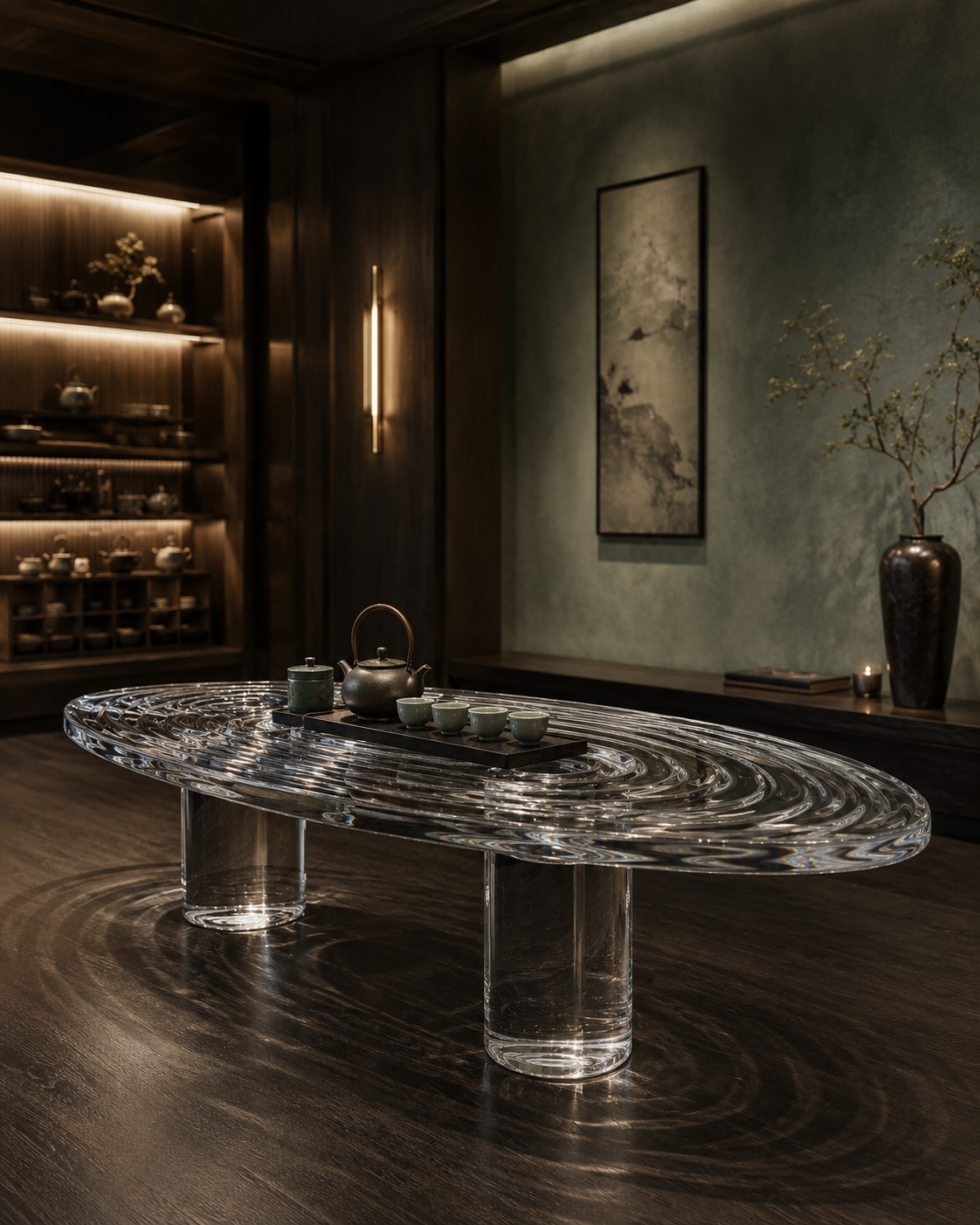
Statement Pieces Can Strengthen Brand Recognition
Strong hospitality brands are recognized through more than logos. They use repeated visual cues that guests associate with a specific standard, mood, or lifestyle. Furniture can carry those cues very effectively.
A signature transparent console, sculptural crystal-like table, illuminated reception element, or custom seating feature can become part of a property's identity. When similar visual language appears across multiple locations, the brand becomes easier to recognize without relying on explicit signage.
For owners, this means hospitality furniture can play a strategic role in brand building. The goal is not to fill space with unusual objects. The goal is to select a small number of elements that express the brand clearly and consistently.
Why Social Sharing Changes the Value Equation
Today, a highly photogenic interior can generate exposure far beyond the people physically present in the building. Guests photograph hotel lobbies, restaurants, lounges, boutiques, spas, bars, and retail environments because distinctive spaces become part of their social identity.
A memorable piece of synthetic crystal furniture can increase the likelihood that a guest pauses, photographs the space, or shares it online. That does not make every statement piece a guaranteed marketing tool, but it changes how owners should evaluate design investment.
The value of a strong visual feature may include organic brand impressions, user-generated content, influencer visibility, press photography, event imagery, and increased recognition across digital channels. In other words, the furniture may contribute to marketing performance as well as spatial function.
Distinctive Materials Create Perceived Value
Customers make rapid judgments about quality. They notice whether a space feels generic or considered, whether materials feel ordinary or exceptional, and whether the environment communicates investment.
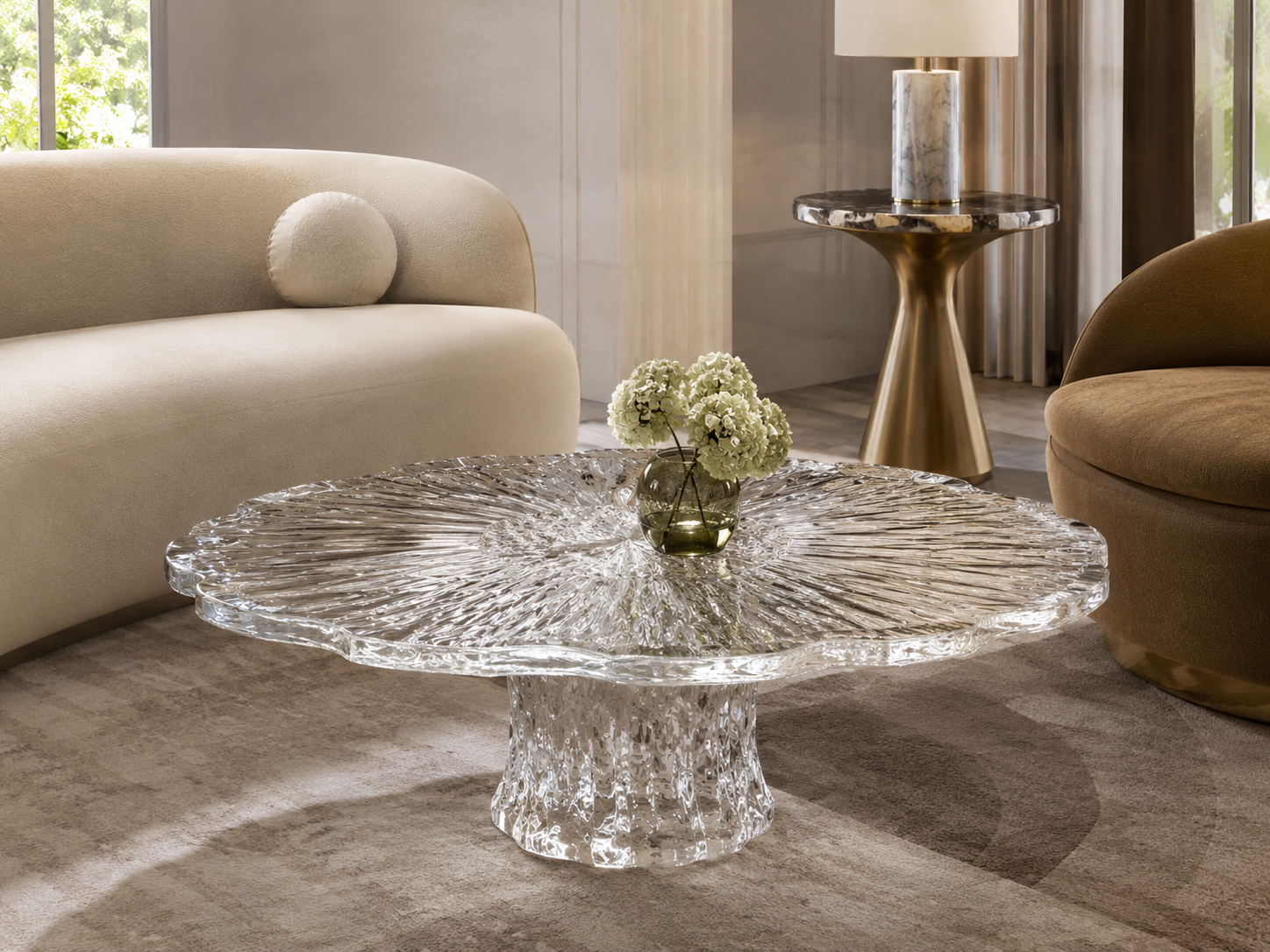
Material choice strongly affects those judgments. Natural stone, custom metalwork, hand-finished wood, artistic glass, and synthetic crystal furniture can all communicate a level of specificity that mass-produced furnishings do not.
Transparent and crystal-like materials are particularly effective because they react to light and surrounding finishes. A substantial transparent table can feel visually weightless while still reading as expensive and engineered. A faceted console can create changing reflections throughout the day. A custom reception element can appear almost architectural rather than simply decorative.
This visual complexity contributes to perceived brand value, especially when the material execution is precise.
The Difference Between Expensive Furniture and Valuable Furniture
High cost does not automatically create business value. A piece becomes valuable when it supports a commercial objective.
For a luxury hotel, that objective may be creating a stronger arrival experience. For a flagship store, it may be increasing dwell time and reinforcing product positioning. For a restaurant, it may be creating a recognizable dining environment. For a developer, it may be differentiating a property in a competitive market.
This distinction matters when evaluating premium furniture. Owners should ask what role a proposed statement piece is expected to play. Is it helping guests navigate? Creating a focal point? Reinforcing brand identity? Supporting photography? Making a large space feel more intentional? Providing a signature visual element that competitors cannot easily copy?
If the answer is clear, the investment can be evaluated more intelligently.
Synthetic Crystal Furniture Offers a Unique Visual Position
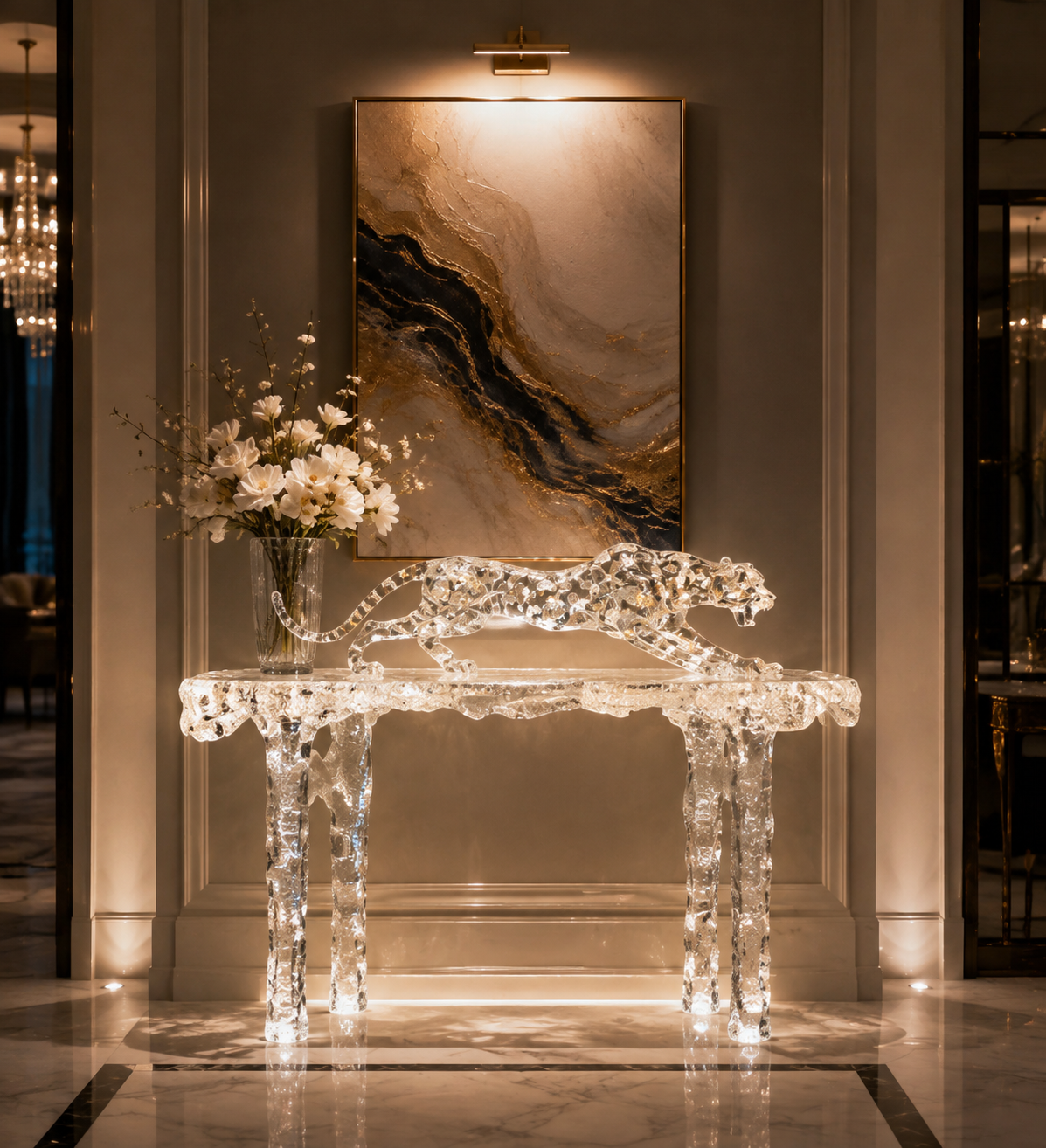
Synthetic crystal furniture sits in an interesting position between furniture, sculpture, and architectural feature. It can be shaped into bold volumes while maintaining transparency or controlled color. It can feel substantial without visually closing a space. It can also be combined with metal, stone, wood, lighting, or embedded decorative elements.
This flexibility makes it useful for custom synthetic crystal furniture in luxury hotels, restaurants, clubs, boutiques, showrooms, and corporate spaces. Designers can create one-off forms that respond directly to the architecture rather than selecting from standard catalog dimensions.
For brands seeking differentiation, that custom capability matters because recognizability often comes from details that are not easily available off the shelf.
Statement Furniture Can Improve Spatial Performance
Visual impact is important, but business value improves when design also supports how the space functions. A statement piece should be positioned where it contributes to circulation, zoning, guest interaction, or operational use.
A transparent console can divide a large lobby without blocking sightlines. A sculptural table can create a natural meeting point. A distinctive reception desk can make orientation intuitive. A custom bar feature can create a strong visual destination from across a room.
Because transparent furniture maintains visual openness, it can be particularly useful in spaces where designers want to add functional mass without making the interior feel crowded.
Durability Protects the Investment
Owners should never evaluate statement pieces only by how they look in a rendering. Commercial environments place furniture under real operational stress. Guests touch it, staff clean it, luggage contacts it, objects are moved across it, events alter the layout, and maintenance teams must work around it.
The business value of synthetic crystal furniture therefore depends on appropriate engineering, surface treatment, edge design, structural planning, and maintenance guidance. A piece that photographs beautifully but becomes difficult to maintain can quickly shift from asset to liability.
For this reason, the best custom furniture manufacturer will discuss real use conditions early. The supplier should understand expected traffic, cleaning frequency, loading, movement, environmental conditions, and installation constraints before finalizing the construction.
Return on Investment Is Broader Than Direct Revenue
It is difficult to assign a direct revenue number to a single piece of furniture. However, luxury design investments often create value through several indirect channels.
A distinctive interior may support higher room rates, stronger restaurant positioning, more event bookings, improved press coverage, greater social exposure, better tenant perception, stronger property differentiation, and more memorable customer experiences. None of these results comes from furniture alone, but furniture can contribute meaningfully when it is part of a coherent design strategy.
This is why owners should think of statement furniture as part of the overall brand environment rather than as an isolated procurement line item.
Consistency Matters for Multi-Site Brands
For hotel groups, retail brands, and restaurant concepts operating multiple locations, one successful signature piece can evolve into a repeatable design language. That creates another layer of value.
If a particular synthetic crystal furniture feature becomes associated with the brand, it can be adapted across properties while keeping core visual characteristics consistent. This requires disciplined production standards, color control, repeatable finishing, accurate drawings, and reliable project management.
Consistency is especially important when each location is manufactured at a different time. A brand signature loses impact if transparency, color, finish, or proportions vary too widely from site to site.
How Owners Should Evaluate a Statement Furniture Proposal
Before approving a significant custom piece, owners and project teams should ask several practical questions. Does the piece support the brand concept? Is it located where guests will actually notice it? Does it improve or disrupt circulation? Can it be installed without compromising the architecture? Is the material appropriate for expected traffic? Can staff maintain it easily? Can the supplier reproduce the quality if additional pieces are required later?
For luxury furniture, visual originality must be supported by operational logic. The strongest designs are those that remain impressive after the opening photographs have been taken.
Why Collaboration Improves Commercial Outcomes
Designers, owners, contractors, and manufacturers often evaluate furniture from different perspectives. Designers focus on concept. Owners focus on brand and financial value. Contractors focus on coordination and risk. Manufacturers focus on material and production feasibility.
When these perspectives are aligned early, custom synthetic crystal furniture can be developed more efficiently. Technical limitations can be solved before they force late compromises, while commercial priorities can guide where investment should be concentrated.
This approach often leads to fewer but stronger statement pieces, which is usually more effective than spreading budget across many decorative elements with limited impact.
From Furniture to Brand Asset
The highest-value furniture in a premium commercial space does more than support a function. It contributes to recognition, experience, storytelling, photography, and memory. It helps a property feel specific rather than interchangeable.
When designed with clear business objectives and engineered for real-world use, synthetic crystal furniture can become one of those rare elements that connects design value with commercial value. It can shape the arrival experience, communicate investment, support brand differentiation, and create a visual signature that continues working long after installation.
The next time a project team debates whether a signature piece is worth the investment, the better question may be how much brand value is being left on the table by choosing something guests will never remember.
READ MORE:
- Why Material Consistency Defines Quality in Premium Synthetic Crystal Furniture
- What to Consider Before Specifying Custom Transparent Furniture at Scale
- How Synthetic Crystal Furniture Protects Design Vision from Concept to Installation
- Why High-End Spaces Are Moving Beyond Traditional Materials to Acrylic and Synthetic Crystal Furniture
- Come i mobili in cristallo sintetico stanno diventando la nuova tendenza nel design degli spazi di lusso
- Dal mobile ordinario al punto focale artistico: come il cristallo sintetico aumenta il valore degli spazi contemporanei
- Anche i piccoli spazi possono avere un'anima di lusso: tecniche di design con mobili in cristallo sintetico
- Non solo elementi decorativi: come i mobili in cristallo sintetico combinano estetica e funzionalità
- Trasformazione degli spazi: come i mobili in cristallo sintetico creano un'atmosfera di lusso e raffinatezza


