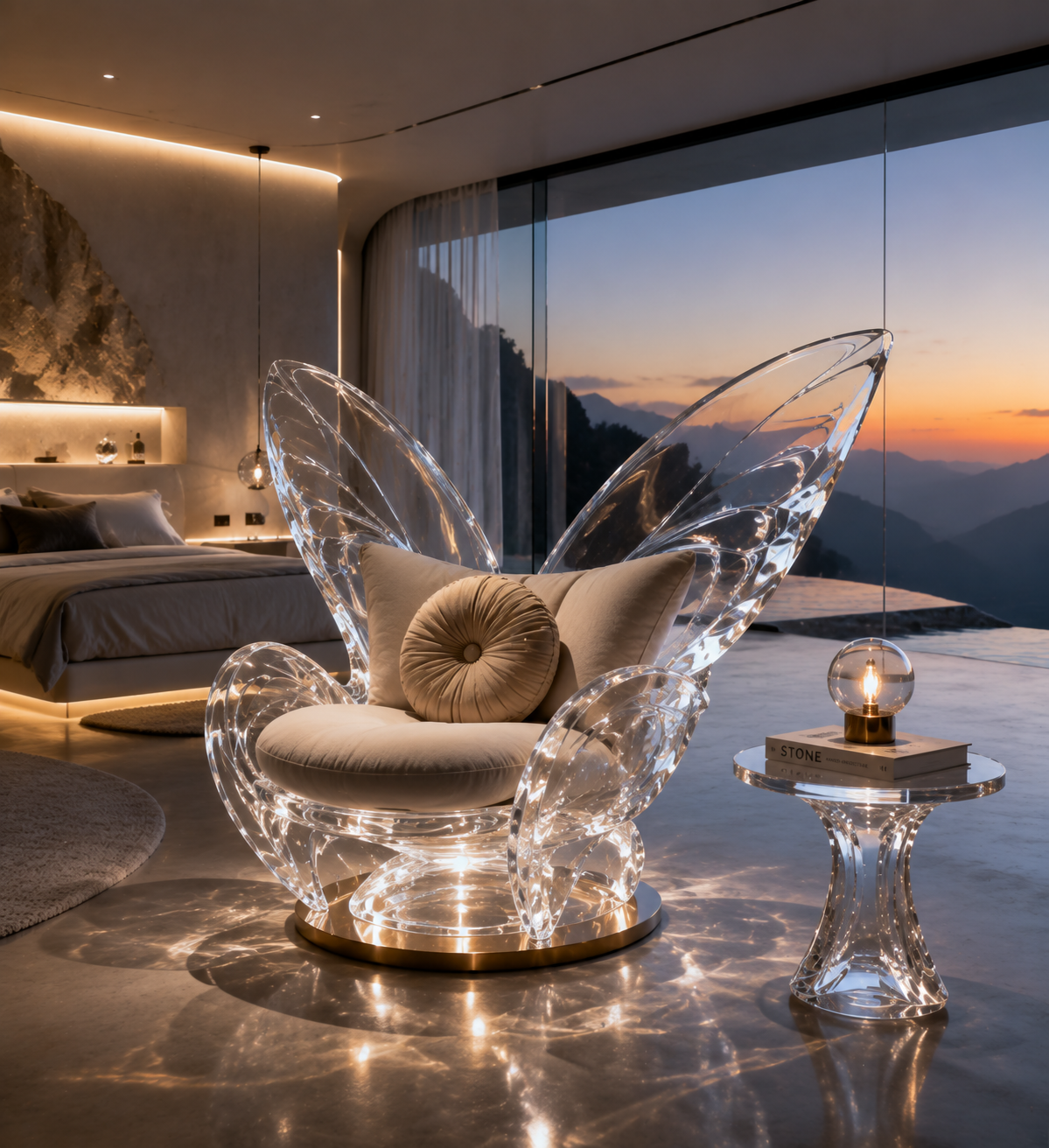
In premium interiors, appearance is the first thing people notice, but it is not the only thing that determines quality. A beautifully polished sample can win approval in a meeting, yet a project may still fail if the final production varies in color, transparency, dimensions, finish, or structural behavior.
This is why material consistency matters so much in high-end furniture. For projects involving synthetic crystal furniture, consistency is especially important because transparent and crystal-like materials reveal details that opaque surfaces can easily hide. When the standard is luxury, quality must be repeatable, not accidental.
Appearance Can Be Impressive Without Being Reliable
Design teams often evaluate a material from a small sample, a prototype, or a finished mock-up. These references are useful, but they can create a false sense of certainty if the supplier has not demonstrated that the same result can be repeated across full production.
A single piece of luxury furniture may look exceptional because it received extra attention, manual correction, or carefully selected material. The real test comes when the same finish must be reproduced across dozens or hundreds of units.
For synthetic crystal furniture, small differences in tint, thickness, polish, edge treatment, bonding, and internal clarity can become obvious when multiple pieces are installed together. Consistency is therefore not a secondary technical detail. It is part of the visual experience.
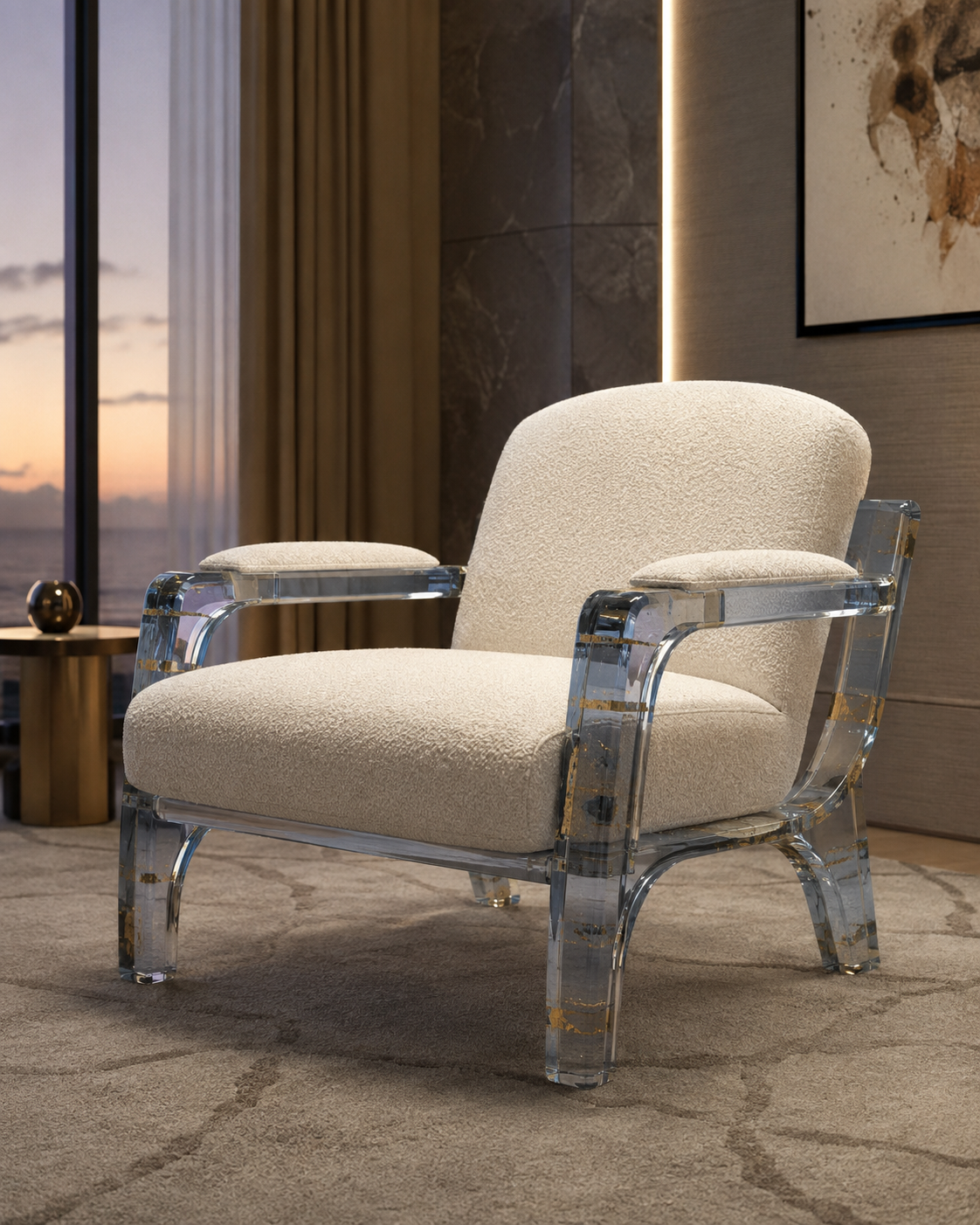
Premium Projects Depend on Repeatability
Hotels, retail flagships, restaurants, clubs, commercial lobbies, and luxury residential developments often require coordinated furniture families. A table in one area may need to match consoles, benches, display elements, or reception features elsewhere.
If those pieces vary too much, the project loses coherence. Guests may not identify the exact cause, but the environment can feel less refined.
Reliable premium furniture production depends on controlled processes. Raw materials should be checked. Approved colors should be referenced. Dimensions should be measured against drawings. Polishing should follow defined standards. Critical surfaces should be inspected under consistent lighting. Finished pieces should be compared with approved samples before packing.
This disciplined approach is what turns an attractive design into a dependable project result.
Transparency Makes Quality Control More Demanding
Opaque materials can conceal internal reinforcement, adhesive lines, minor alignment differences, and variations beneath the surface. Transparent furniture cannot.
The viewer may see through edges, joints, corners, embedded details, and structural transitions. Light can amplify imperfections. Reflections can reveal inconsistent polishing. Thick sections can make color variation more visible than thin samples.
As a result, synthetic crystal furniture requires quality control that considers optical behavior as well as dimensions. A piece can be technically within tolerance and still look wrong if the transparency, edge brilliance, or internal visual balance differs from the approved standard.
Color Consistency Is More Complex Than It Appears
Clear materials are not always perceived as completely colorless. Thickness, surrounding finishes, lighting temperature, and material formulation can influence the final appearance.
For tinted custom synthetic crystal furniture, the challenge becomes even greater. A small shift in color may look insignificant in isolation but obvious when two pieces stand side by side.
This is why large projects should establish a physical color reference and define how it will be evaluated. Project teams should also consider whether all related pieces should be produced from controlled batches to reduce visible variation.
Color approval should never rely only on screen images because digital displays and photographs can distort the actual material.
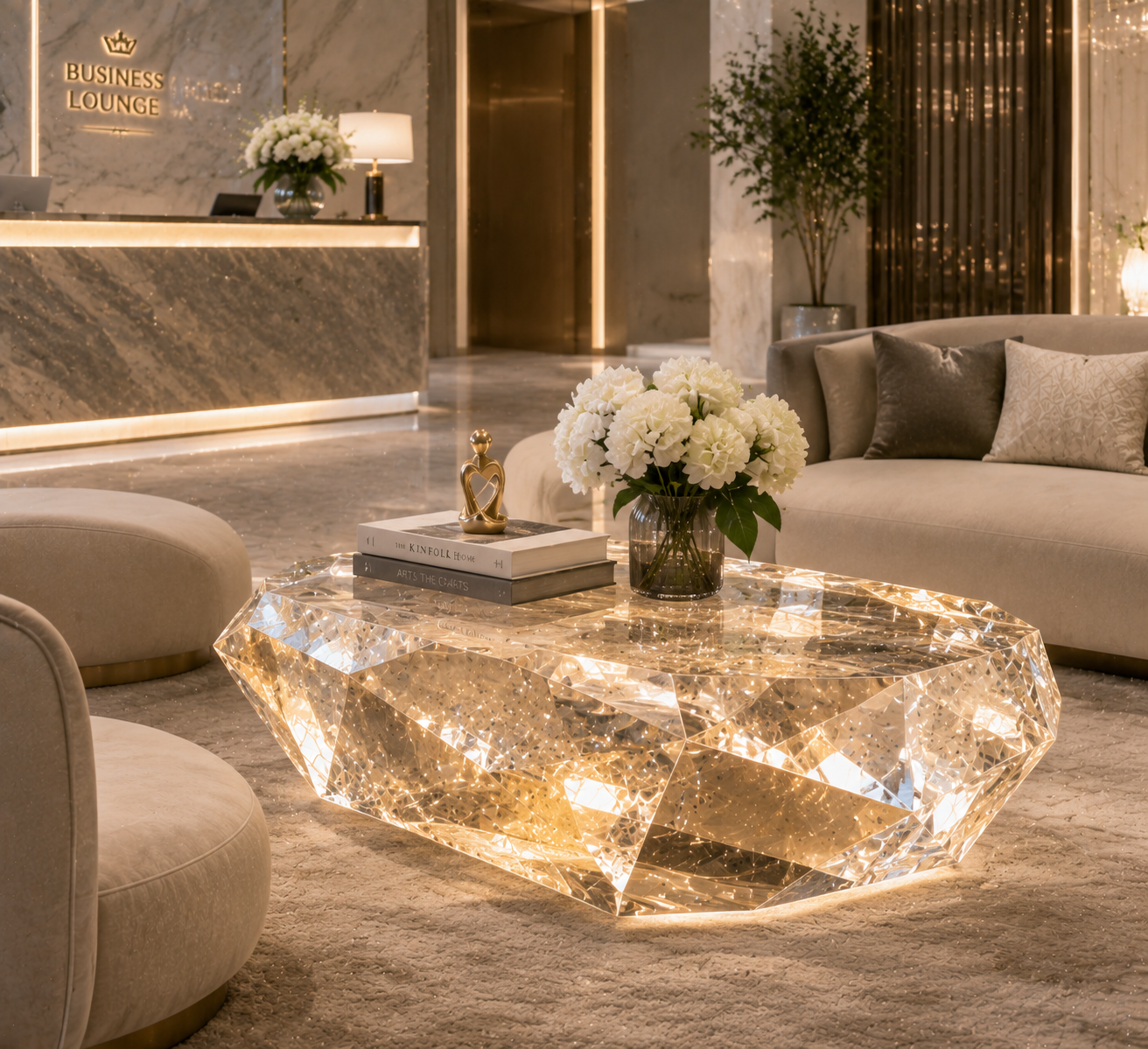
Dimensional Precision Protects the Design
Premium furniture often uses clean geometries, precise reveals, aligned edges, repeated spacing, and carefully controlled proportions. These features depend on dimensional accuracy.
A few millimeters may not matter in some products, but they can be highly visible in a minimal transparent design. Uneven gaps, inconsistent leg positions, mismatched top thicknesses, or misaligned joints can make a piece feel poorly made even when the overall form is correct.
For statement furniture, dimensional precision is therefore part of aesthetics. The more visually simple the design appears, the more important execution quality becomes.
Surface Finish Must Remain Stable Across Production
Polishing quality strongly influences the appearance of synthetic crystal furniture. High-gloss surfaces, polished edges, frosted sections, satin treatments, and mixed finishes all interact differently with light.
When a project includes multiple units, each piece should reflect light in a comparable way. Inconsistent polishing can make one item look brighter, cloudier, sharper, or duller than another.
Production standards should therefore define which surfaces are polished, which are matte, how edges are treated, and what level of visual uniformity is expected. Inspection should be performed before protective films and packaging make the surfaces difficult to compare.
Material Consistency Supports Long-Term Performance
Quality is not only what the client sees during handover. Premium spaces are expected to maintain their appearance through years of use.
Furniture in hospitality and commercial environments is exposed to cleaning, contact, movement, temperature changes, lighting, accidental impacts, and daily operational pressure. If material quality varies, some pieces may age differently from others.
For hospitality furniture, this can create a maintenance problem. One table may remain clear and visually stable while another develops a noticeably different appearance. Consistent material and production standards help reduce those variations.
Owners should therefore ask not only whether a piece looks good today, but whether a group of pieces is likely to age in a comparable way.
Consistency Reduces Replacement Risk
Large commercial projects frequently need replacement pieces after opening. A unit may be damaged, a new area may be added, or a brand may expand the same design to another location.
If the original custom furniture manufacturer has documented material references, drawings, color standards, finish details, and production methods, replacement becomes more predictable.
Without that documentation, reproducing the original appearance years later can be difficult. This is especially important for synthetic crystal furniture, where optical qualities and color can be highly visible.
Consistency therefore creates value beyond the initial order. It gives owners a better chance of maintaining a coordinated design language over time.
Quality Control Should Begin Before Manufacturing
Many people think quality control happens at the end of production. In reality, the strongest quality systems begin much earlier.
Project drawings should identify critical dimensions. Material samples should be formally approved. Tolerances should be agreed. Color references should be recorded. Prototype feedback should be documented. Packaging requirements should be considered before the finished product reaches the packing area.
For custom synthetic crystal furniture, early quality planning reduces the chance that subjective expectations become disputes at the end of the project.
Why Cheap Substitutions Create Expensive Problems
Value engineering is a normal part of commercial projects, but material substitutions can create hidden costs if they reduce consistency.
A lower-cost transparent material may initially appear similar, yet differ in optical quality, color stability, machinability, bonding behavior, polish response, or long-term appearance. If those differences lead to rework, replacement, delays, or visible inconsistency, the saving may disappear quickly.
This is why luxury furniture should be evaluated on total project value rather than unit price alone. The cost of a material is only one part of the equation. Production reliability, quality control, lifespan, replacement compatibility, and brand perception all matter.
Manufacturing Precision Protects Brand Perception
Premium brands invest heavily in consistency because customers associate consistency with trust. The same principle applies to interiors.
If one location uses beautifully executed synthetic crystal furniture and another uses visibly inconsistent versions, the brand experience changes. Guests may not know the technical reason, but they can perceive differences in finish and quality.
For international hotel groups, luxury retailers, and multi-site commercial brands, manufacturing precision becomes part of brand governance. Furniture is not simply purchased; it is reproduced as part of a larger visual system.
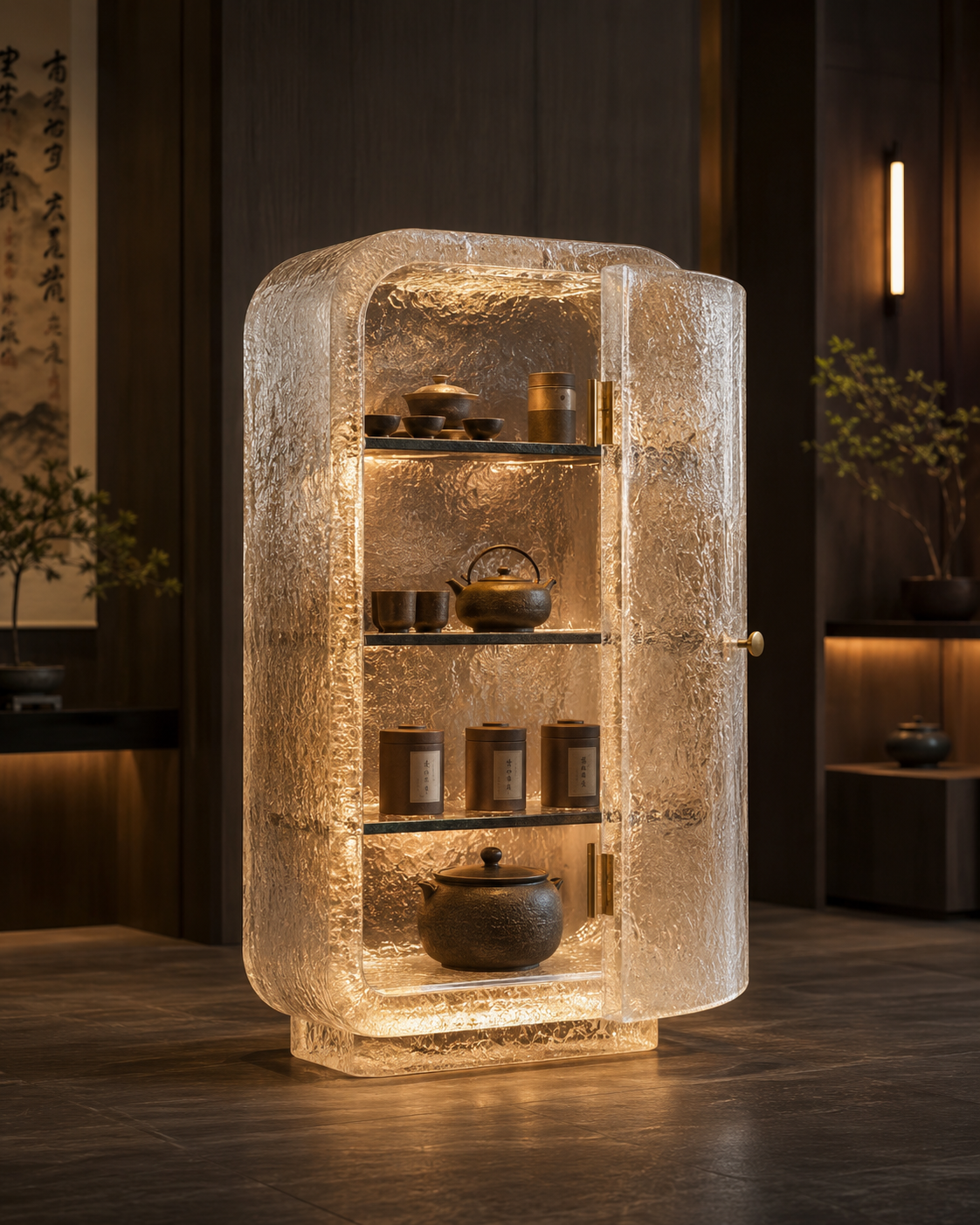
Project Teams Need Objective Standards
Words such as premium, crystal clear, flawless, perfect, or luxury can be interpreted differently. Successful projects translate subjective design language into measurable or reference-based standards.
That may include approved samples, finish boards, tolerance limits, inspection distances, lighting conditions, color references, prototype sign-offs, and packaging requirements.
For transparent furniture, physical reference samples are particularly useful because they show the expected relationship between transparency, edge polish, thickness, and color in a way that written descriptions cannot.
Objective standards reduce uncertainty and make communication between designers, contractors, procurement teams, and manufacturers more efficient.
Supplier Discipline Matters as Much as Material Choice
Even the best material can produce inconsistent results in an uncontrolled manufacturing environment. Material selection and production discipline must work together.
A capable custom furniture manufacturer should manage drawing revisions, raw material inspection, machining, polishing, assembly, bonding, dimensional checks, final visual inspection, packaging, and delivery with documented procedures.
For synthetic crystal furniture, the supplier should also understand how thick transparent volumes, polished edges, tinted sections, integrated metal components, and lighting features affect the final appearance.
The strongest manufacturing partner is not simply the one that can make the design once. It is the one that can reproduce the approved result consistently across the entire project.
Consistency Is the Foundation of Premium Value
Appearance creates the first impression, but consistency determines whether that impression survives across a full project and over time. A premium environment should not depend on lucky samples or one-off craftsmanship that cannot be repeated.
When synthetic crystal furniture is specified with controlled materials, clear standards, precise manufacturing, disciplined inspection, and long-term replacement planning, it becomes a reliable part of the interior rather than a visual risk. That reliability is what allows designers to create ambitious transparent forms while giving owners confidence in the finished result.
In the end, the most expensive mistake in a luxury project may not be choosing the wrong look, but choosing a material system that cannot deliver the same look twice.
READ MORE:
- What to Consider Before Specifying Custom Transparent Furniture at Scale
- The Business Value of Statement Synthetic Crystal Furniture in Luxury Spaces
- How Synthetic Crystal Furniture Protects Design Vision from Concept to Installation
- Why High-End Spaces Are Moving Beyond Traditional Materials to Acrylic and Synthetic Crystal Furniture
- Come i mobili in cristallo sintetico stanno diventando la nuova tendenza nel design degli spazi di lusso
- Dal mobile ordinario al punto focale artistico: come il cristallo sintetico aumenta il valore degli spazi contemporanei
- Anche i piccoli spazi possono avere un'anima di lusso: tecniche di design con mobili in cristallo sintetico
- Non solo elementi decorativi: come i mobili in cristallo sintetico combinano estetica e funzionalità
- Trasformazione degli spazi: come i mobili in cristallo sintetico creano un'atmosfera di lusso e raffinatezza


