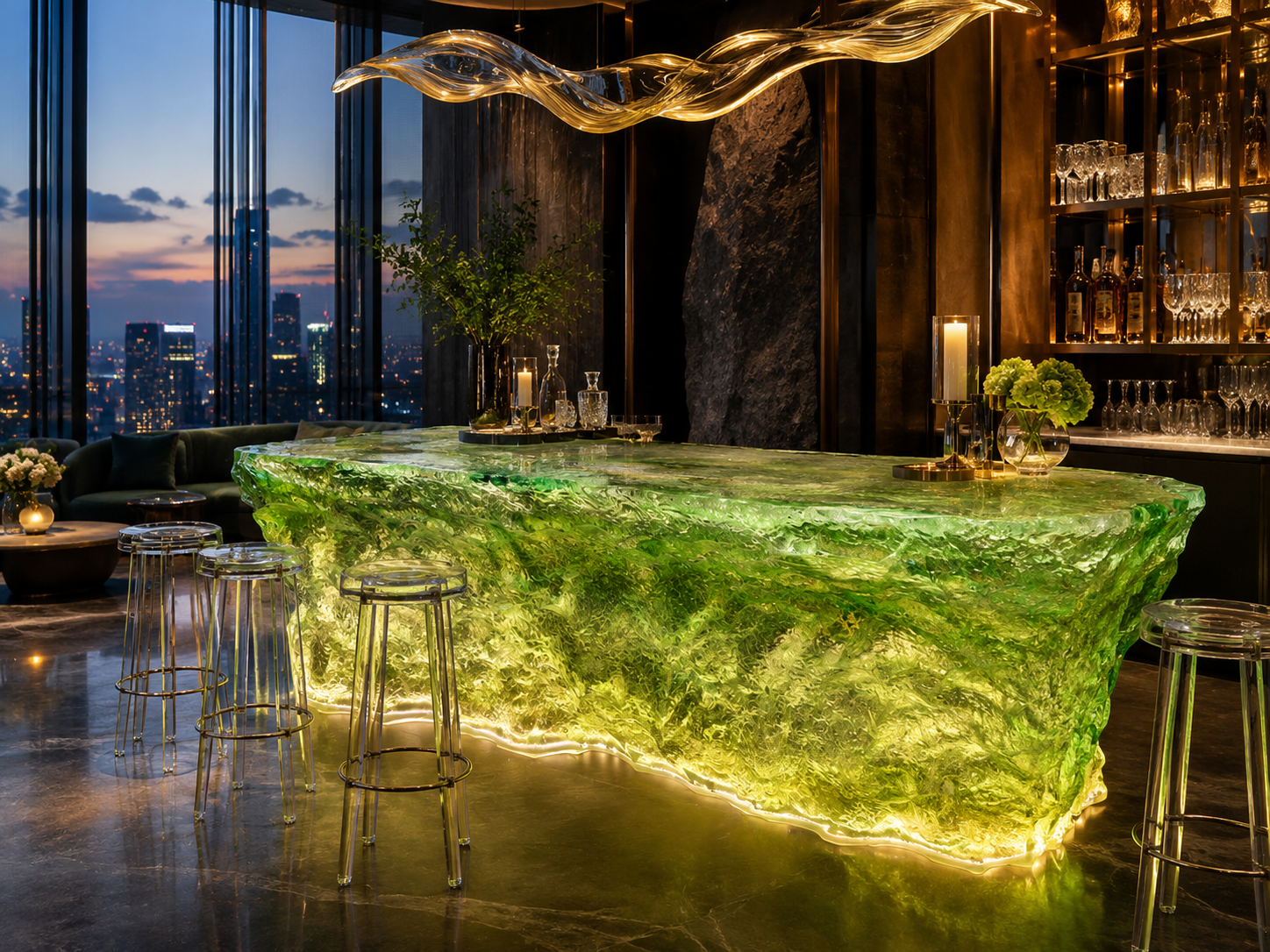
For many years, furniture purchasing decisions were explained mainly through three factors: appearance, function, and price. A table had to look attractive, a chair had to be comfortable, and a cabinet had to provide useful storage. In the premium market, however, this formula is no longer enough.
High-end customers increasingly ask a more complex question: What makes this piece feel valuable?
That sense of value is not created by price alone. It comes from the relationship between design, materials, proportions, craftsmanship, durability, exclusivity, and the emotional experience of using the product. This is one reason acrylic furniture has developed far beyond its earlier reputation as a purely modern or decorative category.
When manufactured with high-grade material, carefully controlled thickness, precise machining, clean bonding, refined polishing, and thoughtful structural design, crystal acrylic furniture can create a surprisingly luxurious presence. The material may be transparent, but the quality behind it is highly visible.
For premium consumers, interior designers, hospitality developers, and luxury retailers, this visibility matters. A transparent material leaves fewer places for poor workmanship to hide. Edges, joints, surfaces, proportions, reflections, and internal clarity all become part of the design.
As a result, the material itself becomes a form of communication.
Below are six reasons high-end customers are paying closer attention to the sense of value created by synthetic crystal acrylic furniture.
1. Material Value Is Becoming Part of Luxury Perception
Luxury furniture is no longer defined only by ornamental decoration, rare wood, precious metals, or traditional craftsmanship. Contemporary luxury can also be quiet, minimal, architectural, and technologically precise.
This change has created new opportunities for premium acrylic furniture.
A high-end customer may look at two transparent tables with similar shapes and still perceive a major difference in quality. One may appear lightweight and ordinary, while the other feels substantial, refined, and architectural. The difference is often created by material quality and manufacturing execution.
Several characteristics influence this perception.
First is optical clarity. Premium acrylic with excellent transparency creates a cleaner visual impression than material with visible haze, distortion, or inconsistency. Because the furniture interacts continuously with its surroundings, clarity directly affects the way the entire piece is perceived.
Second is material thickness. Thick acrylic can produce a strong visual contradiction: the furniture occupies substantial physical volume, yet it does not visually block the room. This combination is highly attractive in sophisticated interiors. A thick transparent console, dining table base, or side table can feel solid and important without creating the heaviness of an opaque object.
Third is surface refinement. Highly polished edges and smooth surfaces allow light to travel through and reflect from the material in a controlled way. These details may appear subtle, but high-end buyers often notice them immediately.
Fourth is proportion. A premium product rarely looks expensive because of material alone. The dimensions of the legs, top, joints, curves, and edges must feel intentional. The most successful luxury furniture designs combine material quality with disciplined proportions.
This explains why modern luxury consumers are becoming more material-aware. They are not simply buying a transparent chair or table. They are buying a carefully designed object whose material qualities contribute to the atmosphere of the entire room.
For manufacturers, this means acrylic should not be treated as an inexpensive visual effect. When the target market is premium, the material needs to be selected, engineered, and finished as carefully as wood, stone, metal, or leather.
2. Crystal-Like Transparency Creates a Stronger Visual Identity
One of the most distinctive advantages of crystal acrylic furniture is its ability to be physically present while remaining visually light.
This is especially important in contemporary interiors.
Luxury homes, hotel suites, high-end apartments, boutiques, galleries, and reception spaces often contain multiple strong materials: marble floors, wood wall panels, textured fabrics, metal details, decorative lighting, stone surfaces, artworks, and sculptural accessories. Adding another visually heavy piece of furniture can make the space feel crowded.
Transparent furniture offers a different solution.
Because the eye can see through the material, an acrylic table, chair, console, bench, or display unit can perform its function without interrupting important sightlines. The surrounding interior remains visible, and the furniture becomes integrated into the space rather than competing with it.
This does not mean transparent furniture disappears completely.
Premium acrylic interacts with light in ways that can make it highly expressive. Thick polished edges may catch highlights. Curved surfaces may create subtle distortions. Faceted details can produce reflections similar to crystal. Colored or tinted acrylic can introduce a controlled visual accent while preserving transparency.
In this sense, acrylic can behave almost like an optical material.
A well-designed acrylic side table beside a luxury sofa does more than provide a surface. It frames the carpet below it, reflects surrounding lighting, and allows the upholstery and flooring to remain visually connected. A transparent console placed in front of a decorative wall allows the architecture to remain visible. An acrylic dining base can support a substantial tabletop without visually dividing the room.
These effects are particularly valuable in smaller luxury residences where every square meter must feel open. They are equally useful in large interiors where designers want visual continuity.
This is why high-end furniture buyers increasingly appreciate acrylic for reasons beyond novelty. The material can solve genuine design problems while creating a distinctive contemporary identity.
The key difference is quality.
Low-grade transparent products can feel temporary or overly decorative. High-quality acrylic furniture, by contrast, can feel architectural. Its clarity, mass, reflections, edge treatment, and engineering can give it a level of sophistication that works naturally in premium environments.
The value is therefore not simply “transparency.” It is controlled transparency used as a design tool.
.png)
3. Manufacturing Difficulty Strengthens the Sense of Exclusivity
From a distance, acrylic furniture can look simple.
A clear table may appear to consist of only a few transparent panels. A console might have a minimal rectangular structure. A chair may use a clean geometric form with very little visible decoration.
But simplicity often makes manufacturing more demanding, not less.
With opaque materials, some structural elements, internal joints, fasteners, or surface variations can be concealed. With crystal acrylic furniture, almost everything can be seen.
This places greater pressure on fabrication quality.
Cutting must be precise. Edges need to be straight and consistent. Polishing must create a refined finish without introducing irregularities. Bonded areas must be handled carefully. Curves need to appear smooth and deliberate. The relationship between different components must be accurately controlled.
Even small defects may become visually obvious because light travels through the material.
This manufacturing challenge contributes directly to perceived value.
High-end customers often appreciate products more when they understand the level of precision required to produce them. A thick acrylic table with flawless polished edges may look effortless, but that visual simplicity can require significant technical control.
This is similar to other areas of luxury design. A perfectly tailored minimalist coat may require greater pattern accuracy than an ornate garment. A simple architectural interior may depend on extremely precise alignment. A clean metal detail may demand more finishing work because every imperfection remains visible.
Premium acrylic furniture follows the same principle.
The clearer and more minimal the product appears, the more disciplined the manufacturing process needs to become.
Customization adds another layer of complexity. Luxury projects often require specific dimensions, unusual thicknesses, custom colors, integrated metal elements, special edge treatments, or shapes designed for a particular space. Manufacturers capable of translating these concepts into reliable finished products provide more than production capacity; they provide technical problem-solving.
That technical capability becomes part of the product's value.
For this reason, premium acrylic manufacturers should communicate craftsmanship rather than presenting acrylic furniture as a simple commodity. Customers should understand the importance of material selection, machining accuracy, polishing, assembly, finishing, inspection, packaging, and project-specific engineering.
When these processes are executed well, luxury furniture made from acrylic can communicate precision and exclusivity without excessive decoration.
Its sophistication comes from control.
4. High-End Buyers Are Paying More Attention to Long-Term Experience
The premium furniture market is increasingly experience-driven.
Customers may still be attracted initially by an image, showroom display, or interior design concept, but long-term satisfaction depends on what happens after the product enters the space.
Does it remain visually attractive?
Does it feel stable?
Is it practical to maintain?
Does the surface quality meet expectations?
Does the furniture continue to work with the interior after other decorative elements change?
These questions are becoming increasingly important for high-end furniture buyers.
The best acrylic furniture designs perform well because the material is not only decorative; it also has practical advantages when used correctly. Transparent furniture can adapt to many color schemes because it does not introduce a dominant opaque color. This gives it unusual flexibility in interiors that may evolve over time.
For example, a transparent acrylic coffee table can remain compatible when a homeowner changes rugs, cushions, artwork, or wall colors. A clear console may continue to work even after a hotel renovates surrounding finishes. Acrylic display furniture can support seasonal merchandising without competing with products.
This visual adaptability creates long-term design value.
Structural design is equally important.
Premium buyers expect furniture to feel considered and dependable. This means designers and manufacturers need to evaluate thickness, spans, load distribution, joints, support positions, and product use. A visually elegant piece should also feel appropriate for its intended application.
Maintenance also influences customer experience.
Transparent surfaces naturally reveal dust, fingerprints, and surface marks more clearly than some opaque materials. Rather than ignoring this reality, premium suppliers should provide appropriate care guidance. High-end customers generally accept material-specific maintenance when the product's aesthetic and functional value justifies it.
What matters is transparency in both senses of the word: visual transparency and clear communication.
Brands that explain correct cleaning methods, care expectations, usage conditions, and installation requirements create greater confidence.
This is particularly important for hospitality, retail, and commercial projects, where furniture may experience more frequent interaction than in private residences.
The overall goal should not be to claim that one material is perfect for every environment. Premium positioning comes from selecting the correct material for the correct application and engineering the product accordingly.
When this approach is taken, premium acrylic furniture can deliver an appealing combination of modern appearance, spatial flexibility, customization potential, and long-term visual relevance.
For luxury buyers, that combination strengthens the sense that the product is not merely fashionable—it is thoughtfully designed.
5. Acrylic Fits Contemporary Luxury Interior Design
One reason acrylic continues to gain attention in premium projects is its unusual ability to work with other materials.
It does not need to dominate a room.
Instead, it can create contrast.
Consider a living room with a natural stone floor, walnut wall panels, textured upholstery, and brushed metal lighting. Introducing another heavy wooden or stone table may create too much visual density. A transparent furniture piece can provide function while allowing the more tactile materials to remain prominent.
The same principle works in many combinations.
Acrylic and marble create a contrast between optical lightness and geological weight.
Acrylic and wood combine modern precision with natural warmth.
Acrylic and stainless steel create a clean, contemporary architectural character.
Acrylic and brass can produce a more glamorous luxury effect.
Acrylic and leather balance transparency with tactile richness.
Acrylic and fabric allow upholstery colors and textures to remain visually dominant.
This flexibility gives interior designers more freedom.
In residential projects, acrylic furniture can help maintain openness in living rooms, dressing rooms, bedrooms, dining areas, and home offices. In hospitality interiors, it can support sophisticated visual concepts without overwhelming guest spaces. In boutiques and showrooms, transparent displays allow products to remain the primary focus. In event and exhibition environments, acrylic can create modern structures while preserving visual circulation.
Customization further strengthens this design potential.
Although clear acrylic is the most familiar expression, designers can explore tinted tones, frosted effects, colored components, combined materials, sculptural curves, geometric forms, and different thicknesses.
This allows crystal acrylic furniture to move between minimalist and expressive design languages.
A clear rectangular console may suit a quiet contemporary residence. A tinted sculptural table may work in a fashion boutique. A thick transparent pedestal may function as a gallery display. A custom acrylic bench with metal details may become a feature element in a hotel lobby.
The material is therefore not limited to one visual identity.
Its value comes from adaptability.
For high-end buyers, this matters because luxury interiors are increasingly personalized. Customers do not necessarily want the same recognizable object found everywhere else. They want furniture that supports a specific architectural story.
Manufacturers that offer custom dimensions, custom shapes, material combinations, prototyping, and project-based production are therefore well positioned in the premium segment.
The customer is not simply purchasing a table.
They are purchasing a piece designed to belong to a particular space.
That relationship between object and environment is one of the strongest sources of perceived value in contemporary luxury design.
.png)
6. Material Storytelling Helps Transform Furniture Into a Premium Product
A product can be well made and still be undervalued if customers do not understand what makes it special.
This is where material storytelling becomes important.
High-end customers often want a reason behind the price.
They want to know why one piece costs more than another. They want to understand what makes the material different, how the product is made, what level of customization is possible, and how the design will contribute to their space.
For luxury furniture, the story should not be artificial marketing language. It should be built around real product decisions.
Why was a particular acrylic thickness selected?
How are the edges finished?
How does the structure maintain visual simplicity?
What customization was required?
How does transparency interact with the surrounding architecture?
What additional materials are integrated into the design?
How does the manufacturer inspect the final product?
How is the furniture protected during transportation?
These details help customers understand value.
For B2B buyers, the story can become even more important. Interior designers, architects, furniture brands, hotel developers, contractors, and retailers need confidence that the supplier can translate design intent into production.
They may require drawings, samples, prototypes, custom finishes, packaging solutions, production coordination, or repeat manufacturing.
In these cases, the value of premium acrylic furniture is not located only in the physical material. It also includes the expertise surrounding the material.
This changes how manufacturers should position themselves.
Competing only on price can make acrylic appear interchangeable. Competing on design support, precision, finishing, customization, quality consistency, and project understanding creates a stronger premium proposition.
The future of crystal acrylic furniture will likely depend on this broader definition of value.
Customers will continue to care about appearance, but appearance alone will not be enough. They will increasingly evaluate why a piece looks refined, why it suits the space, how carefully it is made, and whether the supplier understands premium expectations.
The material becomes the beginning of the conversation rather than the entire conversation.
Conclusion
The growing interest in synthetic crystal acrylic furniture reflects a broader change in the luxury market.
High-end customers are becoming more sensitive to the relationship between material, craftsmanship, visual experience, and long-term value. They are not satisfied with products that merely look expensive. They want products whose value can be understood through proportion, clarity, finish, engineering, customization, and the way they interact with the surrounding environment.
This is why acrylic furniture can occupy a meaningful position in contemporary luxury interiors.
Its transparency creates visual lightness. Its thickness can create physical presence. Its polished surfaces interact with light. Its neutral visual character allows other materials to remain important. Its customization potential supports unique projects. And its manufacturing requirements create opportunities for genuine craftsmanship.
Most importantly, acrylic demonstrates that luxury is not determined by whether a material is traditional or modern, natural or synthetic.
Luxury is created when material is used intelligently.
For manufacturers, designers, and furniture brands, the opportunity lies in moving beyond the idea of acrylic as simply a transparent substitute for another material. High-quality crystal acrylic furniture should instead be developed as a design category with its own visual language, engineering requirements, finishing standards, and premium applications.
When that happens, customers do not simply see a clear table, chair, console, or display unit.
They see precision.
They see craftsmanship.
They see design intention.
And ultimately, they see value.
READ MORE:
- From Living Room to Terrace: How Crystal-Like Furniture Works Across Indoor and Outdoor Design
- Beyond Wood and Metal: What Distinctive Materials Can Make Outdoor Furniture Stand Out?
- 2026 Design Inspiration: Where Synthetic Crystal Furniture Works Best in Commercial and Residential Spaces
- Why More Designers Are Bringing "Crystal-Like Furniture" Into Modern Interiors
- High-End Spaces Do Not Have to Be Complicated: How Transparent Materials Elevate Interior Design
- Synthetic Crystal Acrylic Furniture: Giving Modern Spaces Stronger Visual Impact
- Why Crystal-Grade Acrylic Is Becoming an Innovative Material in the Eyes of Designers
- Synthetic Crystal Acrylic Furniture: A New Breakthrough for High-End Product Differentiation
- From Transparent Aesthetics to Commercial Competitiveness: Future Opportunities for Synthetic Crystal Acrylic Furniture


