For high-end interior designers working on ultra-luxury residential and hospitality projects, material sourcing often presents a paradox: clients demand one-of-a-kind, statement-making pieces, but natural crystal’s inherent limitations—supply volatility, structural inconsistency, and exorbitant lead times—frequently derail project timelines and budget forecasts. A 2023 luxury interiors industry survey found that 68% of senior designers reported natural stone and crystal material delays as a top cause of post-contract project adjustments, with custom crystal furniture being the most frequently delayed category. This is where synthetic crystal emerges as a underrecognized solution, offering performance and design flexibility that addresses many of the sector’s most persistent pain points.
Design Consistency: Eliminating the Guesswork in Custom Commissioning
One of the most significant pain points for luxury designers working with natural crystal is the lack of batch-to-batch consistency. Every natural crystal formation is unique, meaning that a sample approved during the concept phase may bear little resemblance to the final piece quarried months later. For clients who have signed off on specific veining patterns, color saturation, or clarity levels, this inconsistency often leads to costly reworks, client dissatisfaction, and strained vendor relationships.
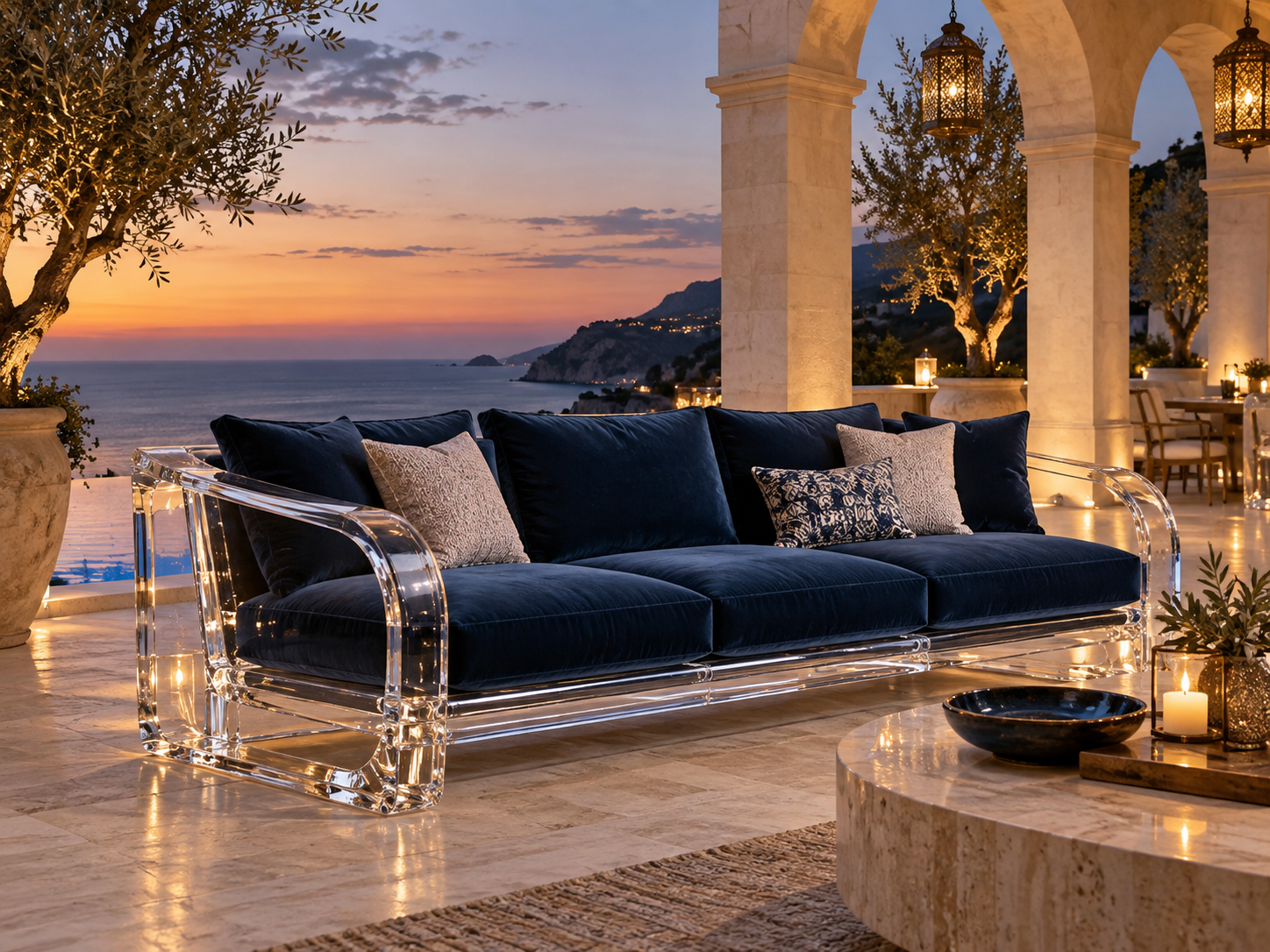
In contrast, synthetic crystal is manufactured under controlled laboratory conditions, allowing for precise replication of color, clarity, and structural properties across every production run. Designers can specify exact hue intensities, veining density, and even light refraction levels with full confidence that the final product will match the approved renderings down to the millimeter. This predictability is particularly critical for large-scale installations—such as custom crystal dining tables, wall panels, or lobby feature pieces—where multiple components must align visually to create a cohesive aesthetic. For firms working on multi-unit luxury residential developments, this consistency also ensures that amenity spaces maintain a uniform luxury standard across all units.
Structural Versatility: Pushing the Boundaries of Furniture Form
Natural crystal’s inherent fragility and irregular shape limit its functional application in furniture design. Most natural crystal pieces are limited to small, decorative accents or low-load surfaces, as the stone’s natural fissures make it prone to cracking under weight or temperature fluctuations. Designers who want to create large, load-bearing crystal furniture—such as full dining tables, kitchen islands, or seating elements—often face structural engineering challenges that require costly reinforcement, which can detract from the material’s natural beauty.
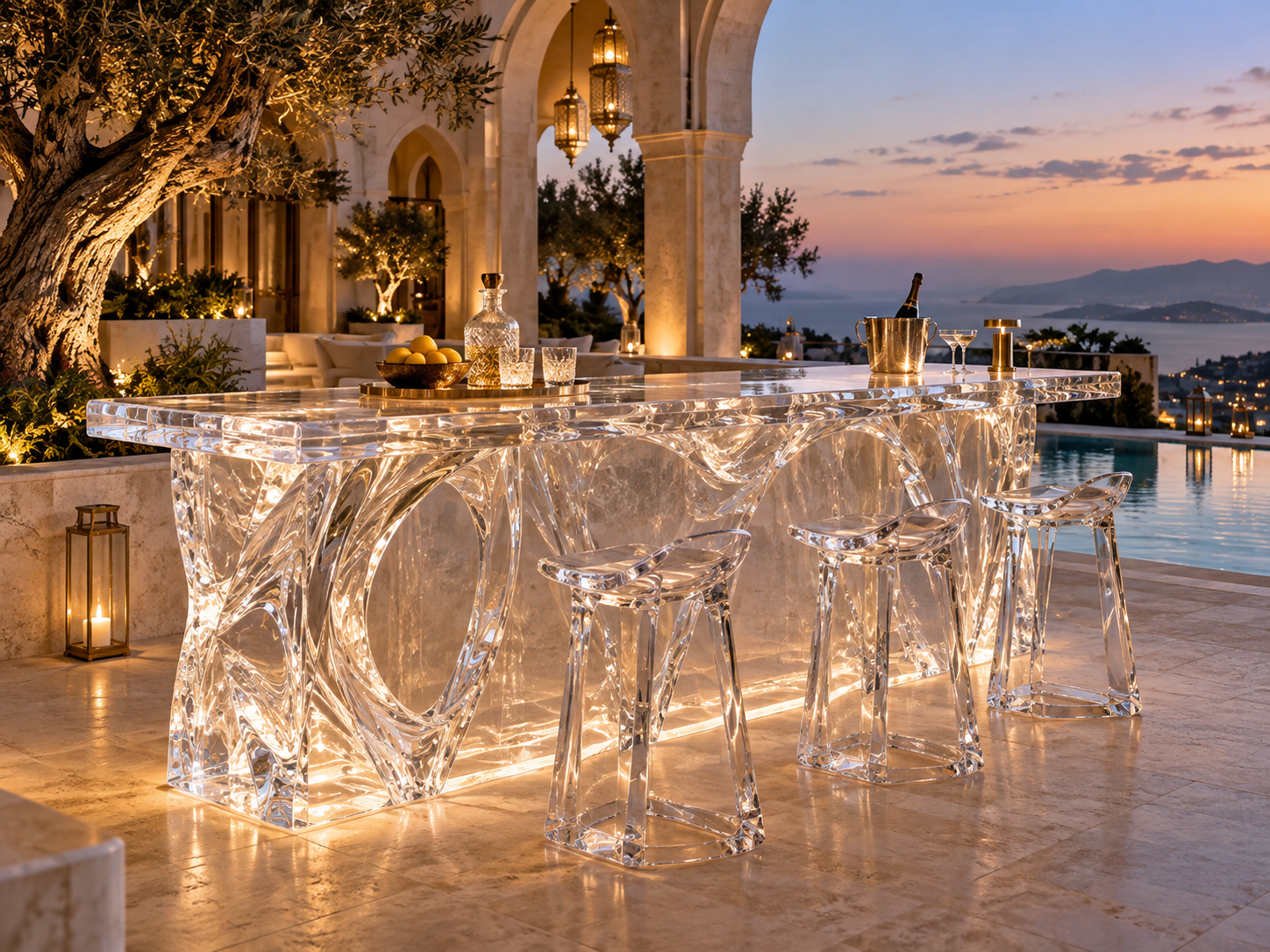
Synthetic crystal, by contrast, is engineered with uniform structural density, eliminating the internal fissures that weaken natural formations. This structural integrity allows designers to experiment with thinner profiles, larger surface areas, and more ambitious cantilevered designs that would be structurally impossible with natural crystal. The material can also be cut, shaped, and polished with far greater precision, enabling intricate edge details, custom inlays, and seamless joint work that creates the illusion of a single, monolithic crystal slab. For designers looking to create truly showstopping focal pieces, this versatility opens up a design vocabulary that natural crystal simply cannot support.
Supply Chain Reliability: Mitigating Project Delay Risks
Global supply chain disruptions have hit the luxury interiors sector particularly hard, with natural crystal facing some of the longest lead times of any high-end material. Most high-quality natural crystal is sourced from a small number of mines in South America and Eastern Europe, and geopolitical tensions, export restrictions, and mining labor shortages have led to lead times of 6–12 months for custom orders. For designers working on tight project timelines—common in high-end residential and hospitality projects where move-in dates and launch deadlines are non-negotiable—these delays can result in financial penalties and reputational damage.
Synthetic crystal production is not tied to geographic mining locations, with manufacturing facilities located across multiple regions, reducing exposure to single-source supply chain risks. Standard lead times for custom synthetic crystal furniture pieces typically range from 8–12 weeks, with rush order options available for time-sensitive projects. This reliability allows designers to plan project timelines with greater accuracy, reducing the need for contingency budgets and last-minute material substitutions that can compromise design intent. For B2B design firms managing multiple concurrent projects, this supply chain stability also simplifies inventory and procurement planning, reducing administrative overhead.
Practical Application: A Case Study in Luxury Hospitality Design
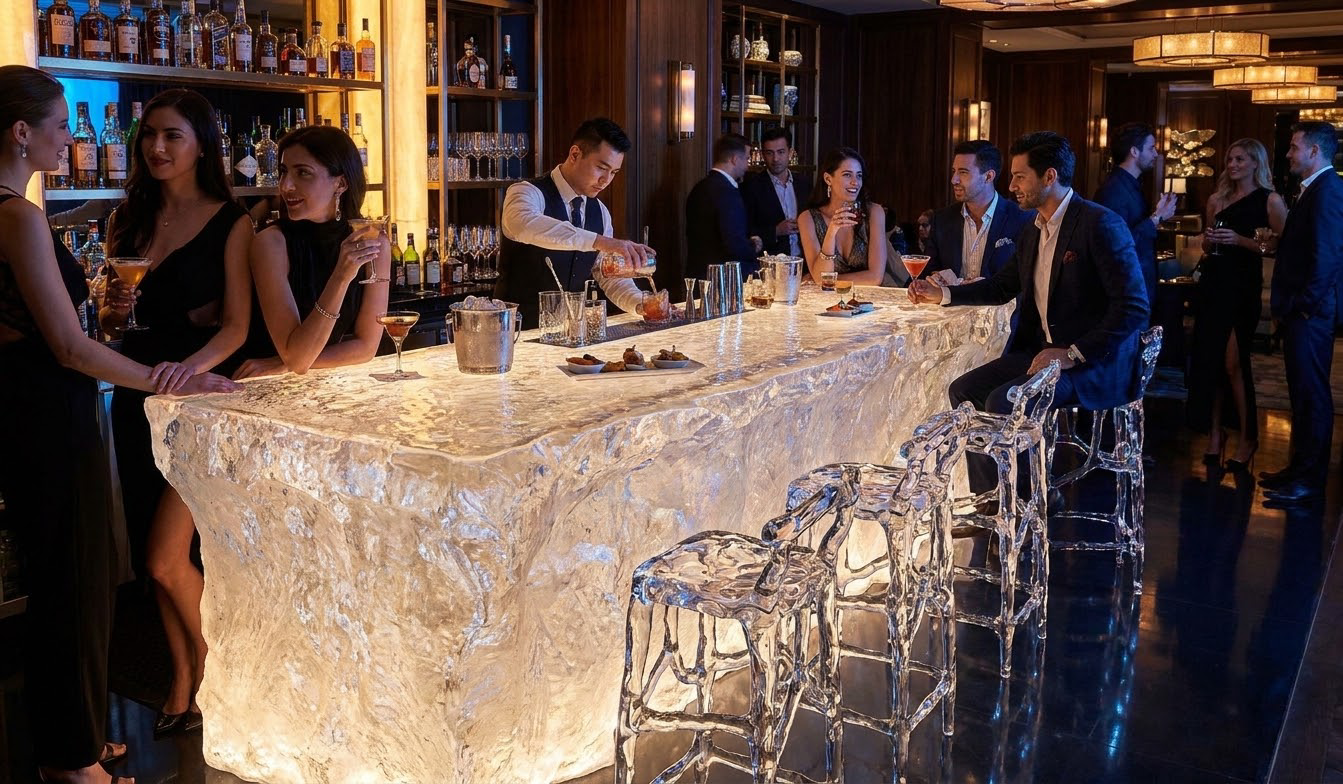
To illustrate these benefits in practice, consider a 2024 luxury boutique hotel project in the Middle East, where the design team initially specified natural crystal for the lobby’s 4-meter central reception desk. After two rounds of sample approvals failed to match the client’s requested soft blue hue and uniform clarity, and the quarry notified the team of a 4-month production delay due to a mining permit issue, the firm switched to a synthetic crystal alternative.
The final piece, fabricated to the exact color and dimensional specifications the client had approved, was installed in 10 weeks—three months ahead of the original natural crystal timeline. The material’s uniform structural density allowed the design team to incorporate a 1.2-meter cantilevered section without additional structural support, creating a more sleek, modern silhouette than the original natural crystal design. Post-installation testing also found that the synthetic surface was 30% more resistant to scratches and acid damage from common hospitality spills (such as wine and citrus) than natural crystal of comparable quality, reducing long-term maintenance costs for the hotel operator.
For interior designers operating in the high-end luxury market, the goal is always to deliver exceptional design that meets client expectations while managing the practical constraints of timelines, budgets, and material performance. Synthetic crystal is not a replacement for natural crystal in every scenario—for clients who specifically seek the unique, one-of-a-kind geological history of a natural formation, natural crystal remains the only option. But for the majority of luxury projects where design precision, structural versatility, and supply chain reliability are top priorities, it offers a compelling alternative that outperforms its natural counterpart in key areas.
As the luxury interiors sector continues to evolve, designers who expand their material palette to include engineered alternatives will be better positioned to deliver innovative, client-centric solutions that stand out in a crowded market. What has been your experience working with engineered luxury materials in high-end projects? Share your insights in the comments below, or feel free to reach out directly to discuss material sourcing strategies for your next luxury commission.


