The Myth of “Budget Substitute”: Unpacking Material Misconceptions
For high-end interior designers catering to ultra-high-net-worth clients, the tension between creative ambition and material limitations is a persistent pain point. A 2023 survey of 120 senior luxury interior designers across Europe, North America, and the Middle East found that 68% have had to revise a core design concept because natural crystal materials failed to meet structural, sizing, or consistency requirements for custom furniture. This gap between vision and execution has opened the door for a material long mislabeled as a “budget substitute”: synthetic crystal. Far from a lower-cost alternative, this engineered material is emerging as a driver of high-end design innovation, solving longstanding challenges that have constrained luxury furniture design for decades.
The Myth of “Budget Substitute”: Unpacking Material Misconceptions
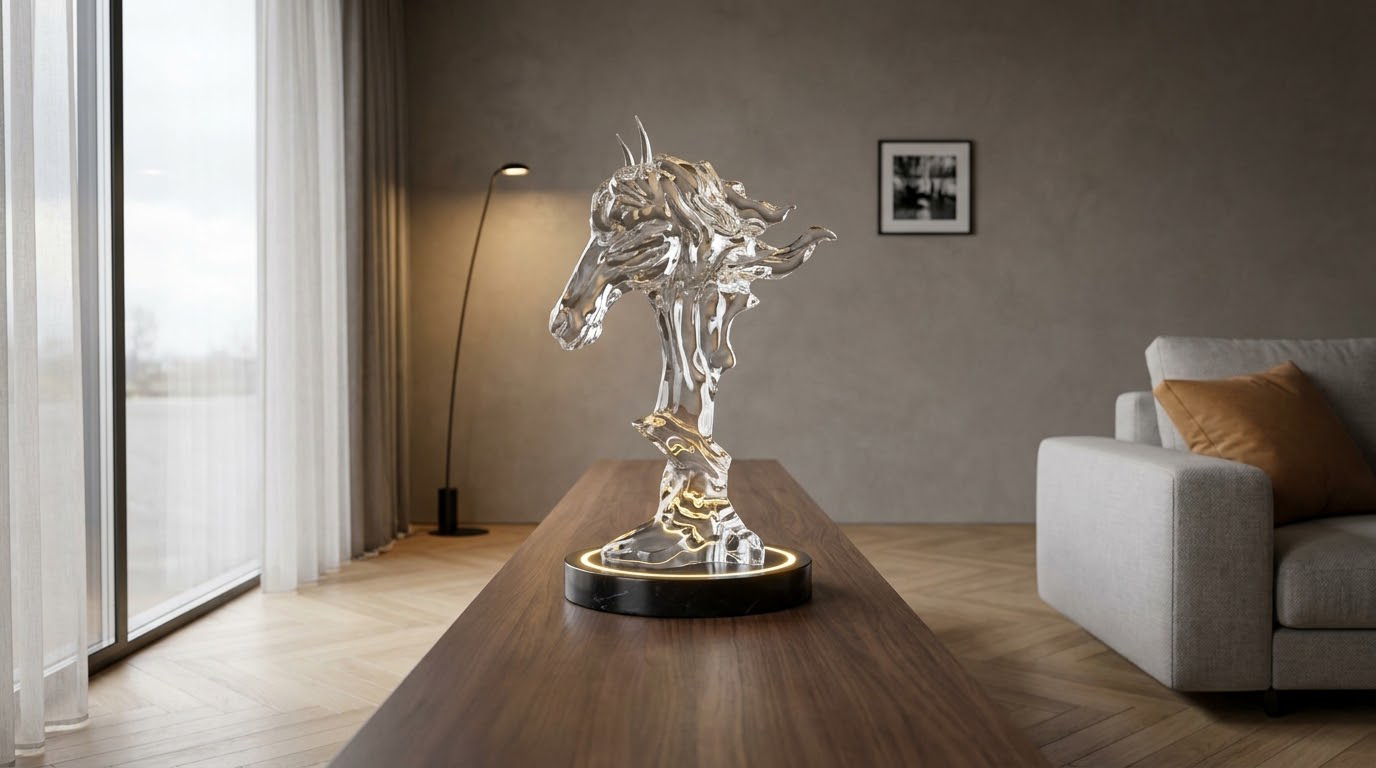
For years, synthetic materials have been unfairly categorized as inferior to their natural counterparts in the luxury design space, and engineered crystal is no exception. Many designers associate it with mass-produced home decor or low-cost accessories, assuming it lacks the depth, clarity, and prestige of natural quartz or rock crystal.
This assumption overlooks the rigorous manufacturing processes behind high-grade engineered crystal. Unlike mass-produced acrylic or resin pieces, premium synthetic crystal is grown in controlled laboratory environments using the same hydrothermal synthesis method that replicates natural crystal formation, just over weeks rather than millennia. The result is a material with identical chemical composition, refractive index, and light-diffusing properties to natural crystal—with none of the natural flaws, inclusions, or size limitations that come with mined stone.
For luxury designers, this means the material can match or even exceed the aesthetic performance of natural crystal, while offering far greater design flexibility. It is not a replacement for natural stone in projects where geological provenance is a core selling point, but a parallel material category that unlocks new creative possibilities.
Solving Core Pain Points for High-End Custom Furniture
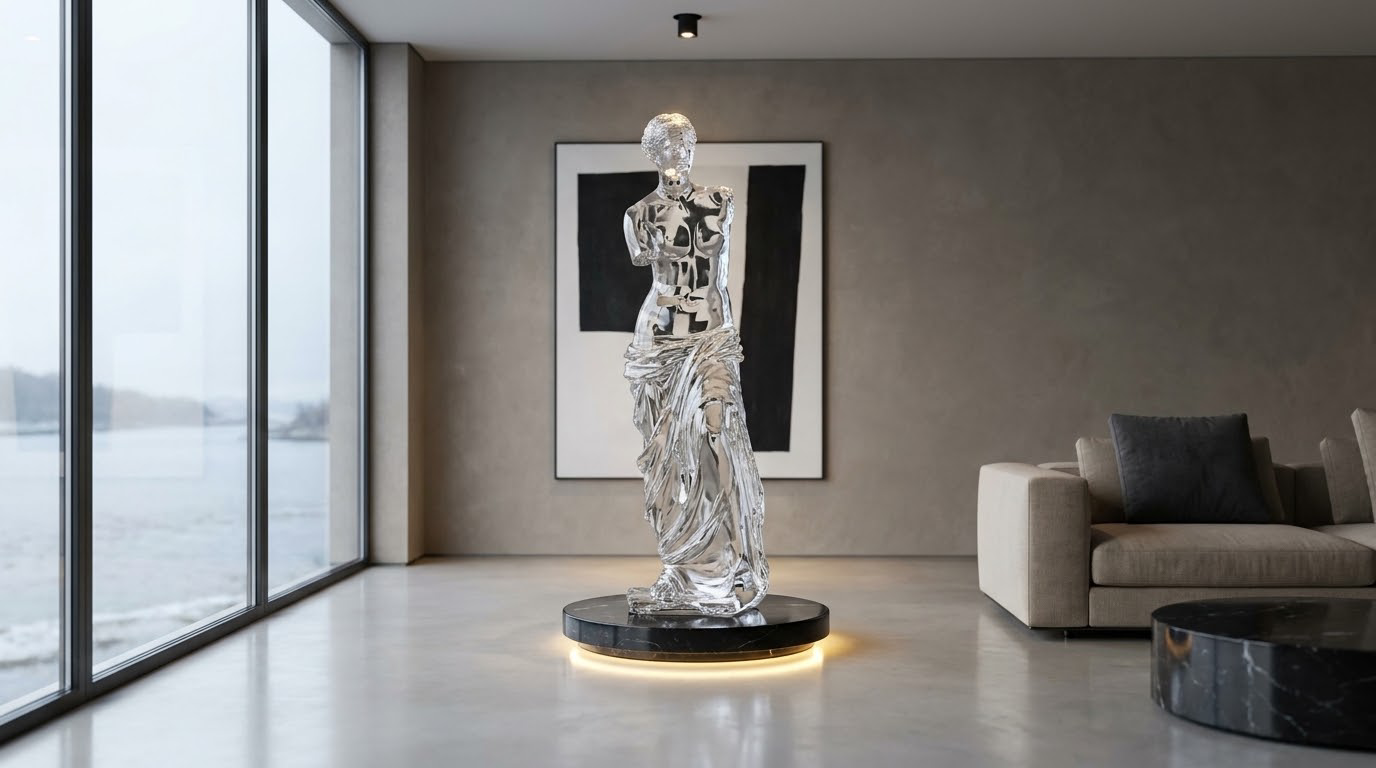
Luxury interior designers face three consistent material challenges when working on high-end residential and hospitality projects: custom sizing constraints, color consistency across large installations, and long-term durability in high-traffic spaces. High-grade synthetic crystal addresses all three.
First, natural crystal slabs are limited by the size of the mined rough stone, often requiring visible seams in large furniture pieces such as dining tables, reception desks, or wall cladding. Engineered crystal can be manufactured in custom sizes up to 3 meters in length with zero seams, enabling designers to create monolithic, statement pieces that would be physically impossible with natural stone.
Second, natural crystal varies widely in color and veining, even within the same quarry. For projects requiring matching furniture sets or uniform material across an entire space, this inconsistency can lead to costly rejections and project delays. Synthetic crystal can be formulated to exact color specifications, with 100% batch-to-batch consistency, eliminating the risk of material mismatch.
Third, natural crystal is porous and prone to scratching, chipping, and staining from common household substances such as wine, coffee, or citrus. High-grade engineered crystal has a non-porous surface with a Mohs hardness rating comparable to natural quartz, making it suitable for high-traffic luxury spaces such as hotel lobbies, private club lounges, and family residences where both beauty and functionality are non-negotiable.
Case Study: Custom Reception Desk for a 5-Star Boutique Hotel
To illustrate the material’s high-end application, consider a recent project for a 5-star boutique hotel in the Maldives, where the design team initially specified natural rock crystal for a 2.8-meter curved reception desk.
The team first sourced natural crystal slabs from a premium quarry in Brazil, but found that the natural inclusions and size limitations required 7 separate seams, disrupting the sleek, seamless aesthetic the design brief demanded. Additionally, the high salt content and humidity in the coastal environment raised concerns about long-term etching and degradation of the natural stone.
The design team switched to high-grade synthetic crystal, which was custom-molded to the exact curved dimensions of the desk in a single, seamless piece. The material was formulated with a subtle blue-green hue that matched the hotel’s oceanfront branding, with consistent coloration across the entire surface. Post-installation testing confirmed that the material resists salt spray, humidity, and daily wear far better than natural crystal, with no visible signs of damage after 12 months of heavy guest use. The project came in 15% under the original natural stone budget, but the primary driver for the switch was design feasibility, not cost—a key distinction for luxury designers.
Practical Guidance for Designers Exploring Engineered Crystal
For interior designers considering this material for their next high-end project, there are three key best practices to ensure optimal results.
First, specify the grade of synthetic crystal clearly. Not all engineered crystal is created equal: low-cost versions used in mass-market decor have lower clarity and durability. For luxury projects, always specify hydrothermally grown, furniture-grade material with a minimum Mohs hardness of 6.5 and zero visible inclusions (unless a textured, inclusion-heavy look is part of the design intent).
Second, collaborate with manufacturers early in the design process. Unlike natural stone, which is selected from existing slabs, engineered crystal can be customized in shape, color, transparency, and even embedded elements (such as gold leaf, metal flecks, or preserved botanicals). Involving the material supplier in the concept phase can unlock design possibilities you may not have considered.
Third, educate your clients on the material’s value proposition. Many high-net-worth clients still associate “synthetic” with lower quality, so frame the material as an innovative design solution that enables a one-of-a-kind piece that cannot be achieved with natural stone, rather than a cost-saving measure. Highlight its durability, consistency, and customizability as premium features that justify its place in a luxury space.
As the luxury design industry continues to prioritize both creativity and functionality, synthetic crystal is carving out a distinct niche as a high-end material in its own right. It is not a replacement for natural crystal, but a complementary innovation that empowers designers to push the boundaries of what is possible in custom furniture. For interior designers tired of compromising their vision to accommodate the limitations of natural materials, this engineered option offers a path to more ambitious, more tailored, and more durable luxury designs.
What has your experience been with engineered crystal in high-end projects? Have you encountered client perceptions that challenge its luxury positioning? Share your thoughts in the comments below, or send a direct message to discuss how this material could fit into your upcoming design briefs.


