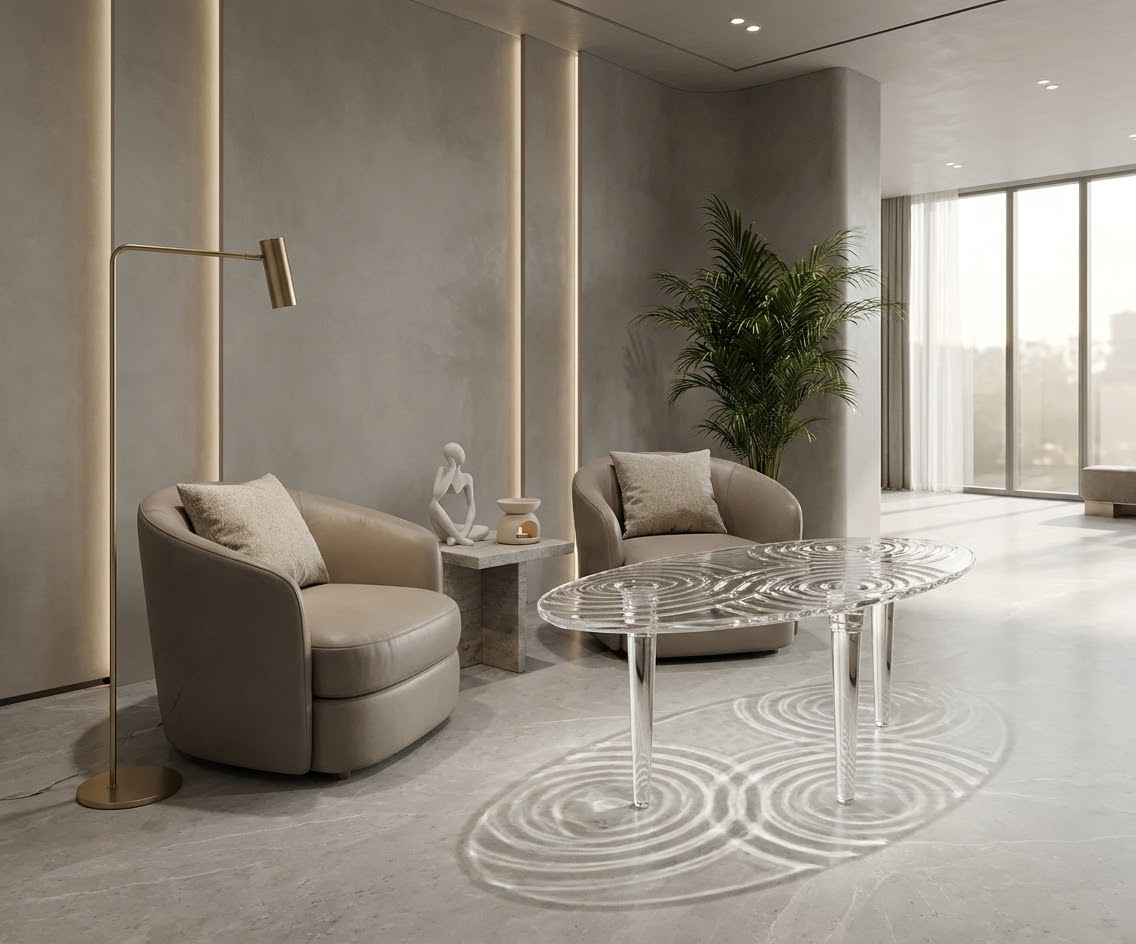
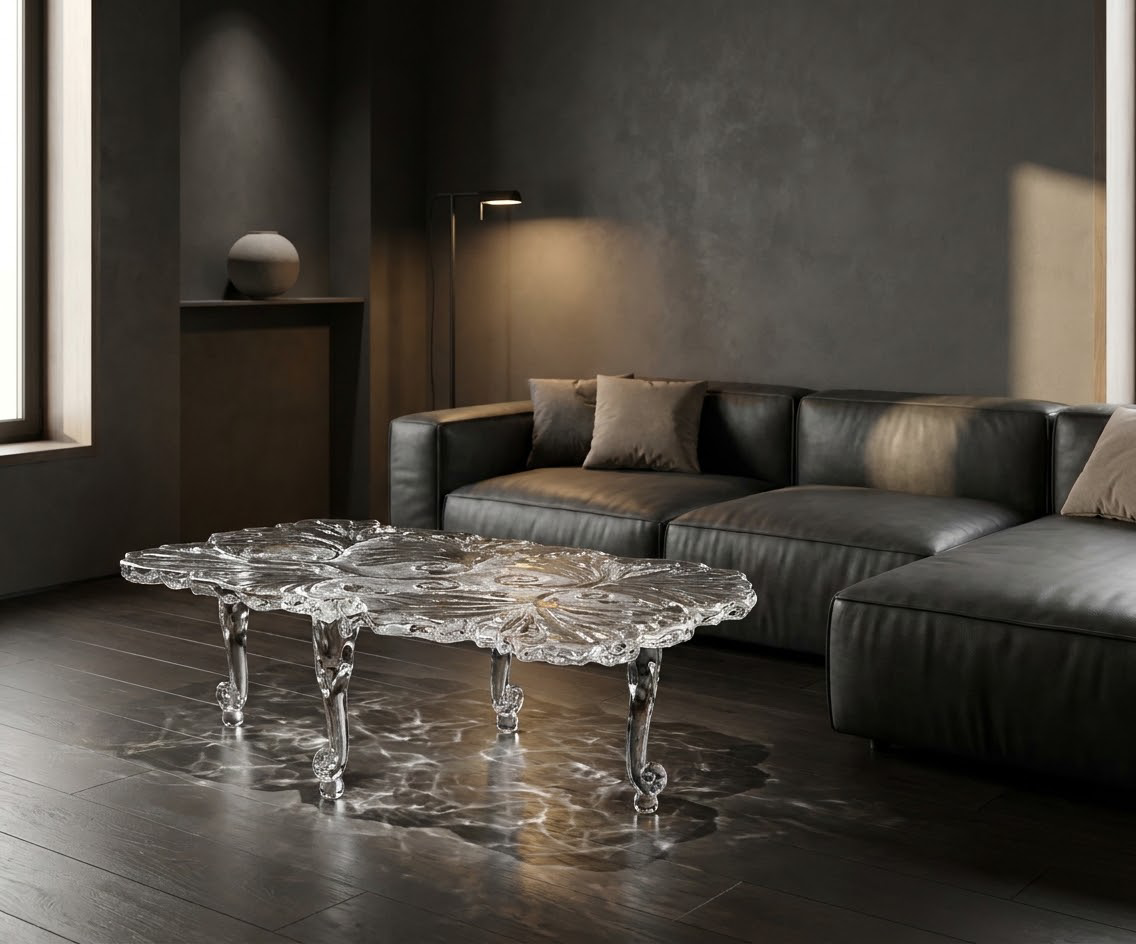
In the 2026 luxury commercial design market, synthetic crystal furniture has become a staple for high-end hospitality, retail, and residential developments.
Interior designers increasingly rely on its luminous aesthetic and durable performance to deliver statement pieces that align with strict brand standards.
This guide breaks down how top manufacturers execute bulk custom orders while upholding uncompromising quality for large projects.
1. Material Standardization: The Foundation of Consistent Synthetic Crystal Furniture
Material variability is the top cause of inconsistencies in artificial crystal furniture production.
For large batch orders, even minor differences in raw material composition can lead to visible color or clarity mismatches across pieces.
2026 manufacturing best practices start with end-to-end material standardization to eliminate this risk.
1.1 High-Purity Optical-Grade Material Sourcing and Validation
High-purity optical-grade material is the gold standard for premium synthetic crystal furniture production.
It delivers uniform light refraction, minimal internal defects, and consistent color rendering across every unit in a batch.
Leading manufacturers source raw material from certified suppliers with strict batch traceability protocols.
Key material validation steps include:
Raw material batch testing for refractive index consistency (±0.002 tolerance)
Internal defect scanning via automated optical inspection (AOI) systems
Color temperature matching against design specification swatches
Chemical composition verification to ensure 99.99% silica purity
These validation steps ensure every synthetic crystal table and chair in a large order starts with identical base material properties.
For interior designers, this means no visible differences between pieces installed across different floors or zones of a project.
1.2 Material Pre-Treatment Protocols for Uniform Performance
Even with consistent raw material, improper pre-treatment can lead to performance variations across finished pieces.
2026 pre-treatment processes are designed to stabilize material properties and ensure uniform response to subsequent machining and polishing steps.
This directly impacts the final high surface hardness and scratch resistance of each piece.
Standard pre-treatment workflows include:
Controlled annealing to relieve internal stress and prevent cracking during machining
Surface cleaning with ultrasonic technology to remove microscopic contaminants
Pre-cutting dimensional calibration to reduce waste and improve machining consistency
Humidity and temperature conditioning to match production environment specifications
Pre-treated material ensures that every synthetic crystal chair in a bulk order achieves the same 7 Mohs high surface hardness rating.
It also reduces post-production defect rates by up to 32%, according to 2026 industry data from leading luxury furniture manufacturers.

2. Precision Manufacturing: Achieving 100% Dimensional Consistency Across Batches
Dimensional consistency is critical for large projects where dozens or hundreds of pieces must fit perfectly with surrounding interior elements.
Even a 1mm deviation in a synthetic crystal table height can create visible alignment issues in a uniform dining or conference space.
Advanced manufacturing technologies in 2026 have made near-perfect dimensional consistency achievable for bulk custom orders.
2.1 CNC Precision Machining and Digital Template Management
Computer numerical control (CNC) machining is the core of modern synthetic crystal furniture production.
2026 systems use 5-axis machining with ±0.05mm positional accuracy to replicate design specifications across every unit.
Digital template management ensures that all production lines use identical design files, eliminating human error in pattern transfer.
Key digital manufacturing controls include:
Cloud-based design file version control to prevent outdated template use
Automated tool calibration before each production run
Real-time dimensional monitoring during machining
Batch-specific production parameter locking to prevent setting changes
These controls ensure that 100 custom synthetic crystal tables will have identical leg angles, edge profiles, and surface dimensions.
For interior designers working on branded hospitality projects, this level of consistency reinforces brand identity across every location.
2.2 Automated Polishing and Surface Finishing Standardization
Hand polishing is a common source of inconsistency in artificial crystal furniture production.
Different technicians may apply varying pressure, leading to differences in surface gloss, edge roundness, or clarity.
2026 manufacturing facilities use automated robotic polishing systems to eliminate this variability entirely.
Automated polishing delivers:
Uniform surface roughness of Ra 0.01μm across all pieces
Consistent edge bevel dimensions within ±0.1mm tolerance
Identical gloss levels (98 GU) on every surface
Reduced human error and production time per unit
Automated finishing also ensures consistent high surface hardness retention, as over-polishing can reduce surface durability.
2026 industry benchmarks show that automated polishing reduces surface finish defect rates by 47% compared to manual methods.
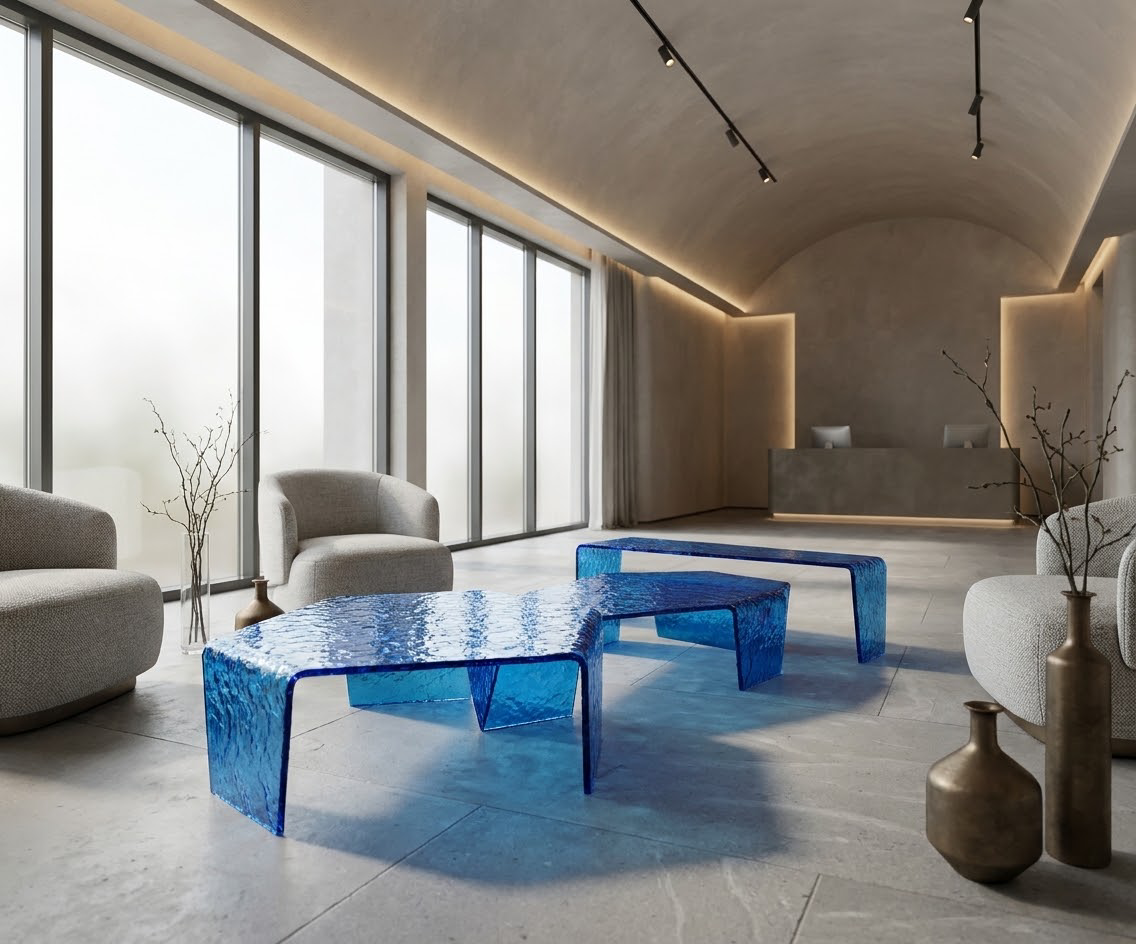
3. Multi-Stage Quality Control: Zero Defect Delivery for Large Custom Orders
Quality control (QC) for large synthetic crystal furniture orders requires more than just final inspection.
2026 best practices implement multi-stage QC throughout the production process to catch defects early and reduce rework.
This approach ensures that every piece meets design specifications before it leaves the factory.
3.1 In-Process Quality Inspection Checkpoints
In-process QC catches issues before they become costly rework or, worse, end up in the final delivery.
2026 manufacturing lines have 7+ inspection checkpoints spread across every production stage, from raw material to final packaging.
Each checkpoint has clear pass/fail criteria tied to project-specific design requirements.
Critical in-process inspection points include:
Raw material incoming inspection (clarity, color, composition)
Post-machining dimensional verification
Polishing surface quality and gloss check
Assembly alignment and structural integrity test
Pre-packaging visual inspection under standardized lighting
For large orders of 50+ synthetic crystal chairs, in-process QC reduces final defect rates to less than 0.5%.
This means interior designers can expect every piece to be installation-ready upon delivery, with no need for on-site repairs or replacements.
3.2 Performance Testing for Durability and Safety
Beyond aesthetic and dimensional checks, synthetic crystal furniture must meet strict performance and safety standards.
2026 testing protocols simulate real-world use conditions to ensure long-term durability, especially for high-traffic commercial projects.
High surface hardness, load-bearing capacity, and impact resistance are core testing metrics.
Standard performance tests include:
Scratch resistance testing to verify 7 Mohs high surface hardness rating
Static load testing (1500N for tables, 1200N for chairs)
Impact resistance testing with 1kg steel ball drop from 1m height
Temperature stability testing (-10°C to 60°C)
UV resistance testing for 500 hours of direct light exposure
All test results are documented and provided to clients as part of the project delivery package.
For interior designers specifying pieces for public spaces, this documentation is critical for meeting building code and safety requirements.
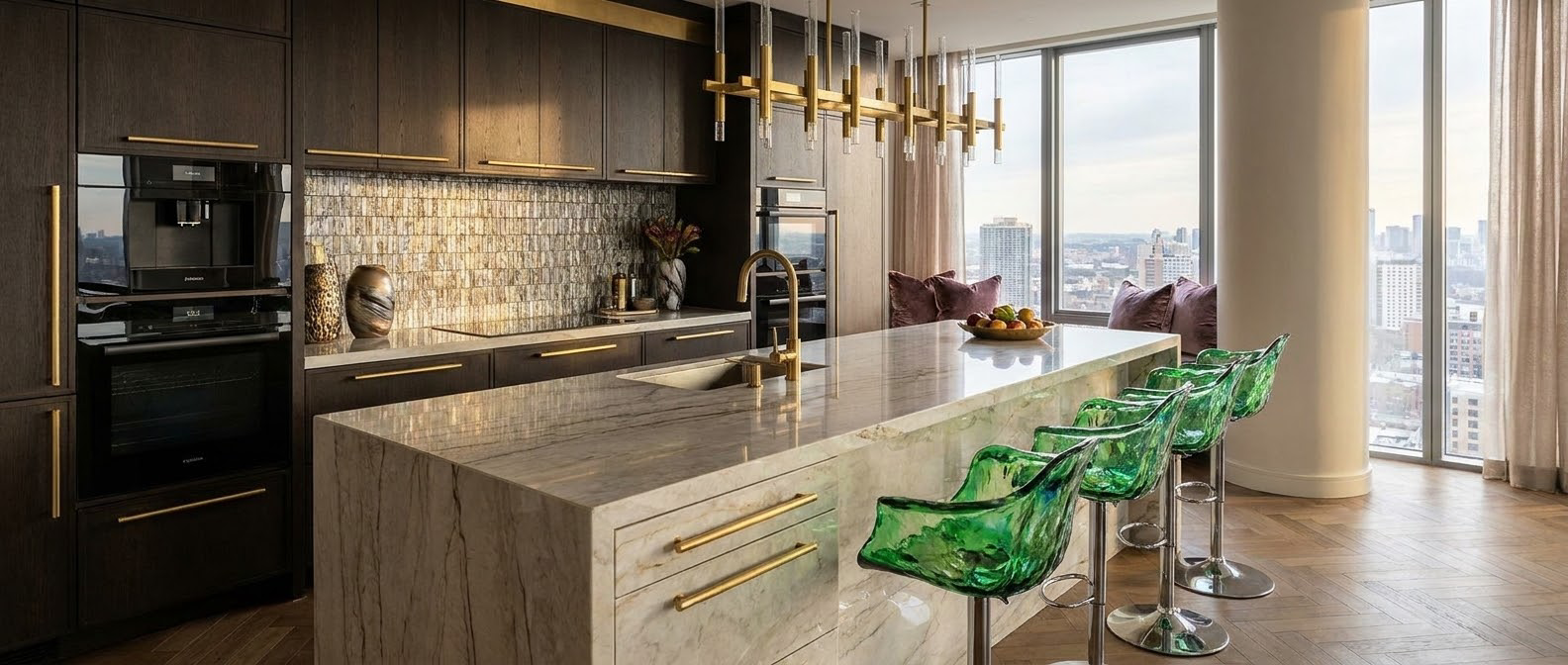
4. Supply Chain and Logistics Optimization: On-Time Delivery for Large Projects
Even the highest-quality synthetic crystal furniture loses value if it arrives late and delays project timelines.
2026 supply chain strategies for custom furniture combine advanced planning, local warehousing, and real-time tracking to ensure on-time delivery.
For large-scale projects with tight deadlines, these optimizations can make or break the client relationship.
4.1 Production Scheduling and Capacity Planning
Bulk custom orders require careful capacity planning to avoid production bottlenecks.
2026 manufacturers use AI-powered scheduling tools to allocate production lines, raw materials, and labor based on project timelines.
This ensures that large orders don’t get pushed back by smaller, last-minute jobs.
Key scheduling optimizations include:
Dedicated production lines for large project orders
Raw material pre-stocking based on project forecast
Labor allocation with cross-trained teams for peak demand
Buffer time built into schedules for unexpected issues
For a 200-unit order of synthetic crystal tables and chairs, optimized scheduling reduces lead times by up to 28% compared to traditional methods.
Interior designers can share accurate delivery timelines with their clients with 98% confidence, according to 2026 industry data.
4.2 Specialized Packaging and White-Glove Delivery Logistics
Synthetic crystal furniture is fragile and requires specialized packaging to prevent damage during transit.
2026 packaging solutions use custom-molded foam, wooden crates, and shock-absorbent layers to protect pieces from impact, vibration, and temperature changes.
White-glove delivery services ensure that pieces arrive in perfect condition and are placed exactly where they need to go.
Delivery logistics best practices include:
Custom crating tailored to each piece’s unique dimensions
Shock and tilt sensors to monitor handling during transit
Climate-controlled transportation for sensitive orders
Pre-delivery site inspection to ensure access and placement readiness
Real-time tracking with 24/7 customer support
For large projects spread across multiple locations, coordinated delivery scheduling ensures all pieces arrive on the same day.
This eliminates installation delays and reduces the need for on-site storage, which is a major pain point for interior designers managing tight project timelines.
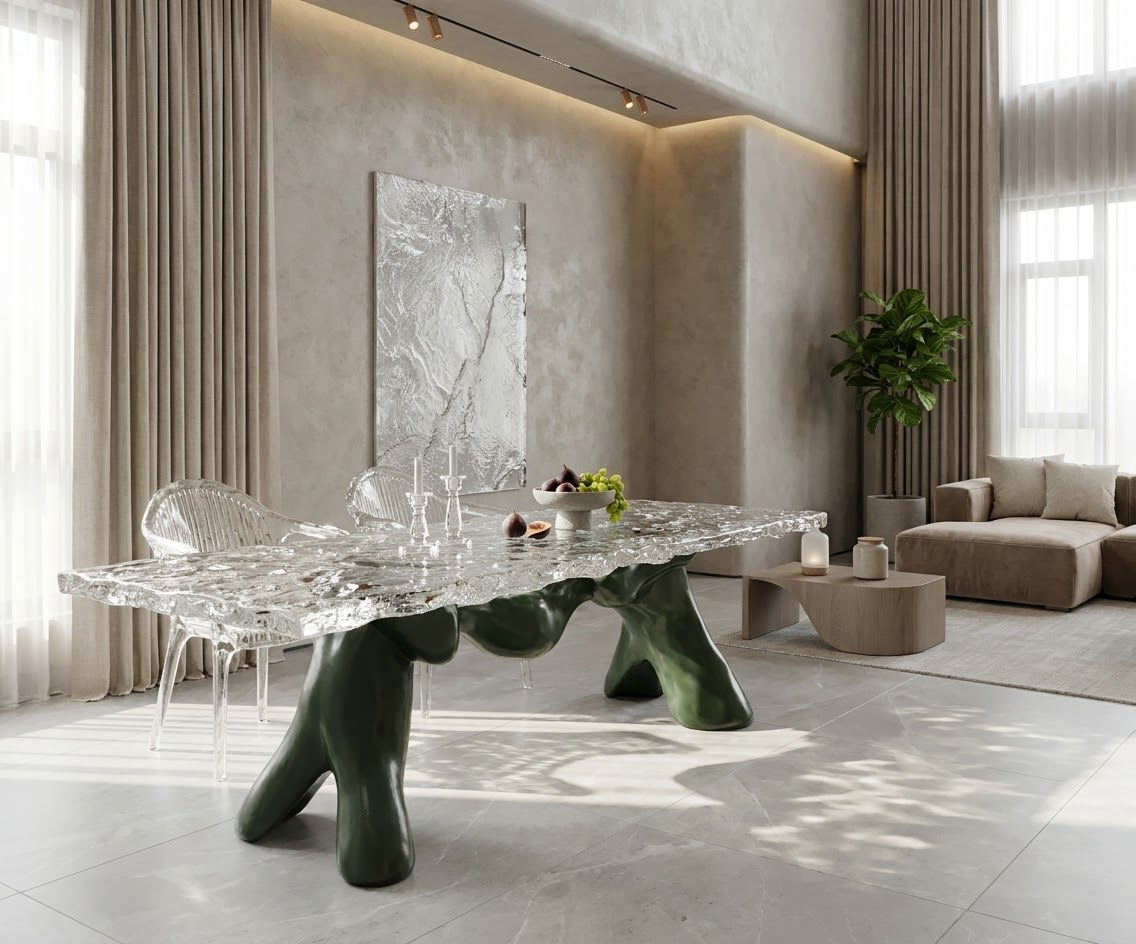
5. 2026 Industry Case Study: 300-Unit Hotel Project Success
To illustrate how these strategies come together, consider a 2026 luxury hotel project in Singapore that required 300 pieces of custom synthetic crystal furniture.
The client, a global hospitality brand, specified identical pieces for 150 guest rooms, 10 restaurant private dining spaces, and 40 lobby seating areas.
The project had a 12-week lead time and zero tolerance for consistency or quality issues.
5.1 Project Execution Strategy and Consistency Outcomes
The manufacturer started by securing a single batch of high-purity optical-grade material to ensure uniform clarity and color across all pieces.
They dedicated two full production lines to the project, with digital template locking to prevent any dimensional variations.
In-process QC checkpoints were implemented at every stage, with full batch traceability for each piece.
Key project outcomes for consistency:
100% dimensional consistency across all 120 synthetic crystal table units (±0.03mm deviation)
Uniform color and clarity matching with zero visible differences between pieces
Consistent high surface hardness rating of 7 Mohs across all units
Zero material-related defects identified during final inspection
The interior design team reported that installation took 30% less time than expected, as every piece fit perfectly with the pre-measured room layouts.
This saved the project over 40 hours of on-site adjustment time and kept the overall construction timeline on track.
5.2 Quality Control and Delivery Performance Results
The multi-stage QC process caught just 3 minor defects during production, all of which were corrected before final assembly.
Final inspection found zero defects across all 300 pieces, a 99.9% pass rate that far exceeds the industry average of 96.2%.
Delivery was coordinated across 3 separate truck shipments, all arriving on the same day as scheduled.
Additional project performance metrics:
100% on-time delivery, 2 days ahead of the original deadline
Zero transit damage reported during unpacking and installation
98% client satisfaction rating from the hotel brand’s design team
2-year warranty provided for all pieces, with zero claims in the first 6 months
This case study demonstrates that synthetic crystal furniture bulk customization for large projects is not only feasible but can deliver better consistency and quality than small-batch production.
For interior designers, partnering with manufacturers that follow these 2026 best practices ensures that their creative vision is executed perfectly, even for the largest and most complex projects.
READ MORE:
- Complete Interior Solutions: How to Integrate Design Development, Custom Manufacturing, and Project Coordination for Efficient Project Delivery?
- Luxury Space Solutions: How to Coordinate Custom Design, Material Expression, and Final Installation to Realize a Complete Design Vision?
- Exclusive Interior Solutions: How Can Distinctive Design Elements and Professional Project Execution Shape Unique High-End Spaces?
- How Designers Transform Creative Concepts Into Synthetic Crystal Furniture: From Unique Shape Development to Precision Custom Processing
- Synthetic Crystal Furniture: A New Approach to Hotel Engineering Furniture Procurement and Supplier Collaboration
- Synthetic Crystal Furniture: Custom Design & Multi-Material Fusion for High-End Spaces
- Synthetic Crystal Furniture: Integrating Material Design, Structural Engineering, and Manufacturing in 2026
- Commercial Interior Solutions: How to Transform Business Space Concepts into Design Results and High-Quality Custom Manufacturing?
- Residential Interior Solutions: How Can Personalized Space Design, Custom Furniture, and Material Integration Create Exceptional Living Environments?


