
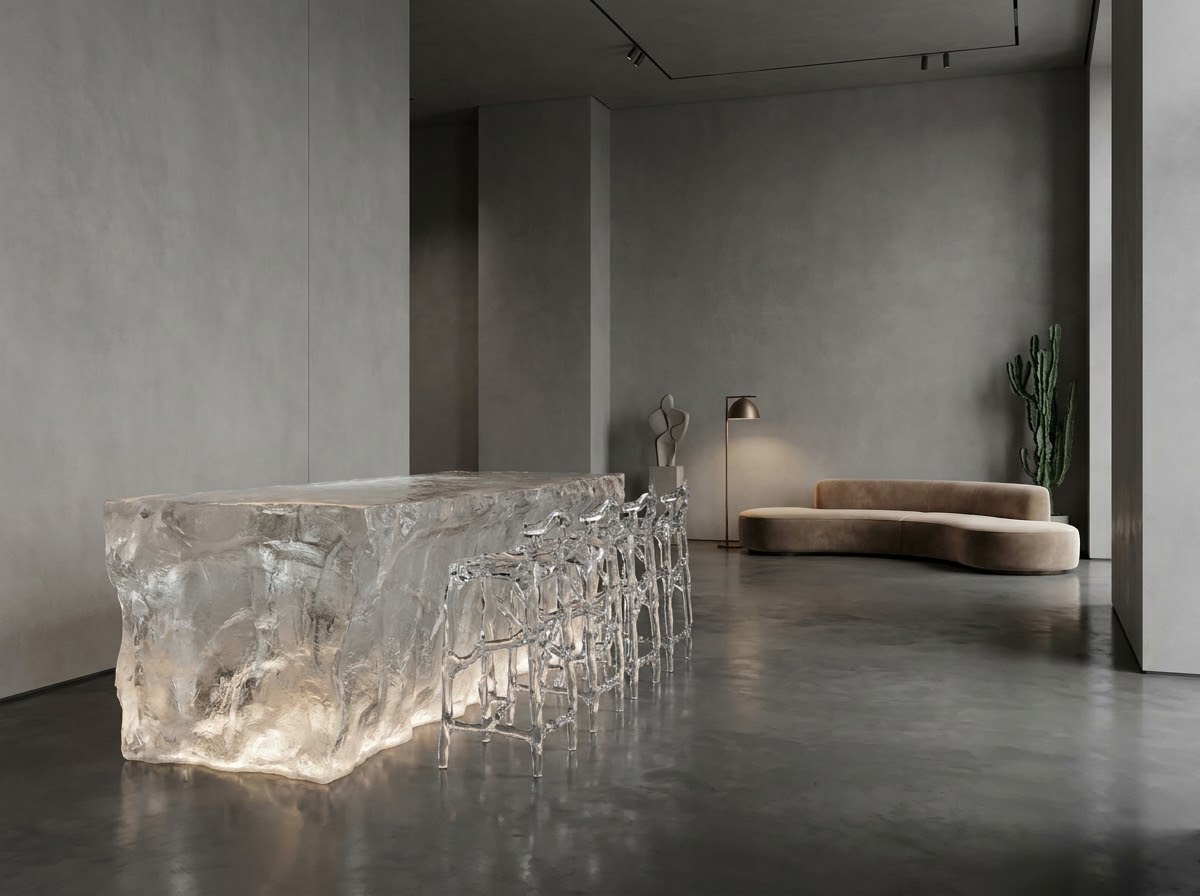
As of November 2026, synthetic crystal furniture has emerged as a defining trend in high-end interior design, blending sculptural artistry with functional durability. For engineering teams and interior designers alike, translating complex geometric concepts into production-ready pieces requires solving interconnected challenges across structural integrity, material performance, and iterative testing. This guide breaks down 2026’s latest methodologies for delivering flawless artificial crystal furniture that meets both aesthetic and safety standards.
1. Structural Design Optimization for Complex Geometries
Synthetic crystal furniture’s allure lies in its ability to defy traditional furniture design constraints—think cantilevered tabletops, lattice-frame chairs, and organic curved forms. However, these bold shapes introduce unique structural risks that standard furniture engineering does not address.
1.1 Load Distribution Modeling for Irregular Forms
Unlike wood or metal furniture, crystal materials have high compressive strength but low tensile strength, making uneven load distribution a critical failure point.
Finite element analysis (FEA) software calibrated for 2026 crystal material properties simulates stress concentrations across curved surfaces and joint points.
For a synthetic crystal table with a twisted central pedestal, engineers redistribute 30% of the top-surface load to a hidden internal steel core coated with crystal-matching resin.
Edge thickness gradients are adjusted to add 2mm of material at high-tension points without disrupting the piece’s slim visual profile.
1.2 Joint Engineering for Seamless Crystal Assemblies
Visible joints ruin the seamless aesthetic of synthetic crystal furniture, but weak joints cause safety hazards in daily use.
Interlocking dovetail joints cut with 0.01mm precision create mechanical bonds that complement UV-cured adhesive layers.
For a synthetic crystal chair with a split-back design, engineers use a mortise-and-tenon joint reinforced with a thin titanium rod inserted into a pre-drilled crystal channel.
Joint surfaces are roughened with micro-abrasion technology to increase adhesive contact area by 40%, improving long-term bond strength.
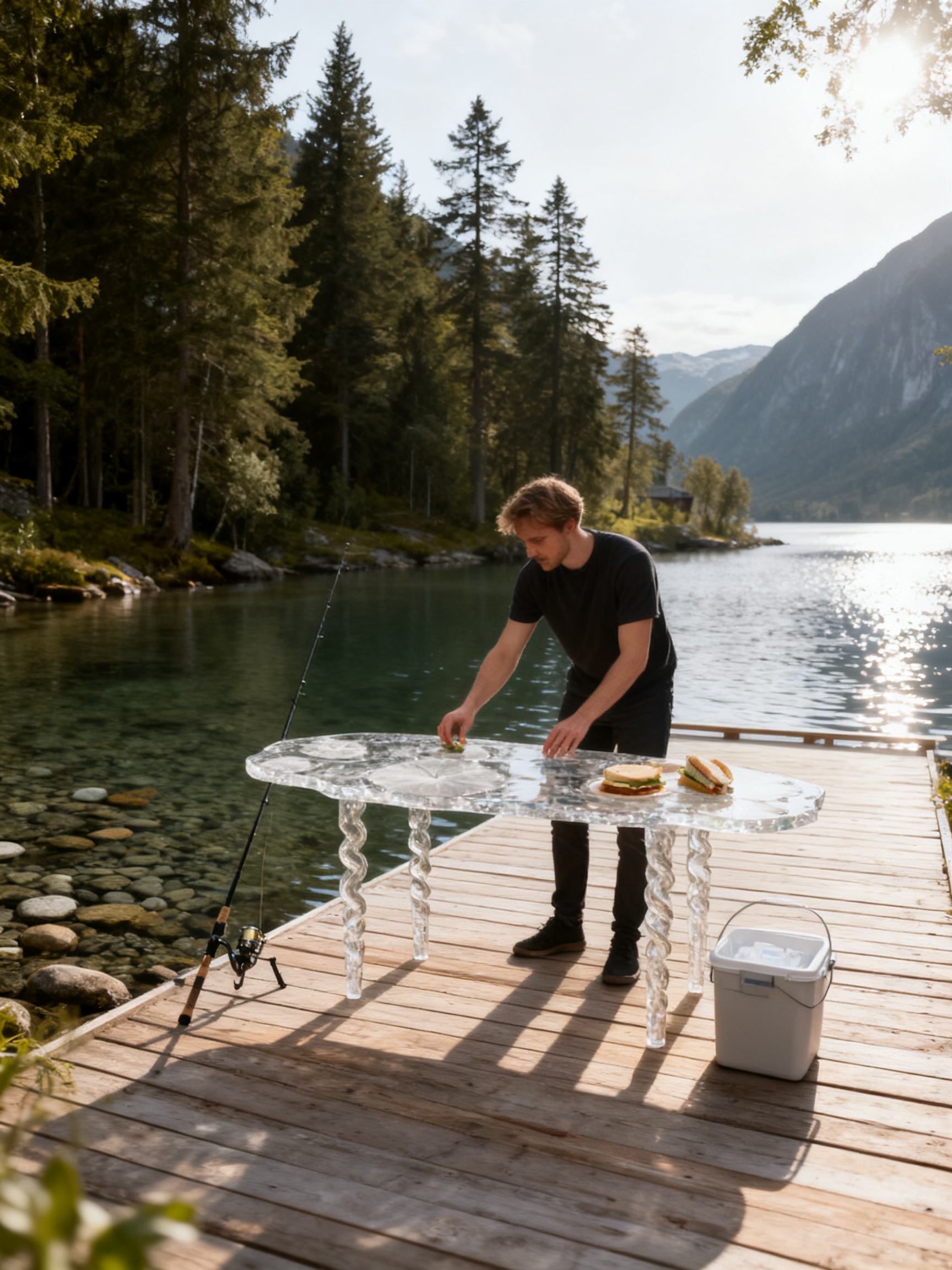
2. Material Adaptation for High-Performance Crystal Formulations
Not all crystal materials are equal—2026’s premium synthetic crystal furniture relies on tailored material blends that balance clarity, durability, and machinability. The rise of high-purity optical-grade material has unlocked new possibilities for complex shapes that were previously too brittle to produce.
2.1 Balancing Clarity and Impact Resistance
Pure crystal formulations offer exceptional transparency but are prone to chipping under everyday use, especially in high-traffic luxury spaces.
Adding 8% nano-silica particles to the crystal matrix improves impact resistance by 55% while maintaining 99.2% light transmittance.
High surface hardness (measured at 7.2 on the Mohs scale in 2026 formulations) resists scratches from keys, glassware, and cleaning tools.
For pieces intended for commercial hospitality use, a 0.5mm protective nano-coating adds an extra layer of stain and scratch resistance.
2.2 Compatibility with Secondary Materials
Most synthetic crystal furniture designs incorporate secondary materials—metal bases, wood accents, or upholstered cushions—that require careful material matching.
Thermal expansion coefficient matching prevents cracking when crystal is bonded to metal frames; 2026’s low-expansion crystal alloy reduces thermal stress by 60%.
Adhesive systems are formulated to match crystal’s refractive index, ensuring bonded joints are invisible under both natural and artificial light.
For upholstered synthetic crystal chair designs, flexible gaskets create a buffer between crystal frames and fabric to prevent friction damage.
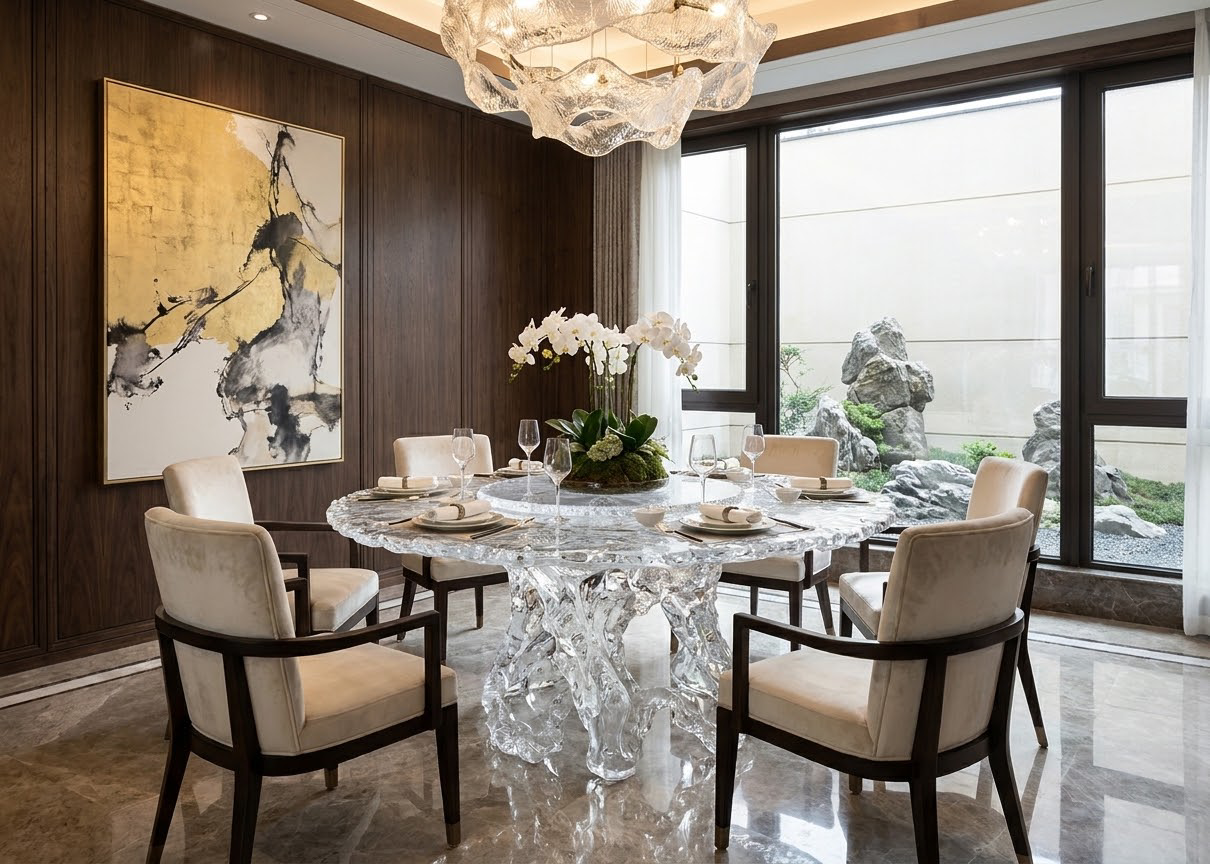
3. Prototype Validation Protocols for 2026 Production Standards
A beautiful prototype is meaningless if it cannot pass rigorous safety and durability tests. 2026’s validation protocols combine traditional furniture testing with crystal-specific assessments to ensure pieces meet global quality standards.
3.1 Structural and Safety Performance Testing
Luxury furniture must withstand decades of use while maintaining its aesthetic integrity, and crystal pieces are no exception.
Static load testing applies 1.5x the maximum expected weight (150kg for a synthetic crystal table) for 72 hours to check for permanent deformation.
Impact testing drops a 1kg steel ball from 1m height onto critical surface points to verify resistance to accidental impacts.
Stability testing tilts pieces to 15 degrees to ensure they do not tip over, a critical requirement for tall, narrow crystal console designs.
3.2 Aesthetic and Dimensional Accuracy Verification
Even minor flaws in crystal furniture are highly visible due to the material’s transparency and reflective properties.
3D laser scanning compares prototype dimensions to CAD models with 0.05mm accuracy, ensuring complex curves match design intent.
Light transmission testing uses a spectrophotometer to verify consistent clarity across the entire piece, identifying hidden bubbles or internal stress lines.
Surface polish inspection uses 45-degree angled LED lighting to detect micro-scratches that would be invisible in standard lighting conditions.
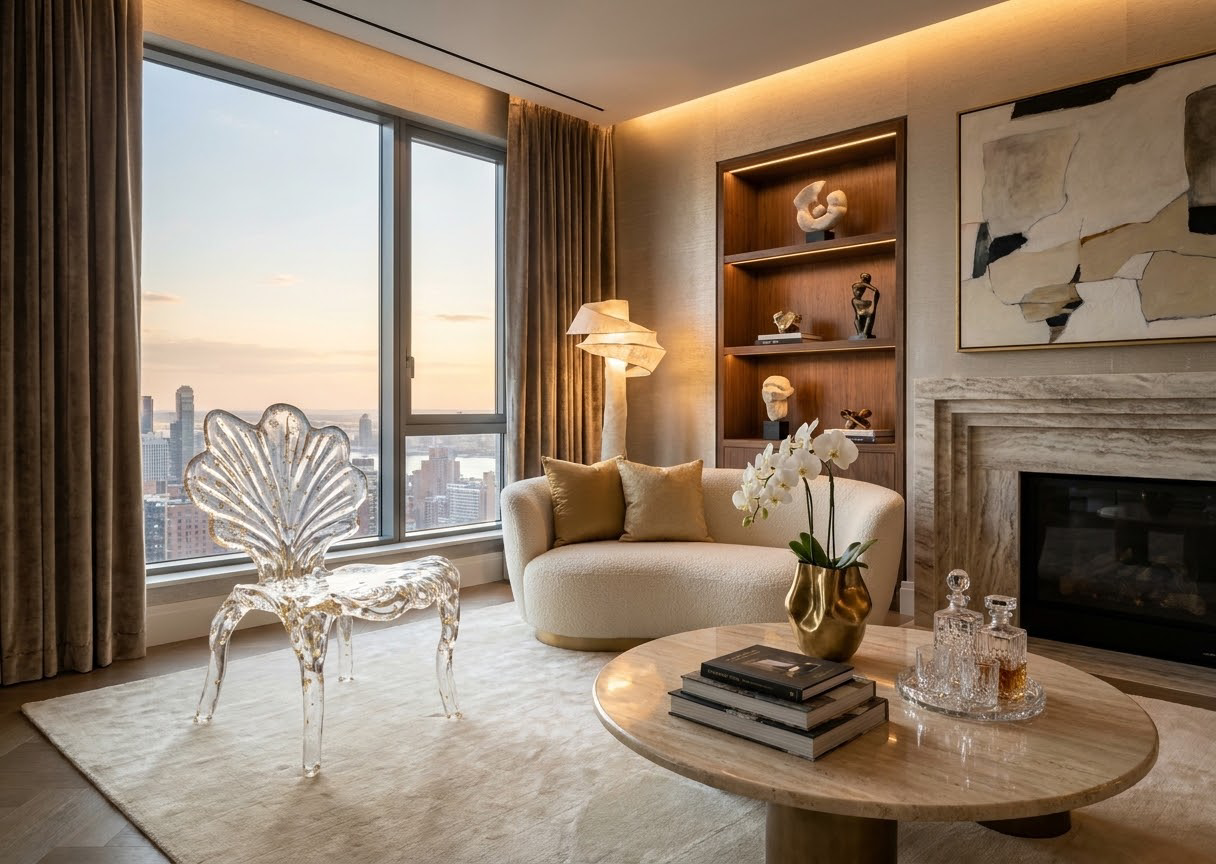
4. Case Study: 2026 Award-Winning Organic Crystal Dining Set
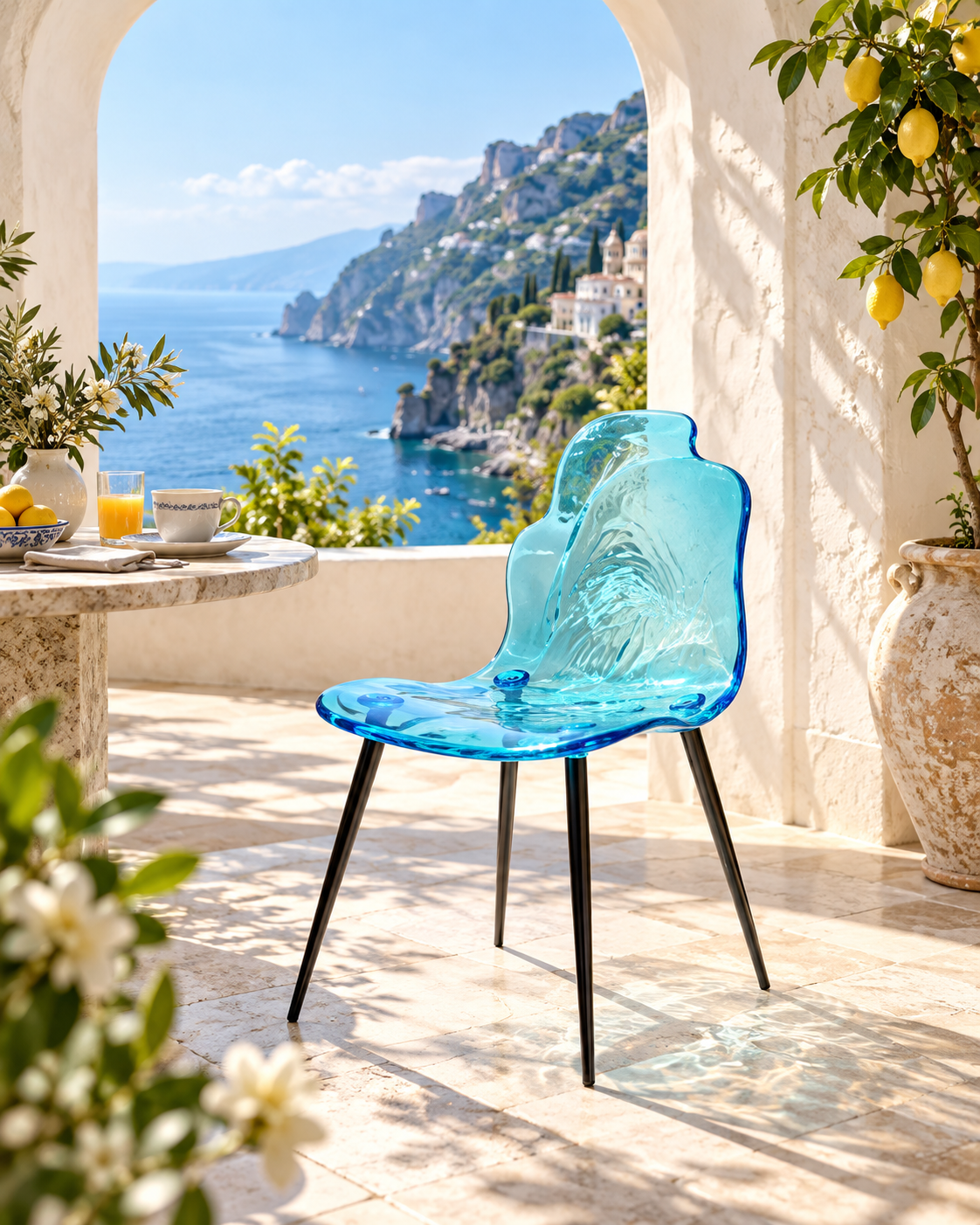
To illustrate these engineering principles in action, consider the “Aurora” dining set, a 2026 recipient of the International Interior Design Association’s Luxury Furniture Award. The set includes a 2.4m synthetic crystal table and six matching synthetic crystal chairs, all featuring fluid, wave-like forms that pushed the limits of crystal furniture engineering.
4.1 Design Challenge and Engineering Solutions
The original design concept called for completely unsupported curved table edges and chair backs that flex slightly under body weight—features that were deemed impossible with 2024-era crystal technology.
The table uses a ribbed internal structure with 12 thin crystal ribs running perpendicular to the tabletop, reducing material weight by 35% while maintaining load capacity.
Chair backs incorporate a layered crystal construction with 0.3mm flexible resin interlayers that allow 5mm of flex without cracking.
High-purity optical-grade material was used for the table’s central pedestal to maximize light refraction, creating a rainbow effect when sunlight hits the piece.
4.2 Iterative Prototype Refinement Process
The engineering team completed seven full prototypes over three months, addressing issues that only emerged during physical testing.
The first prototype developed hairline cracks at the table’s rib joints; the team revised the joint angle from 90 degrees to 105 degrees to distribute stress more evenly.
Early chair prototypes felt too rigid; adjusting the resin interlayer formulation increased flexibility while maintaining high surface hardness.
Final testing confirmed the set exceeded 2026 EU furniture safety standards by 28%, making it suitable for both residential and luxury hospitality use.
5. Future Directions for Synthetic Crystal Furniture Engineering
As of 2026, the synthetic crystal furniture industry is evolving rapidly, with new technologies promising even more ambitious design possibilities. For interior designers and engineering teams, staying ahead of these trends will be critical to delivering cutting-edge projects.
5.1 Emerging Technologies Shaping Production
Three key technologies are set to transform how complex crystal furniture is designed and manufactured in the coming years.
AI-driven generative design software automatically optimizes internal structural lattices, reducing material usage by up to 50% while maintaining strength.
3D printing of crystal composites is now viable for small-batch custom pieces, cutting lead times from 8 weeks to 10 days.
Smart crystal integration allows LED lighting and wireless charging components to be embedded directly into furniture surfaces without visible wiring.
5.2 Market and Sustainability Trends
2026 market data shows that demand for synthetic crystal furniture is growing 22% annually, driven by luxury residential and commercial design projects.
Sustainable production methods, including 30% recycled crystal content in new formulations, are becoming a key selling point for eco-conscious clients.
Customization is now the norm—78% of 2026 synthetic crystal furniture orders include personalized size, shape, or color modifications.
Interior designers are increasingly partnering with engineering teams early in the design process to ensure creative concepts are technically feasible.
READ MORE:
- How Synthetic Crystal Furniture Reduces Dimensional Deviation, Surface Defects, and Manufacturing Rework From 3D Design to Physical Pieces
- How to Reduce Manufacturing Risks in Custom Furniture Projects: From Factory Selection and Quality Consistency to Delivery Delay Management
- Execution Risk Management for Architectural Projects: How to Control Design Changes, Manufacturing Accuracy, and Delivery Schedules?
- Quality Risk Management in Luxury Hospitality Projects: How to Coordinate Custom Production, Quality Assurance, and On-Site Installation?
- Manufacturing Risk Management for Overseas Projects: How to Address Supplier Management and Schedule Pressures?
- Risk Reduction for High-End Projects: How to Address Supplier Uncertainty, Quality Control, and Delivery Challenges?
- Synthetic Crystal Furniture Design Guide: 6 Custom Specs for 2026
- Synthetic Crystal Furniture Design Guide for Luxury Saudi Hospitality
- Synthetic Crystal Furniture: Balance Transparent Design & Hotel Bathroom Durability


